
Top 12 Marketing Automation Tools Every Startup Should Know
Starting a business is exhilarating, but let's be honest: marketing can quickly become overwhelming

Starting a business is exhilarating, but let's be honest: marketing can quickly become overwhelming. You're juggling email campaigns, social media posts, lead nurturing, customer segmentation, and analytics, all while trying to actually run your business. The reality is that 61% of marketers cite generating traffic and leads as their top challenge, according to HubSpot's State of Marketing Report.
The most common problems startups face with marketing automation are clear: limited budgets that make every dollar count, small teams stretched impossibly thin, lack of technical expertise to set up complex systems, and the paralysis that comes from having too many tool options. Many founders I've spoken with admit they've wasted months using the wrong platform or, worse, trying to do everything manually.
The solution isn't working harder. It's working smarter with the right automation tools. When implemented correctly, marketing automation can recover up to 20 hours per week for small teams, improve lead conversion rates by 53%, and reduce marketing costs by 12.2% while increasing revenue, as reported by Nucleus Research.
This guide cuts through the noise to highlight ten marketing automation platforms that actually make sense for startups. These aren't enterprise-level behemoths requiring six-figure budgets. They're practical, scalable solutions that can grow with your business.
1. HubSpot Marketing Hub
HubSpot has become nearly synonymous with inbound marketing automation, and for good reason. Their free tier is genuinely useful for early-stage startups, offering email marketing, forms, landing pages, and basic CRM functionality without spending a cent.
What sets HubSpot apart is the intuitive interface that doesn't require a computer science degree to navigate. You can set up automated email sequences, score leads based on behavior, and track the entire customer journey from first website visit to closed deal. The platform scales beautifully as you grow, with paid tiers adding advanced features like A/B testing, smart content, and detailed attribution reporting.
Forbes noted that "HubSpot's focus on providing value before asking for a purchase has revolutionized how businesses think about customer acquisition." For startups, this philosophy translates into tools that actually help you build relationships rather than just blast promotional content.
The main drawback? Once you outgrow the free tier, pricing jumps significantly. But by that point, you'll likely have the revenue to justify the investment.
2. Mailchimp
Mailchimp started as an email marketing tool and has evolved into a comprehensive marketing platform. Their free plan supports up to 500 contacts and 1,000 monthly email sends, making it perfect for bootstrapped startups testing their messaging.
The platform now includes customer journey builders, segmentation tools, landing pages, and even basic CRM features. The drag-and-drop email builder is intuitive enough for non-designers to create professional-looking campaigns. Integration with e-commerce platforms like Shopify and WooCommerce makes it particularly valuable for online retailers.
According to Entrepreneur magazine, "Email marketing delivers an average ROI of $42 for every $1 spent, making it one of the most effective marketing channels available." Mailchimp makes capturing that ROI accessible to businesses of all sizes.
The learning curve is gentle, and their educational resources are excellent. However, deliverability can sometimes be an issue compared to more specialized email service providers, particularly as your list grows.
3. ActiveCampaign
ActiveCampaign is where email marketing meets sophisticated CRM and sales automation. This platform punches well above its price point, offering features you'd typically find in enterprise software at startup-friendly rates.
The automation builder is incredibly powerful, letting you create complex, conditional workflows based on user behavior, custom fields, and engagement levels. You can automate not just emails but also SMS messages, site tracking, lead scoring, and sales tasks. The machine learning features help predict which leads are most likely to convert and when to send messages for maximum engagement.
TechCrunch highlighted ActiveCampaign as "a platform that successfully bridges the gap between marketing and sales teams." For startups where everyone wears multiple hats, this integration eliminates data silos and ensures nothing falls through the cracks.
The interface has more of a learning curve than Mailchimp, but the investment pays off in capability. Plans start at reasonable rates for small lists, with predictable scaling as you add contacts.
4. Sendinblue (now Brevo)
Sendinblue, which recently rebranded to Brevo, offers an incredibly generous free tier that includes unlimited contacts and 300 emails per day. Unlike competitors who limit by contact count, they focus on send volume, which can be a game-changer for startups with growing lists but limited budgets.
Beyond email, the platform includes SMS marketing, chat, CRM, landing pages, and Facebook ads integration. The transactional email service is particularly robust, making it excellent for SaaS startups that need to send password resets, notifications, and other automated messages.
Marketing Land reported that "SMS open rates average 98%, compared to just 20% for email," and Brevo makes it easy to incorporate both channels into your automation strategy. The workflow builder is visual and straightforward, though not quite as advanced as ActiveCampaign.
For European startups, GDPR compliance is built-in, which simplifies legal requirements. The main limitation is that some advanced features are locked behind higher-tier plans.
5. Omnisend
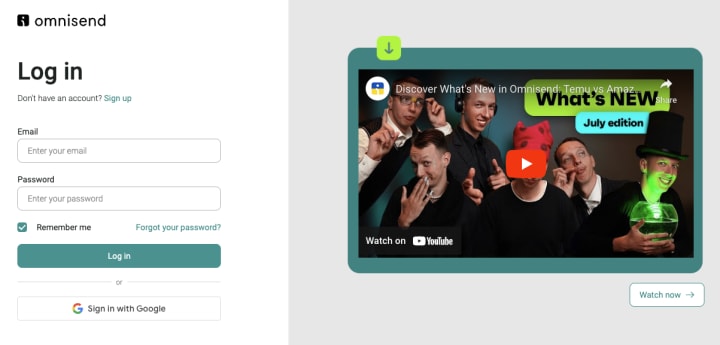
Built specifically for e-commerce, Omnisend understands the unique needs of online retailers. The platform seamlessly integrates with Shopify, WooCommerce, BigCommerce, and other major platforms to pull in customer data and purchase history automatically.
Pre-built automation workflows for cart abandonment, welcome series, order confirmation, and win-back campaigns mean you can get sophisticated marketing running in hours, not weeks. The email editor includes product picker tools that dynamically pull items from your store, and the platform supports SMS, push notifications, and more.
Business Insider found that "cart abandonment emails have an average open rate of 45% and click-through rate of 21%," significantly higher than standard promotional emails. Omnisend's automated cart recovery alone can recoup substantial revenue for growing stores.
The free plan includes up to 250 contacts and 500 emails monthly, enough to validate your strategy before committing to paid plans. If you're running an online store, this platform deserves serious consideration.
6. Drip
Another e-commerce specialist, Drip positions itself as an ECRM (E-commerce CRM) rather than just an email platform. The distinction matters because every feature is designed around turning browsers into buyers and buyers into repeat customers.
Drip's visual workflow builder is among the best in the industry, making it simple to create complex automations based on browsing behavior, purchase history, and custom events. The platform tracks every customer interaction across email, on-site activity, and third-party integrations to build comprehensive profiles.
What really sets Drip apart is the revenue attribution. You can see exactly which emails, campaigns, and automations are driving sales, not just opens and clicks. For data-driven founders, this visibility is invaluable.
Inc. Magazine noted that "personalized email campaigns improve click-through rates by an average of 14% and conversions by 10%." Drip's segmentation and personalization tools make this level of customization accessible without requiring a data science team.
The main consideration is cost. Drip doesn't offer a free tier, and pricing starts higher than some alternatives. However, if you're doing meaningful e-commerce volume, the ROI typically justifies the investment.
7. GetResponse
GetResponse is an all-in-one platform that deserves more attention than it gets. Beyond excellent email automation, it includes webinar hosting, conversion funnels, landing pages, and even website builder functionality.
The webinar integration is particularly unique. You can automatically register attendees, send reminder emails, and follow up after the event, all within the same platform. For B2B startups using educational content to generate leads, this feature alone can justify the subscription.
The automation builder uses a visual workflow system similar to ActiveCampaign but with a slightly simpler interface. You can create time-based sequences, behavior-triggered emails, and complex conditional paths based on user actions.
According to a study cited by MarketingProfs, "webinars generate leads at a rate of 20-40%," making them one of the most effective top-of-funnel tactics. GetResponse makes executing webinar campaigns dramatically easier by consolidating tools.
Pricing is competitive, with a free tier for basic needs and paid plans that remain affordable as you scale. The platform has strong deliverability rates and responsive customer support.
8. Moosend
Moosend is the hidden gem of marketing automation, offering enterprise-level features at prices that make CFOs smile. The platform includes email marketing, automation workflows, landing pages, subscription forms, and detailed analytics.
The drag-and-drop editors for both emails and automation sequences are clean and intuitive. Pre-built recipes for common automations (welcome series, abandoned cart, re-engagement) help you launch quickly, while custom workflows handle more complex scenarios. Real-time reporting shows exactly how campaigns perform, including revenue tracking for e-commerce integrations.
What makes Moosend stand out is value. You get features comparable to platforms costing two or three times as much. The free plan supports unlimited emails to up to 1,000 subscribers, and paid plans offer unlimited emails regardless of tier.
VentureBeat reported that "marketing automation can increase qualified leads by as much as 451%," but only if you actually use it. Moosend's approachable interface and pricing remove the barriers that prevent many startups from getting started.
The trade-off is a smaller ecosystem of integrations compared to market leaders, though all the major platforms are covered.
9. Autopilot
Autopilot takes a different approach to marketing automation, focusing heavily on visual journey mapping. The canvas-based interface lets you literally draw out customer journeys, adding emails, SMS messages, postcards, in-app messages, and more at each stage.
This visual approach makes it easier to conceptualize complex multi-channel campaigns and spot gaps in your customer experience. The platform integrates with thousands of apps through Zapier, Segment, and native connections, pulling in data from across your tech stack.
For SaaS startups, the in-app messaging and behavior tracking features are particularly valuable. You can trigger messages based on how users interact with your product, not just your marketing emails. This tight integration between marketing and product experience drives better onboarding and retention.
Fast Company described modern marketing as "creating experiences, not just campaigns," and Autopilot's multi-channel, journey-focused approach embodies this philosophy.
The platform has been acquired by Ortto and is transitioning, which creates some uncertainty. However, the core functionality remains strong for startups needing sophisticated multi-channel automation.
10. Klaviyo
Klaviyo has become the go-to platform for serious e-commerce businesses, particularly those on Shopify. The platform's deep data integration creates incredibly detailed customer profiles, enabling segmentation and personalization that directly impact revenue.
You can segment based on predicted customer lifetime value, purchase frequency, browsing behavior, engagement level, and dozens of other attributes. Automated flows for welcome series, browse abandonment, cart abandonment, post-purchase, win-back, and replenishment are highly customizable and proven to convert.
The reporting goes beyond typical email metrics to show actual revenue generated, with attribution modeling that clarifies which touchpoints matter most. A/B testing is built into workflows, letting you continuously optimize performance.
Shopify's own data shows that "email marketing drives more sales for online stores than social media, with an average order value 3x higher." Klaviyo is built specifically to maximize this channel for e-commerce brands.
The downside is cost. Klaviyo's pricing scales with your contact list more aggressively than alternatives. But for growing e-commerce businesses, the platform typically pays for itself through improved conversion rates and customer lifetime value.
11. Walls.io
Walls.io focuses on the social side of marketing automation by helping startups collect, curate, and display social media content in a structured, automated way. Instead of treating social channels as disconnected platforms, Walls.io brings posts, hashtags, mentions, and user-generated content into a single, manageable hub.
For brands running campaigns across multiple channels, this solves a common visibility problem. Social content often lives and dies inside individual networks. Walls.io makes it reusable by turning it into a living asset that can be embedded on websites, landing pages, event pages, product launches, and internal dashboards. Content updates automatically based on rules you define, which reduces manual publishing and moderation work.
The platform integrates with major social networks like Linkedin, Instagram, TikTok, Facebook, X or YouTube and supports automation through moderation rules, content approvals, and real-time updates. This makes it especially useful when paired with email marketing and CRM tools. For example, campaigns promoted through HubSpot can link to live social walls that showcase real customer engagement, reinforcing trust and social proof without additional effort.
Walls.io is also strong for brands that rely on community and advocacy. Hashtag campaigns, product launches, webinars, and virtual events benefit from centralized social visibility. Instead of screenshots or static embeds, teams get dynamic content that reflects ongoing engagement. This helps marketing teams connect brand storytelling with authentic customer voices.
From an automation perspective, Walls.io does not replace email or CRM platforms. It complements them by handling a piece many automation stacks overlook: how social content is surfaced, reused, and connected to the broader customer journey. For brands focused on credibility, engagement, and multi-channel consistency, Walls.io fits naturally alongside traditional marketing automation tools.
Pricing is scalable and depends on usage and features, making it accessible for early-stage startups while still supporting growth. If your automation strategy includes social proof, community content, or campaign visibility beyond inboxes and ads, Walls.io is a practical addition to the stack.
12. Productsup
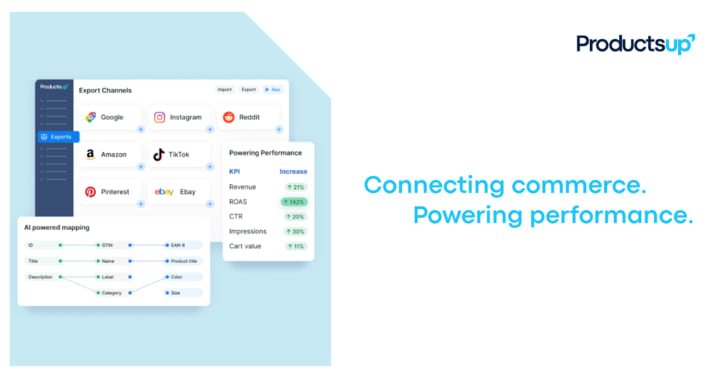
For e-commerce startups selling across multiple channels, product feed management is a critical but often overlooked piece of the automation puzzle. Productsup automates the process of creating, optimizing, and distributing product data feeds to marketplaces like Google Shopping, Meta, Amazon, and dozens of other sales channels. Instead of manually updating product information across platforms, a task that becomes unmanageable as inventory grows, feed management tools sync your catalogue automatically, ensuring pricing, availability, and product details stay accurate everywhere you sell.
This saves hours of manual work while eliminating costly data errors that lead to disapproved listings or overselling out-of-stock items. According to Google, retailers using optimized product feeds see up to 25% higher click-through rates on Shopping ads. For startups scaling across channels, automated feed management directly improves ad performance, marketplace visibility, and operational efficiency, freeing your team to focus on growth rather than spreadsheet maintenance
Making the Right Choice for Your Startup
The best marketing automation tool depends on your specific situation. E-commerce businesses should lean toward Omnisend, Drip, or Klaviyo. B2B companies and service providers might prefer HubSpot, ActiveCampaign, or GetResponse, as outlined in this overview of AI-Powered SaaS Tools for B2B Businesses. Bootstrapped startups with minimal budgets should start with the free tiers of Mailchimp, Brevo, or Moosend.
The most important step is simply getting started. According to Salesforce research, "67% of marketing leaders currently use a marketing automation platform," and that number is only growing. The competitive advantage goes to companies that implement sooner rather than later.
Start with one platform, master the basics, and expand your sophistication over time. Marketing automation is a journey, not a destination. The tools listed here will serve you well at every stage of that journey.
Frequently Asked Questions
What is marketing automation and why do startups need it?
Marketing automation uses software to automate repetitive marketing tasks like email campaigns, social media posting, lead scoring, and customer segmentation. Startups need it because small teams can't manually handle the volume of personalized communication required to compete effectively. Automation allows you to nurture leads, onboard customers, and drive engagement 24/7 without hiring a large marketing team. It also provides data and insights that help you make better decisions about where to invest limited resources.
How much does marketing automation typically cost for startups?
Many platforms offer free tiers that work well for early-stage startups. Mailchimp, Brevo, and Moosend all provide free plans with enough functionality to get started. As you grow, expect to pay between $20 and $300 monthly depending on your contact list size and feature needs. Most platforms scale pricing based on subscribers or email volume, so costs grow predictably with your business. The ROI typically far exceeds the cost when implemented properly.
Can I use multiple marketing automation tools together?
Yes, and many successful startups do exactly this. You might use HubSpot for CRM and landing pages, Klaviyo for email marketing, and a separate tool for social media scheduling. The key is ensuring your tools integrate properly so data flows between them. Platforms like Zapier can connect tools that don't have native integrations. However, consolidating to fewer platforms generally makes management easier and provides better data consistency.
Many startups also complement their automation stack with automation-based social media tools that help centralize content, track engagement, and connect campaign performance back to their broader marketing workflows, something platforms like Walls.io often highlight.
How long does it take to see results from marketing automation?
Most businesses start seeing measurable improvements within 30 to 90 days of implementing marketing automation. Quick wins like automated welcome emails or cart abandonment sequences can show ROI within weeks. More sophisticated lead nurturing campaigns and customer journey optimization take longer to refine but deliver compounding benefits over time. The key is starting with high-impact, simple automations and building complexity as you learn what works for your audience.
What's the difference between email marketing and marketing automation?
Email marketing is one component of marketing automation. Basic email platforms let you send campaigns to your list, while marketing automation platforms trigger messages based on user behavior, segment audiences dynamically, score leads, personalize content, and coordinate multi-channel campaigns across email, SMS, social media, and more. Think of email marketing as a feature and marketing automation as a comprehensive strategy that includes email plus many other capabilities.
Do I need technical skills to use marketing automation tools?
Not for most modern platforms. Tools like Mailchimp, HubSpot, and Brevo are designed for marketers without coding knowledge. They use visual workflow builders, drag-and-drop editors, and templates that make setup straightforward. More advanced customizations might benefit from technical help, but you can accomplish 90% of what you need without touching code. Most platforms also offer extensive tutorials, support resources, and communities to help you learn.
About the Creator
Laslo Povanych
Laslo Povanych is a guest post writer specializing in B2B, SaaS, marketing, and customer service. With a passion for creating actionable, insightful content, he helps brands connect with their audience, build authority, and drive growth.
Keep reading
More stories from Laslo Povanych and writers in Journal and other communities.
25 Best AI-Powered Tools Transforming Business Productivity in 2026
The modern workplace is a new world. What used to take an eight-hour manual process now occurs in merely minutes because of artificial intelligence that is integrating itself into our world of work. I have personally evaluated numerous artificial intelligence resources over the past six months, and I am astonished at what I have seen regarding productivity. Projects cut in half? Gone are entire lists of busywork.
By Laslo Povanych30 days ago in Journal
~ Fired ~
— Ai Intrusion ~ Are you Next ~ Is Ai Evolution after your job? — Few workplaces haven't been affected. Ai is in supermarkets, at doctors' offices, and even monitoring farms. I just can't think of anything this machine is not getting into, can you? For instance: Education ~ Law and Tech jobs will one day have a major influence or be taken over by these inanimate machines, with accuracy and vigor. From mechanics' diagnoses to a wide variety of everyday jobs, including fast food workers, with this input having the ability to cut their unnecessary work hours. I'm certain all of us have been touched by this with our short stories and colorful headings, have you? Even comments are very questionable 'Non-Robot' insertions.
By Jay Kantor6 days ago in Journal
Salt Typhoon and the Widespread Hacking of Western Telecoms Networks
China's Salt Typhoon campaign represents a fundamental shift in state-sponsored cyber espionage, moving away from the opportunistic targeting of individuals towards the systematic subversion of national telecommunications infrastructure. Attributed to contractors working for the Chinese Ministry of State Security based in Chengdu, this operation has exposed a profound structural vulnerability at the heart of Western democratic governance.
By James Marinero7 days ago in Journal


Comments
There are no comments for this story
Be the first to respond and start the conversation.