
Ukraine Destroys Half of Russia's Key Pantsir Air Defence Systems in Major $4 billion 2025 Blow
Corridors opened for precision deep strikes

In the grinding attrition of the Ukraine-Russia war, 2025 marked a pivotal year where technology and strategy converged to deliver a devastating setback to Moscow's aerial dominance.
According to an announcement from Ukraine's Security Service (SBU) on February 14, 2026, the elite Alpha special operations unit has systematically destroyed or disabled approximately half of Russia's operational Pantsir air defense systems.
This campaign, spanning the entirety of 2025 and spilling into early 2026, isn't just a tally of hardware losses—it's a strategic masterstroke that's reshaping the conflict's dynamics, inflicting an estimated $4 billion in damage and prying open vulnerabilities in Russia's once-impenetrable air shield.
Prized asset
For those unfamiliar with the Pantsir-S1 (and its upgraded S2 variant), it's one of Russia's most prized defensive assets.
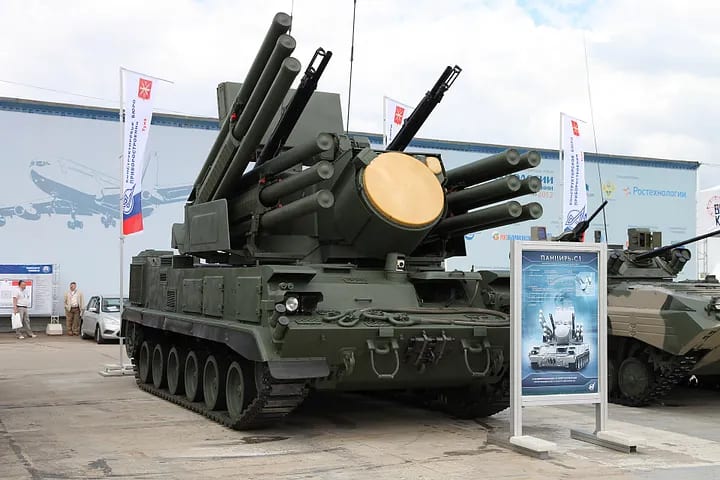
Priced at $15 to $20 million per unit, this hybrid gun-missile system is engineered as a "drone killer," combining rapid-fire 30mm autocannons with short-range missiles to neutralize low-flying threats like Ukraine's swarms of unmanned aerial vehicles (UAVs).
Deployed in layers around critical sites—including atop Moscow's Foreign Ministry building and encircling President Vladimir Putin's residences—the Pantsir forms the innermost "onion skin" of Russia's integrated air defense network, protecting heavier systems like the S-300, S-400, and Buk from saturation attacks.
Smart tactics
The SBU's revelation, reported by outlets like the Kyiv Independent and Ukrinform, underscores how Ukraine turned the Pantsir's strengths against it. By exploiting the system's need to emit radar signals for targeting, Ukrainian forces transformed these defenses into beacons for precision strikes.
The strategy involved waves of low-cost decoy drones to overwhelm and deplete Pantsir missile stocks, followed by high-precision follow-ups using Western-supplied munitions such as France's AASM Hammer bombs or the U.S.'s GBU-39 Small Diameter Bombs.
This "saturation and strike" approach not only neutralized the systems but did so economically: Ukraine's domestically produced drones, numbering over four million in 2025 alone, cost fractions of what Russia spends on replacements.
Geographic spread
Geographically, the campaign's reach was impressive and methodical. In Crimea, a key Russian stronghold, strikes like the one on February 12, 2026, near Yevpatoriia obliterated a $100 million Nebo-U radar station alongside its Pantsir escorts, crippling surveillance over the Black Sea. Up north, in regions like Kursk and Belgorod, Pantsir units were drawn closer to the front lines to shield troop movements from Ukrainian FPV (First Person View) drones—only to become sitting ducks.
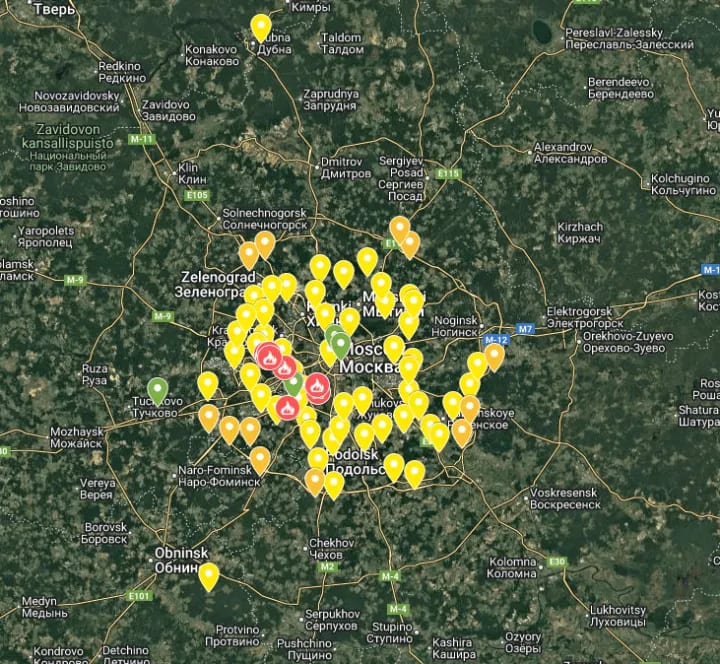
Open-source intelligence maps, such as those from Mark Krutov via United24Media, reveal over 54 confirmed air defense positions in Moscow alone, many now depleted or relocated, hollowing out protections for Russia's heartland.
This isn't mere tactical opportunism; it's a broader economic warfare play. Russia's sanctioned economy struggles to replenish these high-value, low-density assets at the pace of losses.
The SBU estimates that the $4 billion figure includes ripple effects on integrated systems, forcing Moscow into a vicious circle: divert resources from the front to rebuild, or leave urban centers and industrial hubs exposed. As one analyst noted in the original reporting, this "steady grind" is outpacing Russia's industrial capacity, with Ukraine ramping up to seven million drones in 2026.
Implications
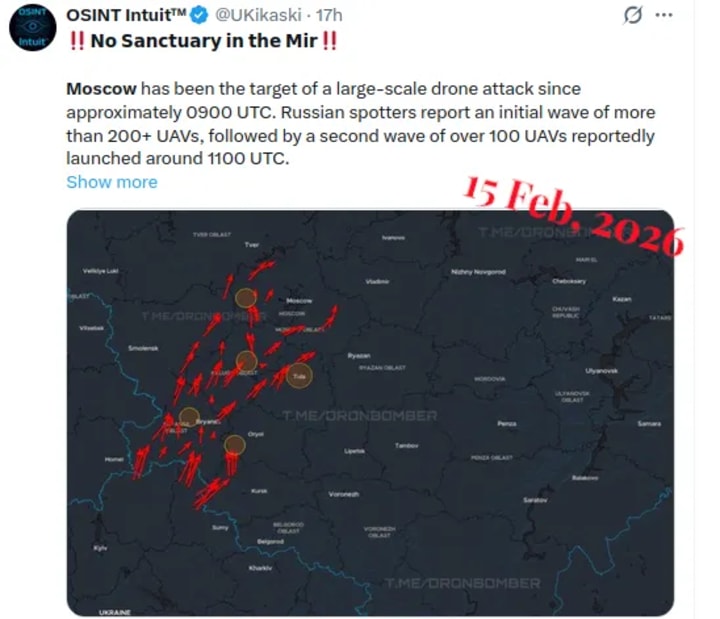
The implications are profound. By punching "corridors" through Russia's layered defenses, Ukraine has enabled deeper incursions. Nights in Moscow now see up to 300 drones swarming, disrupting air traffic and logistics far behind enemy lines. Strikes on distant targets—like the Volgograd arsenal and Tambov Progress Plant on February 12, 2026—demonstrate this newfound reach.
Ukrainian tactical aviation gains effectiveness on the front, while Russian command-and-control falters without reliable point-defense coverage.
Systems fusion
Technologically, Ukraine's "hybrid arsenal" shines here. Domestic innovations like the Lyutyi and Flamingo long-range drones integrate seamlessly with Western tech, supported by digital systems like DOT-Chain for near-real-time targeting—often under two minutes from detection to strike.
This fusion allows Ukraine to outmaneuver Russia's more rigid, relocation-dependent batteries.Yet, questions linger. Russia may adapt by cannibalizing reserves or accelerating production, though sanctions bite hard.
The figures
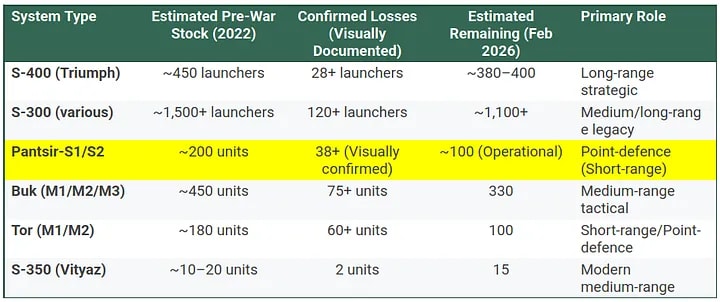
Open sources estimate Russia's pre-war Pantsir fleet at around 200-300 units; losing half leaves a skeletal force stretched thin. For Ukraine, sustaining this momentum depends on continued Western aid and scaling production amid its own economic strains.
This development echoes earlier shifts in the war, such as Ukraine's evolving drone routing tactics—column-like precision versus Russia's chaotic "spaghetti" paths—highlighting Kyiv's adaptive edge. As the conflict enters its fifth year, the Pantsir purge signals a tilt: from stalemate to strategic erosion of Russian capabilities.
What does this mean for the broader war?
It could force Russia toward negotiations or escalation, but Ukraine's message is clear: asymmetric warfare levels the field.
As SBU sources put it, this is about creating conditions for collapse, not just destruction.In reflecting on this, it's worth noting the human element. Behind the stats are Ukrainian operators risking everything in Alpha units, turning ingenuity into impact. For Russia, it's a wake-up call to vulnerabilities in their vaunted systems.
If you're following the Ukraine war, this Pantsir campaign might be the underrated story of 2025—a quiet revolution in air power that's making headlines in 2026.
(Sources drawn from SBU announcements via Kyiv Independent, Odessa Journal, Ukrainska Pravda, Militarnyi, and Defense News. Verification: The pattern of strikes aligns with verified reports.)
About the Creator
James Marinero
I live on a boat and write as I sail slowly around the world. Follow me for a varied story diet: true stories, humor, tech, AI, travel, geopolitics and more. I also write techno thrillers, with six to my name. More of my stories on Medium
Keep reading
More stories from James Marinero and writers in Journal and other communities.
US Accuses China of Secret Nuclear Testing: A New Arms Race Shadow?
In a stark escalation of nuclear rhetoric, the United States publicly accused China of conducting covert nuclear explosive tests, breaching the long-standing global moratorium on such activities, the Comprehensive Nuclear-Test-Ban Treaty (CTBT)
By James Marinero14 days ago in Journal
There's A Hole in My Bucket
It’s a well-known fact that Liza Dufresne was always the brains in the family. She was the one who always came up with the brilliant schemes the Dufresne kids carried out when they were younger. Like when they tricked Mrs. Claybourn into paying for a trip to Disney World. Liza convinced her that their parents had been kidnapped and were being held for ransom for the total price of three tickets. In reality, they were away on a weekend getaway for their anniversary. When they returned, Liza told the Claybourns that they did not like to talk about the ordeal. Their parents never found out how they got the money. Mrs. Claybourn never found out that the Dufresne parents were never really in any danger.
By David E. Perry2 days ago in Fiction



Comments
There are no comments for this story
Be the first to respond and start the conversation.