
Understanding a U.S. Government Shutdown
what it is, why it’s happening, and whether it “fixes” anything

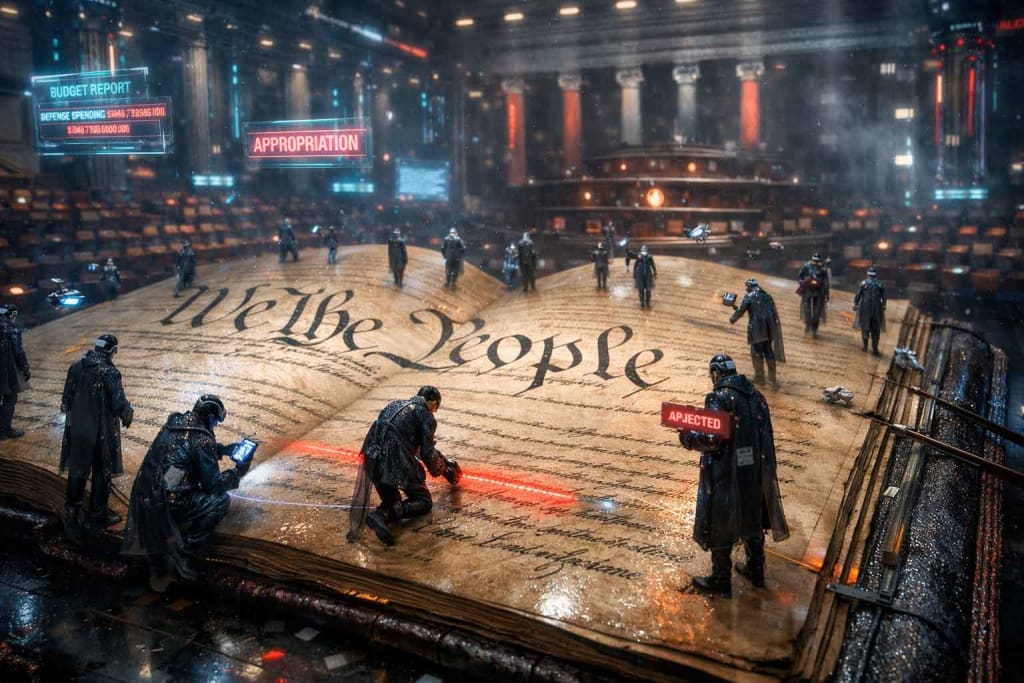
A “government shutdown” in the United States sounds like a sci-fi switch someone flipsand suddenly a whole country goes dark. Reality is messier, more legalistic, and (unfortunately) more human: it’s not the nation shutting off, it’s certain federal agencies losing legal authority to spend money, which then ripples into paychecks, services, contracts, and public trust.
The shutdown story, from the beginning
In the U.S., most federal agencies operate on annual appropriations money that must be authorized by law. When that authorization expires and lawmakers don’t pass a replacement in time, the government hits a legal wall called a “lapse in appropriations.” The result is what people call a shutdown.
That’s what happened on Saturday, January 31, 2026: a partial shutdown began when funding lapsed for key areas, including the Department of Homeland Security, the Pentagon (Defense), and the Department of Transportation, even though other parts of government had already been funded and kept running.
“Partial” matters: some programs keep operating normally (because they were funded earlier or have separate funding sources), while others must reduce operations or stop non-essential work.
What a shutdown really is (the legal mechanism)
A shutdown is not (usually) because the government “ran out of money.” It’s because the government ran out of permission.
Under the Antideficiency Act, federal agencies generally can’t spend or commit funds without appropriations. That law forces agencies to pause “non-excepted” work and do an orderly shutdown when appropriations lapse.
The Office of Personnel Management explains how “shutdown furloughs” work: agencies must stop non-excepted activities funded by annual appropriations if no new funding law or continuing resolution is passed.
So the shutdown is basically the law saying: “No signature, no spending.”
Why funding is stalled this time
This January 2026 shutdown is unusually tied to one specific pressure point: DHS funding, especially money and operating rules connected to immigration enforcement.
Multiple reports describe how a series of events in Minneapolis ignited a political firestorm after two U.S. citizens were killed by federal immigration officers/agents, triggering demands especially among Democrats for reforms and restrictions connected to immigration enforcement tactics.
In response, the United States Senate passed a funding approach that would keep much of government funded while giving DHS only a short, temporary extension essentially buying time to negotiate DHS/ICE-related reforms (like body cameras and warrant requirements, according to reporting).
Then the conflict moved into the United States House of Representatives, where internal politics and bargaining power became the bottleneck. Hakeem Jeffries warned Mike Johnson not to count on Democratic votes to end the shutdown quickly, making the math harder.
That’s the core reason funding is “stuck”: not because lawmakers don’t understand what a shutdown is, but because ending it requires agreeing on what DHS should be allowed to do, how it should do it, and under what oversight.
What happens to workers, normal people, and the “everyday street?”
Shutdowns hit people in three main ways:
1. Federal employees
some are furloughed. Some are deemed “excepted” (often called essential) and must keep working even if pay is delayed until funding is restored.
2. Contractors
Contractors can get hit even harder and faster, because work can pause when agency staff aren’t available, and payments can be delayed. Legal/industry guidance warns that shutdowns can disrupt contracts and contractor cashflow in complicated ways.
3. Services you notice only when they wobble
Air travel is a classic stress point: functions may continue, but strain builds if people are working unpaid or operations are understaffed. FEMA disaster response concerns also come up when DHS funding lapses.
“ICE behavior,” the political fuse, and why it became this symbolic
Immigration enforcement has always carried moral heat in America because it sits at the intersection of law, identity, safety, and civil liberties. Right now, the heat is higher because enforcement actions in Minnesota described by critics as aggressive were followed by deaths that fueled protests and legal battles over federal authority and tactics.
Reporting describes widespread public backlash, protests, and court action. One federal judge denied a request from Minnesota cities to halt the operation on constitutional grounds, even while acknowledging serious concerns raised in the case (the decision focused narrowly on the constitutional argument rather than fully adjudicating tactics).
That helps explain why “ICE reforms” became a shutdown trigger: for many lawmakers and advocacy groups, DHS funding is the leverage point to demand accountability mechanisms (for example: body cameras, tighter rules for operations, and clearer requirements around warrants).
The U.S. “reward and punishment” system: does it work?
America’s system of accountability isn’t one single machine it’s a bundle of overlapping controls:
• Political accountability: elections, hearings, budget leverage (like this shutdown fight).
• Legal accountability: courts, constitutional limits, civil suits.
• Administrative accountability: inspector generals, internal investigations, agency discipline, policy guidance.
The shutdown is a weird kind of accountability tool: it’s the legislative branch using its “power of the purse” to force negotiations. It can produce change, but it’s also blunt-force trauma applied to real lives.
Even the Antideficiency Act itself has “punishment” language: officials who violate it can face administrative discipline and even criminal penalties in extreme cases.
And on the worker side, the system can be contradictory: Congress passed the Government Employee Fair Treatment Act to guarantee back pay for federal employees after a shutdown ends, but recent disputes about interpretation and implementation have created uncertainty and political fighting over whether back pay must be explicitly provided in the legislation that ends a shutdown.
That’s a very American paradox: the law tries to prevent chaos, then the politics re-inject chaos.
Does a shutdown help society always, sometimes, or never?
A shutdown is rarely “good.” At best, it’s a symptom of a system designed to prevent any one branch of government from spending freely without public authorization. That restraint is a real democratic value.
But here’s the honest tradeoff:
Potential upsides
• Forces public debate and transparency about priorities (what gets funded, what conditions apply).
• Can pressure agencies or leadership to accept reforms that might otherwise be ignored.
• Reminds everyone that budgets are moral documents, not just spreadsheets.
Real downsides
• Turns workers and families into bargaining chips (even if back pay eventually arrives).
• Disrupts contractors and local economies in ways back pay doesn’t fix.
• Damages trust: people see government as chaotic, even when the intent is “oversight.”
So, is it “good on the long line”? Not automatically. If reforms genuinely improve safety, oversight, and civil rights, some may argue the pain produced results. If it ends as a temporary political flex with no durable changes, the shutdown becomes pure waste a high-cost performance where the bill is paid by ordinary people.
Where this likely goes next
Most reporting suggests leaders expect the shutdown to be short, with votes scheduled as lawmakers return, but the outcome depends on whether the DHS/ICE reforms reach an acceptable compromise.
The big picture: this shutdown isn’t just about numbers. It’s about the rules of enforcement, the limits of federal power, and the human cost of using budgets as leverage.
If you’re writing this for readers who want to “get it” fast, the cleanest summary is:
A shutdown happens when the U.S. government loses legal authority to spend because Congress hasn’t passed funding on time. This one is driven largely by a fight over DHS funding and immigration enforcement accountability after deadly incidents sparked public outrage.
#politics
#usa
#shutdown
About the Creator
Sayed Zewayed
writer with a background in engineering. I specialize in creating insightful, practical content on tools. With over 15 years of hands-on experience in construction and a growing passion for online, I blend technical accuracy with a smooth.
Keep reading
More stories from Sayed Zewayed and writers in Journal and other communities.
The world order likes to introduce itself as a set of principles.
From 2010 to 2025, that tension between military dominance and national interest did not fade. It became the soundtrack. Every headline felt like a reminder that power still matters, but power now travels in new forms: data, supply chains, energy routes, sanctions, alliances, debt, and the quiet leverage of who controls the platforms where money and information move.
By Sayed Zewayed8 days ago in Journal
How GM Could Become the 2nd US Automaker to Hit $100 a Share (And Then Blow It)
General Motors (NYSE: GM) has captured Wall Street’s attention recently, pushing its share price to all‑time highs and sparking debates among analysts about whether the iconic Detroit automaker could become only the second large U.S. auto company to reach $100 a share. But along with optimism comes caution: structural challenges, trade policy uncertainty and shifting consumer demand could just as easily knock the stock back down. This dual possibility — mounting toward $100, then blowing up — is part of the conversation among investors and market experts.
By Salaar Jamali5 days ago in Journal



Comments
There are no comments for this story
Be the first to respond and start the conversation.