

We spend our time making money
and our money chasing happiness.
But in the time spent trying to buy happiness,
it is lost in the investment of time.
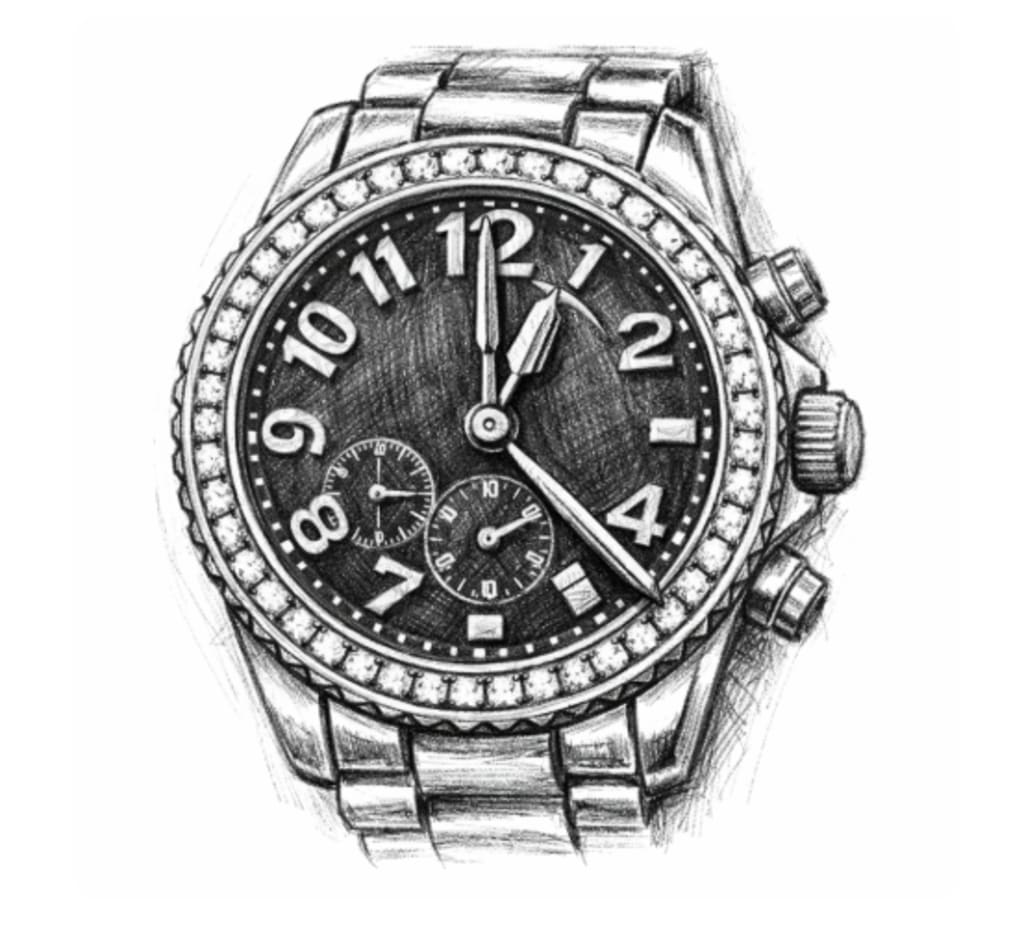
I have a watch. It doesn’t keep time.
It’s a nice watch, but the battery is dead.
The watch is flashy and brings many compliments,
but the hands never leave 1:02 p.m.
I wear the watch, but sometimes I believe
the watch wears me.
I pick it up and put it on because
even though it does not tell time,
it gives the appearance of importance.
It cannot measure my life,
but it convinces others that my life is being measured.
If time stands still and money is void of happiness,
why are our lives spent chasing time and money?
We chase possessions
and call it progress.
Losing time means losing money.
Losing money means working more.
Working more means losing time.
Our neighbor buys a boat.
We want a boat —
but ours must be larger.
A larger boat costs more money.
More money costs more time.
More time costs more life.
We lose our days earning the thing
that proves we have no days to spare.
We finally buy the boat,
dock it like a trophy,
polish it on Sundays
between workweeks.
But we cannot enjoy the boat.
We are too busy paying for it.
The water waits.
The sun waits.
Our lives do not.
Why do we spend our years
chasing possessions
to impress others
with money
we sacrificed our time to earn —
when time
was the only wealth
we ever truly owned?
My co-worker bought a new house
in the country club.
My house is just fine,
but it isn’t in the country club.
All the important people live there.
I want to live there too.
So we buy a house we cannot afford
to impress neighbors we do not like.
Thirty years of payments
for rooms that feel too small,
too staged,
too careful to be lived in.
We mow lawns we never sit on.
We wave at strangers
whose names we never learn.
We measure worth in square footage
and silence in monthly installments.
We live like guests
in our own lives.
All to belong
to a place
where we do not belong —
to impress people
we do not even like.
We spend our time
earning money
to buy things
meant to impress people
who are not thinking about us
at all.
Our lives become receipts.
Proof of purchase.
Evidence of worth
displayed in driveways,
wrapped around wrists,
mortgaged into silence.
We trade hours for objects,
objects for approval,
approval for a feeling
that never quite arrives.
In the end,
our lives are summed up
not by what we loved
or whom we held,
but by what we hoped
others might think
when they looked our way.
And even then,
they are only
thinking of themselves.
In the end, we will look around at the lives we built —
the houses too large to feel like home, the boats that rarely touched water,
the watches that measured everything but what mattered—and we will
wonder when living became something we scheduled instead of something
we did. We will realize we spent years performing success for an audience
equally exhausted, each of us trapped in our own quiet competition,
mistaking admiration for connection and status for belonging.
And when the noise fades — when the payments stop, when the neighbors
move, when the things we chased become things our children must sort
through — what will remain is not the square footage, the brand names, or
the applause we imagined in other people’s minds.
What will remain is the time we traded away.
The dinners we rushed.
The sunsets we missed.
The laughter postponed.
The moments we assumed would wait.
They did not wait.
And in that silence, we will finally understand:
we were never poor in possessions —
only in presence.
About the Creator
Ginny Brown
My writing is grounded in lived experience, legal accuracy, and a commitment to equity, with a focus on ethical storytelling that illuminates systemic challenges and amplifies unheard voices.
Keep reading
More stories from Ginny Brown and writers in Journal and other communities.
The Tomb Called Justice
The courthouse looms at the town’s center like a tomb that refuses to stay closed, a monument of cold marble and older secrets. Its columns do not merely support a roof; they form the ribcage of an idea—that human suffering can be bled out, measured, and bottled in the name of peace. Above the bench, the scales hang like the iron skeleton of a trapped bird, eternally suspended in a room that smells of dust and the metallic tang of old fear.
By Ginny Brownabout 11 hours ago in Humans
~ Fired ~
— Ai Intrusion ~ Are you Next ~ Is Ai Evolution after your job? — Few workplaces haven't been affected. Ai is in supermarkets, at doctors' offices, and even monitoring farms. I just can't think of anything this machine is not getting into, can you? For instance: Education ~ Law and Tech jobs will one day have a major influence or be taken over by these inanimate machines, with accuracy and vigor. From mechanics' diagnoses to a wide variety of everyday jobs, including fast food workers, with this input having the ability to cut their unnecessary work hours. I'm certain all of us have been touched by this with our short stories and colorful headings, have you? Even comments are very questionable 'Non-Robot' insertions.
By Jay Kantor27 days ago in Journal


Comments
There are no comments for this story
Be the first to respond and start the conversation.