
Why Did India Attack Pakistan?
Understanding the 2025 Conflict

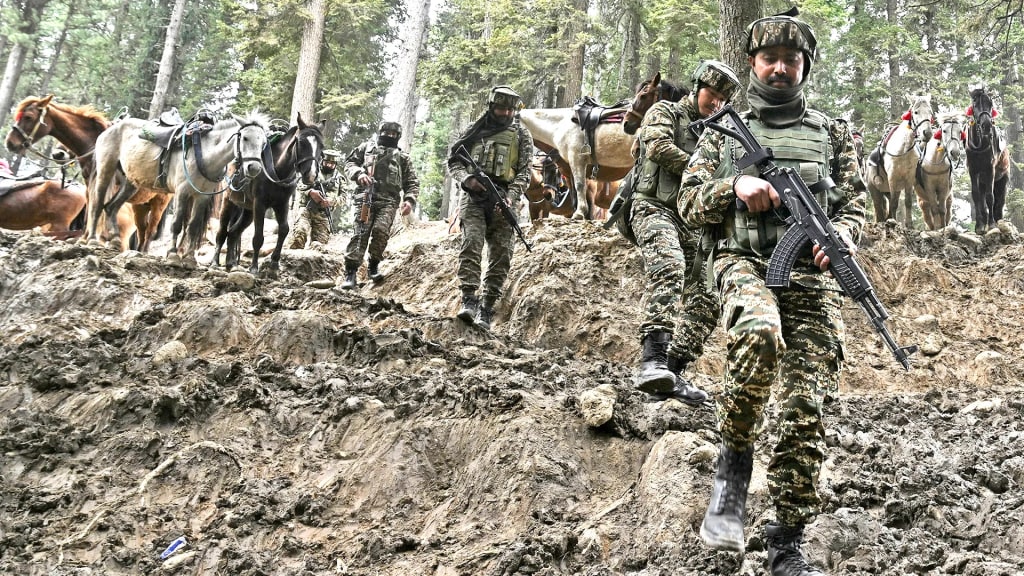
India and Pakistan returned to the spotlight in 2025 due to a major conflict. The recent Indian military action against Pakistan--Operation Sindoor--has serious implications worldwide.
As two nuclear powers, tensions between the two countries are worrying to the international community. This article outlines the reasons for and reactions to India's recent attack on Pakistan.
The Catalyst: Pahalgam Tourist Attack
India's action was immediately triggered by the terrorist attack in Pahalgam, a well-known tourist destination within Jammu and Kashmir. On April 22, 2022, armed militants opened fire on a convoy of buses that were carrying tourists. The attack resulted in 26 fatalities, including 25 Indian nationals and a tourist from Nepal. Additionally, over 40 were injured.
The attack horrified the country. Within hours, Indian intelligence agencies reported that the attackers belonged to the Resistance Front (TRF). The TRF is a well-known proxy group with links to a banned militant group called Lashkar-e-Taiba, which is believed to operate out of Pakistan. Indian authorities claimed that the planning, funding, and training for the attack all indicated it was carried out from Pakistani soil.
India’s Justification for the Attack
In response to the public uproar, Indian leaders said they would "take decisive action." It took India only days to initiate Operation Sindoor, which involved targeting what they said were militant training camps and weapons caches in territory administered by Pakistan.
Indian officials described the attacks as "precise and pre-emptive," designed to mitigate future threats and punish those responsible for the Pahalgam murders. Officials insisted that targets were not civilian or military sites, but were tied to terrorism.
India perceived it as a self-defence action under international law. The government reiterated that despite repeated warnings, diplomatic engagement was not successful, and to not act would only invite more attacks.
Pakistan’s Response and Denials
Pakistan firmly rejected any role in the Pahalgam incident. The government condemned the attack on civilians, but accused India of using the incident as justification for "unprovoked aggression."
In turn, Pakistan launched air patrols and increased military presence in the vicinity of the Line of Control (LoC). Pakistani official claimed that there no terror camps located at the sites targeted by India's airstrike, and that several civilians were injured, and possibly killed.
The Pakistani Prime Minister accused India of staging a "diversionary tactic" to deflect from the internal political problems within India. They expelled the Indian diplomats and indicated there would be consequences if strikes continued to occur.
Escalation and Global Reactions
As tensions increased, the United Nations, the United States, Russia, China, and the Gulf states urged calm. The international community emphasized that the nuclear capabilities of both nations require prudence and diplomacy.
The Secretary of State of the United States asked both sides to refrain from any further escalation, while offering to step in as a mediator. China, a close ally of Pakistan for decades, also called for dialogue but reminded both sides of their "responsibility as nuclear states". The Secretary-General of the United Nations requested both governments go back to the negotiating table.
In the background, all levels of diplomacy were mandated to prevent the outcomes of another Kargil-type war or repeat of the Pulwama-Balakot exchange of 2019.
The Bigger Picture: Old Wounds, New Fears
India and Pakistan have had a conflicted relationship since partition in 1947, and particularly over the status of Kashmir. They have fought wars, fought skirmishes, and terrorism has been a major impediment to resolution.
India blames Pakistan for supporting cross-border militancy. Pakistan blames India for human rights violations in Kashmir. The 2025 conflict is simply another chapter in this fraught relationship.
Release of the negative emotions involved, the problem is that if there is no sustained level of diplomatic engagement, the mutual fear is that if another terrorist attack should trigger conflict, it can lead to a larger multi-state conflict given the rise of hyper-nationalist sentiments in India and Pakistan over the last few years.
About the Creator
Keep reading
More stories from Lightbringer and writers in Journal and other communities.
Who is Richer, Messi or Ronaldo?
In terms of football greats then Lionel Messi and Cristiano Ronaldo are two of the biggest names in the sport’s history. They are not only renowned for their remarkable talent and records on the pitch, but also one of the wealthiest athletes in the world. Many of the fans ask: Who is richer, Messi or Ronaldo? In this post, we will dissect their fortunes up, including their salaries, endorsements, businesses, and overall net worth.
By Lightbringer 9 months ago in Journal
~ Fired ~
— Ai Intrusion ~ Are you Next ~ Is Ai Evolution after your job? — Few workplaces haven't been affected. Ai is in supermarkets, at doctors' offices, and even monitoring farms. I just can't think of anything this machine is not getting into, can you? For instance: Education ~ Law and Tech jobs will one day have a major influence or be taken over by these inanimate machines, with accuracy and vigor. From mechanics' diagnoses to a wide variety of everyday jobs, including fast food workers, with this input having the ability to cut their unnecessary work hours. I'm certain all of us have been touched by this with our short stories and colorful headings, have you? Even comments are very questionable 'Non-Robot' insertions.
By Jay Kantor3 days ago in Journal




Comments
There are no comments for this story
Be the first to respond and start the conversation.