
Why My Neighborhood Library Started Lending Out Smart Devices
How Community Libraries Are Evolving to Bridge the Digital Divide


Never expected to be borrowing a tablet from the library. Yes, I’d borrow books—old paperbacks with pages thumbed soft and the faint smell of dust and glue—but not a tablet. Not some device that could track my reading habits, recommend the next title to dive into, or even help me try out writing real apps. That felt…
The day the cyclone touched down outside Denver was a regular grey-sky Tuesday. I was just on my way to the library, carrying a notebook scrawled full of UX notes from a workshop the other night. Snow clouds filled the sky, and there was that faint aroma of roasting coffee along the streets from the corner cafe. Above the entrance was a hanging banner: “Denver Public Library — Now Lending Smart Devices!”
I paused. Borrowing technology as one would a book? That sounded futuristic, almost absurd. Yet, I’m a person who dedicates at least half of my life to thinking through how technology can optimize learning experiences, so naturally, I was all in.
Quiet Revolution Behind the Circulation Desk
The library felt familiar yet subtly different. The hum of students and families was punctuated by soft beeps from the checkout scanners. A young librarian named Sam greeted me with a warm smile from behind the desk.
“You here to borrow a device?” she asked.
"Okay, but how does it all work?” I asked. Sam launched into how the library had teamed up with a mobile app development Denver firm, in conjunction with mobile app developers Miami, to come up with a simplified system. People could take out tablets, e-readers, or mini AI learning assistants for a fortnight. All applications and learning content and readers’ advisory apps were pre-installed on the device.
“The goal,” Sam said, “is to bridge the digital divide. Some of our neighbors do not have the latest technology at home, and this way, everybody can experiment, learn and create.”
I signed the quick agreement, feeling the cold metal of the tablet in my hands. Heftier than I’d expect. Smooth, slightly warm from the charging station in the library. And then, I was off — officially part of this small, quiet revolution.
Learning From the Borrowers
At first, as a researcher, I had ‘observed’ the teens in the library sharing apps over tablets. Senior citizens gingerly touched the screens under the watchful eyes of the patient volunteers. Parents borrowed AI assistants to help their children with their lessons. It was more like observing a tech toddler grow into some small ecosystem-admittedly, where everybody fed off someone else’s curiosity.
I ran one of the tablets, using an app to make simple interactive stories – and found the interface to be quite smooth, user-friendly, and even fun. I’d bet there’s painstaking design between which buttons go where among those Denver and Miami-based developers, which font to choose, which animation to include, so that the user experience is just a cakewalk for any age group. This wasn’t about an application, but an inviting creative exploration that cut down on the usual tech aversion.
One afternoon, not long ago, I witnessed this teenager Jordan helping out Mrs. Patel, a retired schoolteacher, with a digital library application. Jordan very clearly outlined each and every step and demonstrated how one could go about borrowing an e-book and also adjusting font sizes ‘‘so the letters won’t strain your old eyes’’ to read. The first time Mrs. Patel borrowed an e-book, its lit-up display tickled her so that she burst out laughing. ‘That laughter reverberated in the library, becoming part and parcel of the soft sh-sh-sh of pages and a hint of coffee,’
It hit me, it did: smart use of technology wasn’t a matter of replacing the human side so much as amplifying it.
What I Don’t See Coming
Gradually over the next few weeks, just like he’d said I began noticing little shifts in my behavior. I started ‘borrowing’ the devices for side projects: playing around with coding applications, storyboarding, even testing educational games to suggest to schools. The library became not just a borrowing place — now it was an experimental sand box, a community hub for analog and digital exploration.
And even as I watched, not in anything the slightest bit peripheral to the conversation was how folks swopped tips on app usage, waxed lyrical on their most liked learning tools and even started connecting around ideas for community workshops. It was about the connection, not the devices.
App tracking builds from the Denver-based mobile app development teams and Miami mobile app developers. They worked on creating a middle ground that would allow for smooth checkouts, timely returns, and usage analytics without feeling intrusive in the process. They had designed it to be unobtrusive, technology in the background, with human interaction in focus.
When Technology Feels Personal
I handed in a tablet I’d been playing around with for a while one evening when it was pouring down with rain. Just as I was leaving the circulation desk, I stopped short of going after the little group of ‘neighbors’ that encircled an AI helper there. One wanted to know about green gardening applications, the other about story builders for his kids. Their inquisitiveness was so infectious and I remembered how much pleasure there was in finding out together.
For years, I’d been preaching user experience in workshops and client meetings, often in abstract terms. But here, in this library, the theory came alive. The devices were more than tools. They were bridges between generations, between neighbors, and between strangers, become collaborators in small acts of learning.
I walked home that night, hearing the snow squeak under my boots. The tablet was snug in my bag. Streetlight glowed softly on the wet pavement. I felt quietly satisfied. A library, in the past only for books in hush, now blossomed into a cacophony where technology met human voices, a harmony instead of a duality.
Reflections on Access and Innovation
Borrowing smart devices from the library taught me one very important aspect of access which is it’s not just about having the technology but having it in a way that encourages creativity, learning, and connection. Thoughtful integration, under the direction of skilled mobile app developers in Miami and mobile app development Denver teams, can make seemingly basic services into vitally impactful things.
The library was the embodiment of opportunity to me. I forgot that cool things weren’t exclusively the realm of startups or flashy apps but sometimes just sat quietly in the corner of the community, generously and without fanfare.
I still borrow books, I’m sure. But now, I also check out a tablet or two, maybe for myself, maybe to help a neighbor learn something new. Anyway, each time I am thrilled to be part of a story that’s bigger than any of us – the story where technology doesn’t replace but enhances humanity: one device, one connection, and one curious mind at a time.
About the Creator
Eira Wexford
Eira Wexford is a seasoned writer with 10 years in technology, health, AI and global affairs. She creates engaging content and works with clients across New York, Seattle, Wisconsin, California, and Arizona.
Keep reading
More stories from Eira Wexford and writers in Journal and other communities.
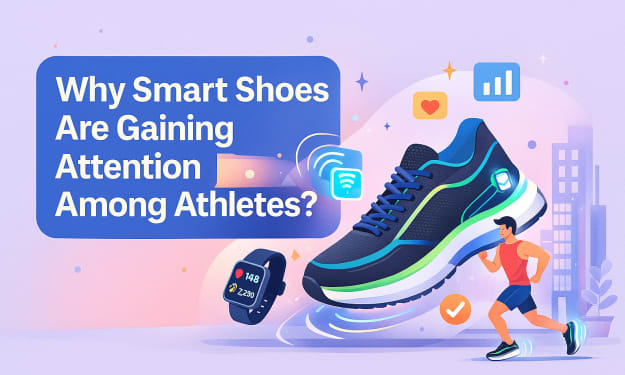
Why Smart Shoes Are Gaining Attention Among Athletes?
The cool air along the Eastbank Esplanade still lingers in my memory whenever I think about how athletes relate to technology today. I remember watching a runner pause gently mid stride, her breath steady but her expression carrying the kind of caution that comes after recovering from an injury. She bent down and tapped a small sensor on her shoe. A moment later her phone revealed soft numbers instead of instructions. She smiled in a way that looked part relief and part recognition. It was the look of someone who finally understood what her body had been trying to say for months.
By Eira Wexford2 months ago in Journal
~ Fired ~
— Ai Intrusion ~ Are you Next ~ Is Ai Evolution after your job? — Few workplaces haven't been affected. Ai is in supermarkets, at doctors' offices, and even monitoring farms. I just can't think of anything this machine is not getting into, can you? For instance: Education ~ Law and Tech jobs will one day have a major influence or be taken over by these inanimate machines, with accuracy and vigor. From mechanics' diagnoses to a wide variety of everyday jobs, including fast food workers, with this input having the ability to cut their unnecessary work hours. I'm certain all of us have been touched by this with our short stories and colorful headings, have you? Even comments are very questionable 'Non-Robot' insertions.
By Jay Kantor4 days ago in Journal
Trump Tells Iran: End Nuclear Ambitions and Stop Killing Protesters or Face US Military Action
A Blunt Warning From Trump Former US president Donald Trump has issued a dramatic warning to Iran, demanding that the country end its nuclear ambitions and halt the killing of protesters, or risk facing US military action. The comments, delivered during a campaign-style address and echoed across social media, have intensified already strained relations between the United States and Iran.
By Aarif Lashari6 days ago in Journal


Comments
There are no comments for this story
Be the first to respond and start the conversation.