
Why the Pyrogen Market Matters
Inside the invisible contaminants shaping global patient safety
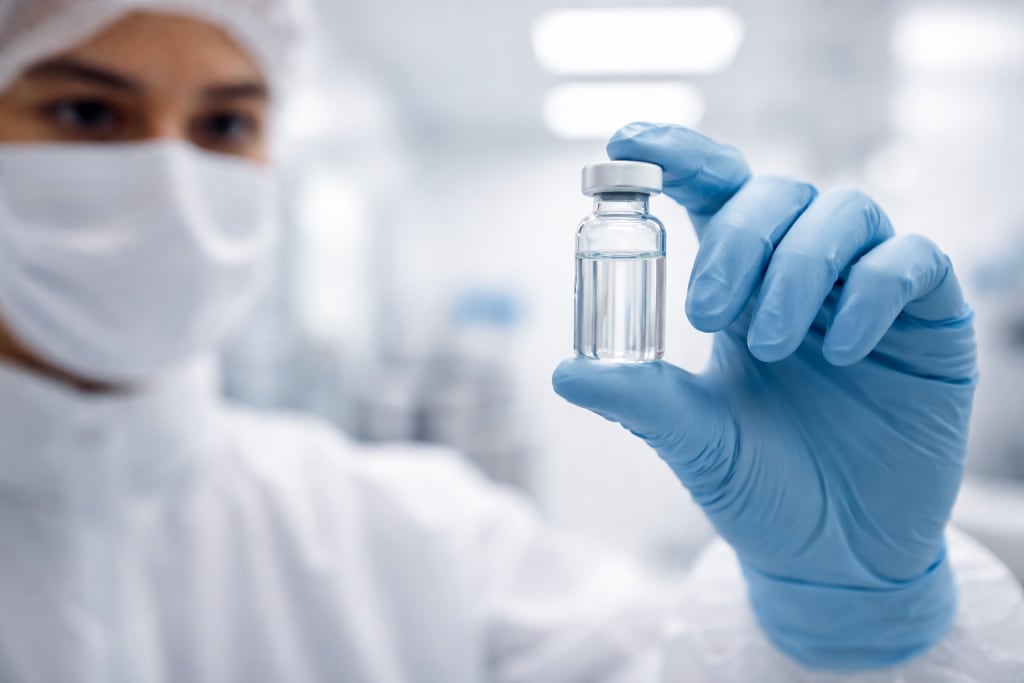
The syringe looks flawless.
Clear liquid. No particles. No discoloration. Nothing to suggest danger.
Yet inside that invisible solution could exist something powerful enough to trigger fever, inflammation, or shock in a patient whose body is already fighting for survival. The threat is not visible to the eye. It leaves no trace in the glass vial. It doesn’t announce itself in bold warning labels.
It’s called a pyrogen.
And while most people will never hear that word, the global Pyrogen Testing Market quietly works behind the scenes to ensure that injectable drugs, vaccines, and medical devices remain safe. According to Mordor Intelligence, pyrogen testing market size in 2026 is estimated at USD 1.7 billion, growing from 2025 value of USD 1.59 billion with 2031 projections showing USD 2.35 billion, growing at 6.7% CAGR over 2026-2031. That growth tells a deeper story—one about modern medicine’s increasing complexity, rising regulatory scrutiny, and the invisible safeguards protecting billions of lives.
Search queries like “what is pyrogen testing in pharmaceuticals,” “why is endotoxin testing important,” and “how are injectable drugs tested for fever-causing contaminants” are becoming more common. Behind those searches is a simple truth: safety in medicine isn’t optional. It’s engineered.
The Invisible Line Between Safety and Risk
Imagine a patient in a hospital ICU receiving an intravenous antibiotic. The formulation has been approved, manufactured, packaged, and transported under strict standards. But if even trace amounts of pyrogens—substances that can induce fever—enter that injectable solution, the consequences could be severe.
Pyrogens often originate from bacterial endotoxins. Even after bacteria are destroyed during sterilization, their endotoxins can remain. These microscopic remnants can trigger immune responses when introduced into the bloodstream.
That is why pyrogen testing is not a final checkbox. It is a foundational safeguard in pharmaceutical manufacturing.
The growth of biologics, vaccines, injectable therapies, and advanced medical devices has intensified the need for reliable pyrogen detection. As healthcare systems expand and pharmaceutical pipelines become more complex, so too does the responsibility to eliminate contamination risks at every stage.
The Pyrogen Testing Market’s projected 6.70% CAGR reflects several underlying drivers:
- Expansion of injectable drug production
- Increasing regulatory compliance requirements
- Growth in biologics and biosimilars
- Rising global focus on patient safety standards
This isn’t a consumer-facing market with flashy advertisements. It is a backbone industry—quiet but indispensable.
And it connects to a broader ecosystem of pharmaceutical quality and testing markets. For example, sectors like the Methionine Market
also demonstrate how specialized biochemical compounds and testing environments intersect with healthcare and life sciences manufacturing. While entirely different in application, both markets reflect how precision chemistry underpins modern global supply chains.
Why Pyrogen Testing Is Becoming More Critical
Global pharmaceutical production is no longer centralized. Manufacturing spans continents. Supply chains are longer. Cold-chain logistics are more complex. Biologics are more sensitive. Vaccines are produced at unprecedented scale.
In this environment, contamination risks can multiply.
Search trends such as “endotoxin limit guidelines,” “pyrogen-free manufacturing process,” and “LAL vs MAT testing methods” show increasing interest in testing methodologies. Healthcare professionals, researchers, and manufacturers are all seeking clarity.
Why?
Because even trace levels matter.
Modern pyrogen testing methods have evolved to ensure faster detection, improved sensitivity, and greater regulatory alignment. Pharmaceutical companies must meet stringent safety thresholds before a product ever reaches patients.
And the stakes are not theoretical.
A contaminated injectable product can result in:
- Patient hospitalization
- Product recalls
- Regulatory penalties
- Loss of trust in pharmaceutical brands
- Significant financial damage
As emerging markets expand their pharmaceutical capabilities and developed nations tighten oversight standards, the demand for advanced pyrogen testing solutions continues to rise.
This sustained need is what underpins the market’s projected 12.5% compound annual growth rate during the forecast period, as reported by Mordor Intelligence.
But beyond numbers lies a more human reality.
The Human Side of an Invisible Market
In a pediatric ward, a newborn receives a life-saving injectable treatment.
In an oncology clinic, a patient begins a biologic therapy infusion.
In a rural hospital, a vaccine is administered to prevent an outbreak.
None of these patients will ask whether pyrogen testing was performed. They assume safety. They trust the system.
That trust is built on invisible layers of quality control.
Pyrogen testing is not glamorous. It doesn’t dominate headlines. Yet it operates at the intersection of science, regulation, and ethics. It embodies the idea that prevention is more powerful than reaction.
The rise of advanced therapeutics—cell therapies, gene therapies, personalized biologics—adds another layer of complexity. These therapies often require sterile, highly controlled environments. Testing must keep pace with innovation.
At the same time, regulatory authorities worldwide continue to refine and enforce standards for endotoxin and pyrogen limits. Manufacturers cannot afford to lag.
The result?
Steady investment in technologies, laboratories, compliance frameworks, and expertise.
When analysts project consistent CAGR growth, they are not merely forecasting revenue. They are mapping the trajectory of responsibility.
A Market Driven by Accountability
The Pyrogen Testing Market represents a broader shift in healthcare: accountability is no longer reactive. It is proactive.
- Hospitals want assurance.
- Patients expect transparency.
- Regulators demand documentation.
- Manufacturers require precision.
This is not a short-term trend. It is structural.
As injectable drug production scales globally, particularly in emerging pharmaceutical hubs, pyrogen testing becomes embedded into every stage of development—from raw material validation to final product release.
Digitalization and automation are also influencing laboratory processes. Faster turnaround times and data integration improve compliance and traceability.
When someone types “how do pharmaceutical companies ensure sterile injectables are safe” into a search engine, they are unknowingly touching this ecosystem.
And that ecosystem is expanding.
A 6.70% CAGR may sound like a statistic. In practice, it represents growing laboratories, trained professionals, regulatory alignment, and technology refinement.
It represents systems designed to prevent harm before it happens.
The Bigger Picture: Why It Should Matter to Everyone
Most of us will interact with injectable medicine at some point in our lives—vaccines, antibiotics, anesthesia, biologics.
We rarely think about what doesn’t go wrong.
We focus on innovation, breakthrough drugs, and new treatments. But without rigorous safety testing—including pyrogen detection—none of those breakthroughs would be viable.
The Pyrogen Testing Market’s steady growth signals an important message: healthcare safety infrastructure is strengthening, not weakening.
As pharmaceutical innovation accelerates globally, invisible safeguards must scale alongside it.
And that raises a final question.
If patient safety depends so heavily on systems we never see, how often do we pause to consider the silent industries working every day to protect us?
What other invisible markets shape the healthcare outcomes we take for granted?
About the Creator
Jordan Stolz Sets Olympic Record, Wins Gold in 1,000m at Milan Cortina Games
Milan, Italy (AP) — Jordan Stolz has imagined this moment since he was five years old. Back then, he was just a kid in Wisconsin, skating on a frozen backyard pond after watching the 2010 Winter Olympics and falling in love with speedskating. He dreamed of standing atop an Olympic podium one day.
By Omasanjuwa Ogharandukun5 days ago in Journal



Comments
There are no comments for this story
Be the first to respond and start the conversation.