
Work Clothes Suck
Comfort and Freedom Are the NEW Professional

I’m stealing this title and mindset from one of my favorite female freelancers and freelance revolution promoters, Sarah Duran (https://www.linkedin.com/in/sarah-duran-72246817/).
She listed this as one of 10 things freelancers know that people with “real jobs” are just now figuring out: (https://www.linkedin.com/feed/update/urn:li:activity:7217546128790052865/).
Freedom and the Freelance Revolution
I recently published an article on the modern Freelance Revolution, where I traced the basic concepts back to other monumental shifts in how we work. One of the earliest movements, called “The Cadbury Concept,” sought to make the work environment more pleasant for workers. While they likely did not relax that day’s accepted mores of dress at work, one of the ways modern freelancers translate those principles is by being relaxed and comfy as we create.
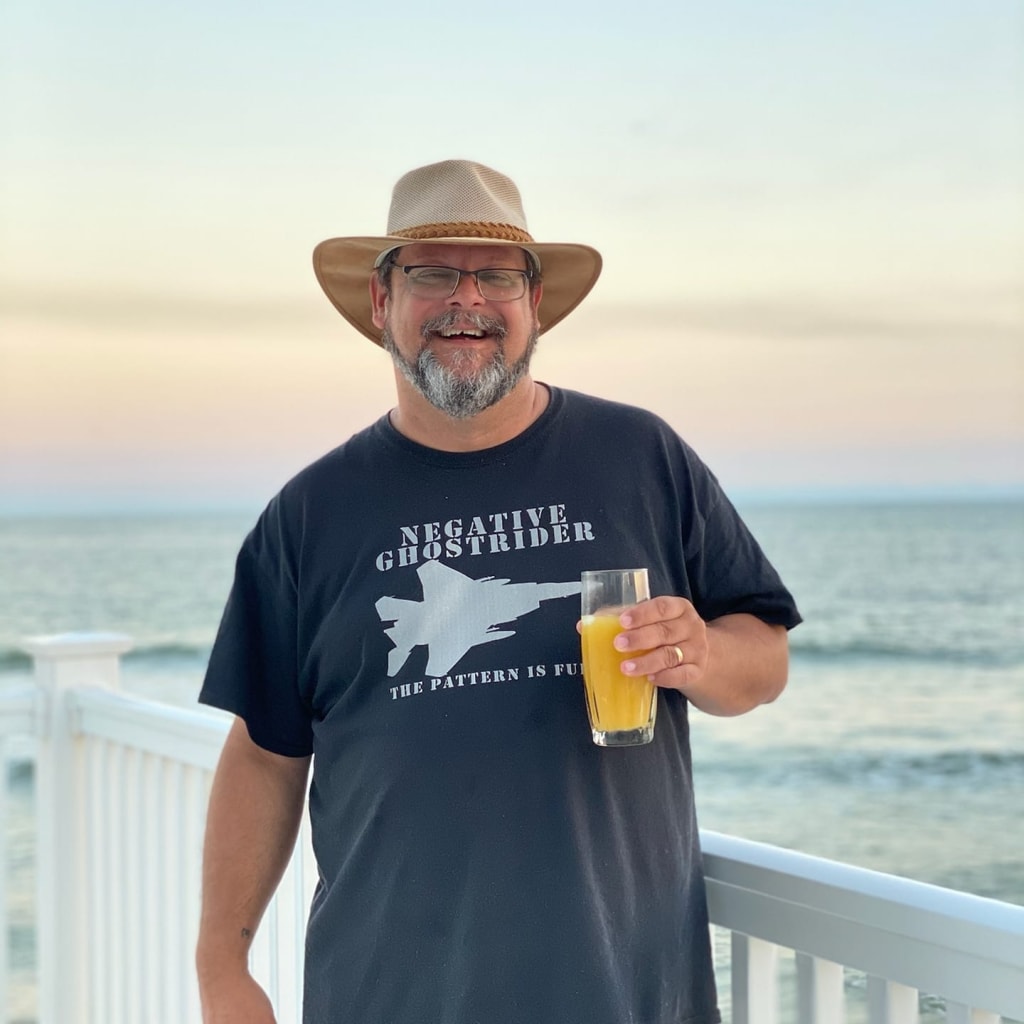
I see it as taking “business casual” to an entirely new and better level. It’s my business, so I work in casual clothing. My daily attire (somewhat reflected in the top photo) is a T-shirt and running shorts, and I am barefoot with plenty of coffee nearby. (OK, my feet seem to stay cold as I get older, so I frequently wear soft houseshoes.)
I recently conducted a professional Google videoconference in a golf shirt (which could be seen) and running shorts (which were underneath the table). I also did a Zoom video interview just yesterday from a hospital room in a t-shirt, pajamas, and hat.
I see it as taking “business casual” to an entirely new and better level. It’s my business, so I work in casual clothing.
I work from home, and my daily productivity schedule is fully conducive to comfortable working attire. Tattoos (I have two), piercings (I have none), colored hair (I have little at all), and other “personal statements” are also the norm among freelancers (and others, too, without a doubt).
Combining Freedom and Professionalism
One of the choicest aspects of freelancing is that my clients choose me for my work, not my appearance or speech.
I’m a writer from Northeast Tennessee, the foothills of the Appalachian Mountains, and I sound like cornbread when I speak. I see it on the faces of many when they hear me for the first time in a video meeting. I’m used to it and do not take offense because the ensuing conversation quickly reveals my knowledge and professionalism, and the subsequent work is far above satisfactory.
My business is 99.99% digital, so clients rarely see or hear me in person. All they have to judge me by is the quality of my work and how I conduct my business, and I’m more than fine with that.
All they have to judge me by is the quality of my work and how I conduct my business, and I’m more than fine with that.
In fact, I showcase this casual appearance in my own LinkedIn header photo.
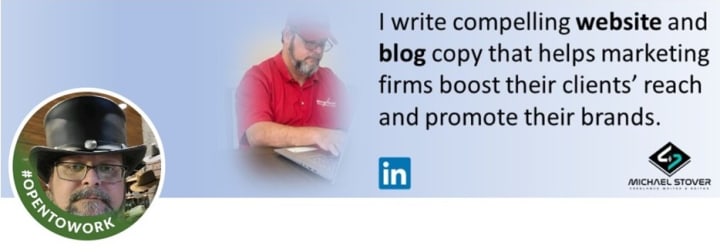
Full disclosure: I wore shorts in this photo, too!
Judging Freelancers By a New Gauge
With more and more people building freelance careers in this new Freelance Revolution, it’s time to begin evaluating freelancers using a new gauge.
Here is Sarah Duran’s full LinkedIn post that sparked my rant:
10 things freelancers know that people with “real jobs” are just now figuring out:
- 9–5 jobs aren’t actually more “secure.”
- Having your kid, or dog, or mother-in-law in the background of your Zoom call doesn’t mean you’re unprofessional; it means you’re human.
- Commutes are soul-crushing.
- Being a working parent is WAY F***ING EASIER when you’re in charge of the what/when/where/how of your work.
- Work clothes suck.
- “Benefits” hold you hostage to shitty jobs working for shitty people.
- Life is too short to spend 1/3 of our lives (the time we spend at a 9–5 job) doing something we hate.
- Going for a run, working in the garden, or hitting the pool in the middle of the day makes you MORE productive, not less.
- Managers wouldn’t need to exist if people did what they loved.
- The 8-hour-day and 40-hour-week are antiquated.
As we celebrate our freelancing freedom, let’s also be quick to point out the benefits we bring to our clients:
- A high level of skills and knowledge in our chosen niche/industry/specialization
- Freelancers cost you less (no office space and equipment costs, no insurance and retirement costs, etc.)
- Greater flexibility in getting the work done on your timetable
- A vast global talent pool that doesn’t restrict more rural businesses
- Freelancers work with many clients, so they can bring fresh ideas and perspectives to your table
The benefits just keep adding up, and business owners should capitalize on using freelance talent.
How About Your Freelance Career?
I’m always interested in other freelancers’ perspectives and ideas. Comment and tell me about your workday, most productive habits, and more. We can always learn more from one another.
The modern Freelance Revolution marches on — are you on board?
About the Creator
Michael Stover
Father of five, proud grandfather, wife to one forever, cancer and COVID survivor, and experienced author and freelance copywriter. I write mostly about the craft of writing and operating a freelance business.
Keep reading
More stories from Michael Stover and writers in Journal and other communities.
The Freelance Revolution
Work is always in flux. What we do, how we do it, and how it impacts other aspects of life are ever-changing elements of developing societies. Every generation seems to have its own “great” work-life event. But recent generations have seen them pile on much faster.
By Michael Stover2 years ago in Journal
~ Fired ~
— Ai Intrusion ~ Are you Next ~ Is Ai Evolution after your job? — Few workplaces haven't been affected. Ai is in supermarkets, at doctors' offices, and even monitoring farms. I just can't think of anything this machine is not getting into, can you? For instance: Education ~ Law and Tech jobs will one day have a major influence or be taken over by these inanimate machines, with accuracy and vigor. From mechanics' diagnoses to a wide variety of everyday jobs, including fast food workers, with this input having the ability to cut their unnecessary work hours. I'm certain all of us have been touched by this with our short stories and colorful headings, have you? Even comments are very questionable 'Non-Robot' insertions.
By Jay Kantor21 days ago in Journal
The Man Who Refused to Die
On November 17, 2012, a small fiberglass fishing boat left the Pacific coast of Mexico near Costa Azul. On board were two men: an experienced fisherman named José and his young crewmate, Ezequiel. They were heading out for what should have been a routine two-day shark fishing trip into the vast waters of the Pacific Ocean.
By Ibrahim Shah 6 days ago in Journal



Comments
There are no comments for this story
Be the first to respond and start the conversation.