
Basement HVAC Design in Colorado: How to Finish a Basement Without Cold Rooms, Stale Air, or Hidden Moisture Problems
A comfortable basement starts with airflow, not just drywall

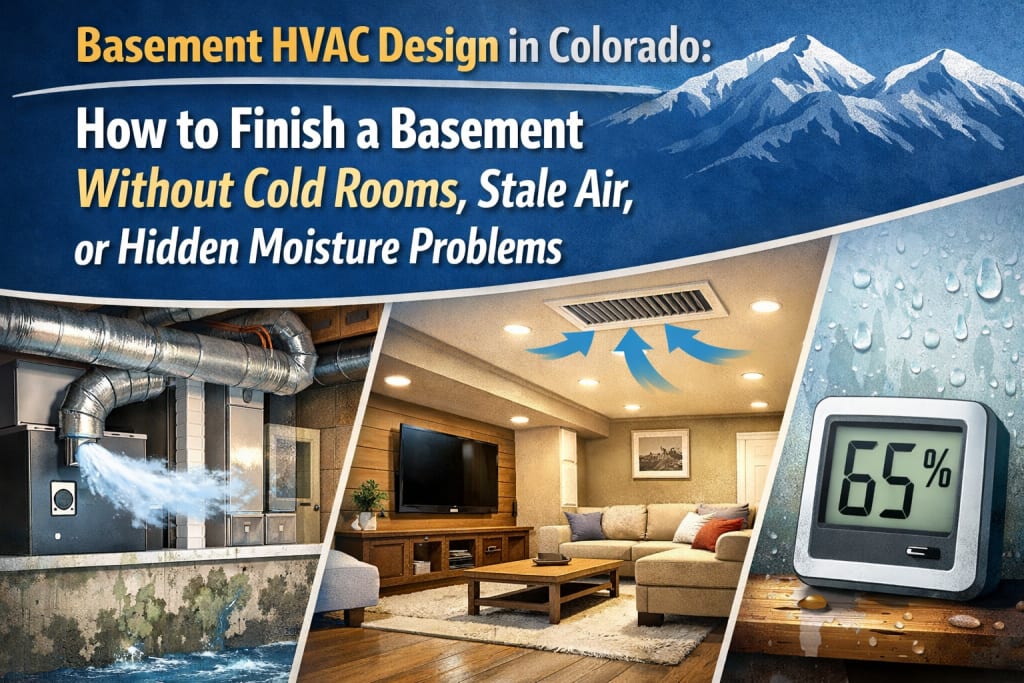
When homeowners start planning finishing a basement in Colorado, they often focus on layout, flooring, and lighting. While those elements matter, true comfort begins with proper airflow and HVAC planning. Without the right design, basements can quickly become cold, stuffy, or prone to moisture buildup.
A well-designed HVAC system ensures that your basement feels like a natural extension of your home rather than an afterthought. Experienced basement remodel contractors understand that heating, cooling, and ventilation must be planned before walls are closed and finishes are installed. This step is critical for creating custom basements that remain comfortable year-round.
Why basement HVAC design is different (especially in Colorado)
Basements behave differently from above-ground living spaces. In Colorado, climate conditions cold winters, dry air, and fluctuating temperatures make HVAC planning even more important during basement remodeling projects.
Because basements sit below grade, they naturally stay cooler and can retain moisture more easily. Air circulation is also limited if the design only focuses on supply vents without return airflow. Additionally, Colorado homes often experience strong seasonal temperature shifts, which can cause uneven heating if the basement isn’t integrated properly with the main HVAC system.
Another factor is insulation and airflow balance. During building basement walls, insulation choices, duct placement, and airflow design all work together to determine how comfortable the space will feel in every season.
Radon + basements + remodel timing
Radon is a natural gas that can enter homes through foundation cracks and soil beneath the house. In Colorado, radon awareness is high because levels can vary significantly depending on the area. This is especially important when planning a basement guest suite, home office, or additional living area.
When remodeling a basement, it’s the perfect time to test for radon and, if necessary, install mitigation systems. Doing this before the basement is fully finished can save time and prevent expensive changes later. Professional contractors often recommend integrating radon planning into the early stages of basement finishing so the system works seamlessly with ventilation and HVAC upgrades.
“Did you know?” facts that change how you should plan a basement finish
Radon testing is easiest in winter
During colder months, homes are typically sealed more tightly, making radon testing more accurate. This timing can provide better insight into your basement’s air quality before finishing begins.
Ventilation standards keep tightening as filtration expectations rise
Modern homeowners expect cleaner indoor air. As building standards evolve, ventilation systems are becoming more advanced, focusing on filtration, air exchange, and humidity balance.
Basement air can be “clean” but still uncomfortable
Even if air quality tests show good results, poor airflow can still lead to uneven temperatures, stale air, or that familiar “basement smell.” Comfort requires both clean air and balanced circulation.
Basement HVAC options: what works best for your layout
The right HVAC approach depends on how your basement will be used and how your home’s current system is designed. Some homes extend their existing HVAC system, while others benefit from dedicated solutions.
Common HVAC strategies used in custom basements include:
- Extending the main HVAC system with balanced supply and return vents
- Adding zoning systems to control basement temperatures separately
- Installing ductless mini-split systems for targeted heating and cooling
- Using energy recovery ventilators (ERVs) for improved airflow
- Adding dehumidification solutions to manage moisture
Each solution has benefits depending on your home layout, ceiling height, and basement usage. A professional assessment ensures your HVAC system supports long-term comfort and efficiency.
A practical HVAC checklist before you finish your basement
1) Define “how the basement will be used” (not just the floor plan)
Before installing ductwork or insulation, determine how the basement will function. Will it include bedrooms, a home theater, or a workspace? Different uses require different airflow strategies.
2) Confirm your baseline: moisture history + radon test plan
Understanding your basement’s moisture levels helps guide insulation and ventilation decisions. Planning radon testing early ensures safety and compliance.
3) Plan supply AND return air (to prevent “stuffy room syndrome”)
Many basements have supply vents but no return airflow. This imbalance traps air and causes uneven temperatures. Balanced airflow improves comfort dramatically.
4) Don't guess on ventilation make it intentional
Proper ventilation removes stale air and introduces fresh air. Without it, basements can feel closed off even with high-quality finishes.
5) Protect comfort with “basement-specific” insulation thinking
Basement insulation should address both temperature and moisture control. This step plays a major role in maintaining consistent comfort throughout the year.
Local angle: Front Range realities that affect basement comfort
Homes along Colorado’s Front Range face unique conditions that influence HVAC design during basement remodeling.
Stack effect can steal your warm air
During winter, warm air rises through the home, pulling cooler air into the basement. Without balanced airflow, this effect can leave basements colder than expected.
Basements need “quiet” comfort strategies
Many homeowners use basements for relaxation, entertainment, or work. HVAC systems should operate efficiently while remaining quiet and unobtrusive.
Radon awareness matters more when basements become bedrooms
When basements include sleeping areas, air quality becomes even more important. Proper testing and ventilation ensure a safe and comfortable environment.
Want a basement that feels like the rest of your home?
A successful basement finish is one where the space feels consistent with the rest of the house. Temperatures remain balanced, airflow is steady, and the environment feels fresh rather than closed off.
Professional planning during the early stages of finishing a basement in Colorado helps prevent common problems like cold spots, humidity issues, and stale air circulation. By focusing on HVAC design alongside layout and aesthetics, homeowners can create living spaces that truly enhance their homes.
Whether you’re building a family room, guest suite, or entertainment area, working with experienced professionals ensures your basement is comfortable, efficient, and built to last.
About the Creator
NOCO Accents
At NOCO Accents in Windsor Colorado, Our specialties span the spectrum of home and business improvement. We create custom accent walls that pop,
Keep reading
More stories from NOCO Accents and writers in Lifehack and other communities.
Basement Zoning & Code Compliance: What You Need to Know in Windsor, CO
Finishing a basement is one of the most exciting remodeling projects for Colorado homeowners. Whether you’re dreaming of a cozy family lounge, a home theater, or a rental suite for extra income, the possibilities are endless. But before you start tearing down walls or shopping for furniture, there’s a critical step you can’t skip: understanding zoning laws and building code compliance.
By NOCO Accents5 months ago in Lifehack
The Invisible Details That Shape Gatherings: A Personal Reflection on Table and Chair Rentals in Conroe, Texas
I never imagined that tables and chairs could carry emotional weight. For most of my life, they were simply objects — functional, practical, easy to overlook. A table was something you ate at. A chair was something you sat on. Their presence felt ordinary, almost invisible.
By House Doctor3 days ago in Lifehack



Comments
There are no comments for this story
Be the first to respond and start the conversation.