
Gua Sha for Lymphatic Drainage: Principles, Evidence, and a Practical Guide
Discover how gentle gua sha techniques support lymphatic drainage, reduce puffiness, and promote circulation with safe, practical routines.
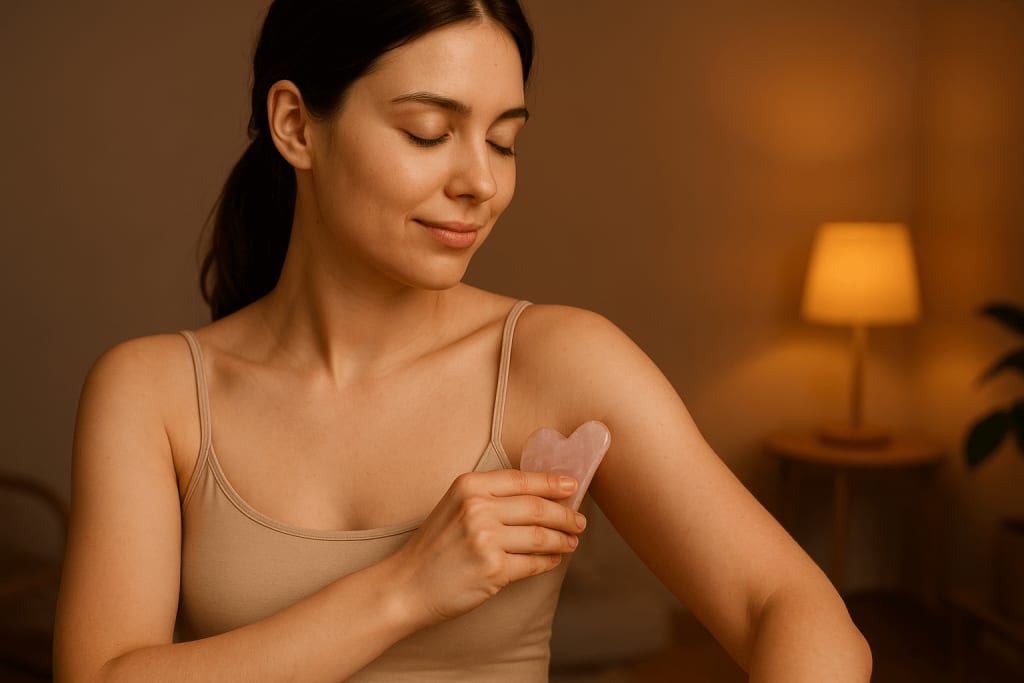
1. Why Talk About Gua Sha and Lymphatic Drainage Together?
“Lymphatic drainage” refers to facilitating fluid return and reducing swelling. “Gua Sha” is a traditional scraping technique using tools on the skin. The two are not the same—but when Gua Sha is applied gently, in the correct direction and with low pressure, it may assist the superficial lymphatic system through mechanical stimulation of the skin and fascia.
The aim here is not to exaggerate or dismiss Gua Sha but to present a measurable, repeatable, and safe approach for daily use.
2. Core Logic: Three Layers – Three Routes – Three Rhythms
- Layers: Skin → superficial fascia → deep fascia/muscle. Lymph drainage mainly involves the skin and superficial fascia.
- Routes: Capillary lymphatics → collecting vessels (towards lymph nodes) → main trunks (thoracic duct/right lymphatic duct). Always “open the gate near the center before working distally.”
- Rhythms:
- Spontaneous lymphatic contraction;
- Muscle and diaphragm pump;
- External mechanical force (e.g., Gua Sha).
3. Evidence—What We Can and Cannot Say
- High-quality studies directly proving “Gua Sha = better lymphatic drainage” are limited. Most research focuses on pain relief and improved circulation.
- Reasonable inference: Gentle, unidirectional scraping likely supports microcirculation and superficial fluid movement, useful for mild swelling or puffiness.
- Important: For diagnosed lymphedema (e.g., post-surgery), medical-grade Manual Lymphatic Drainage (MLD), compression therapy, and professional care remain primary.
4. Who Might Benefit? Who Should Avoid?
- Potentially Beneficial
- Office workers or frequent travelers with mild leg or facial swelling
- Premenstrual or diet-related fluid retention
- General heaviness or puffiness after long sedentary hours
- Avoid or Seek Professional Advice First
- Diagnosed lymphedema
- Acute infection, open wounds, active skin inflammation
- Pregnancy (late stage), severe heart/kidney conditions, active cancer
- Unilateral unexplained swelling, fever, or pain → see a doctor first
5. Tools and Pressure Scale
- Tools: Smooth-edged gua sha boards (jade, steel, resin). Use light oil (jojoba, coconut fractionated) to reduce friction.
- Pressure scale (0–10):
- 2–3/10: Skin and fascia only—ideal for lymph drainage.
- 4–5/10: Myofascial release—use sparingly, not for drainage steps.
- Goal = gentle sliding, not raising bruises or petechiae.
6. Four Golden Rules
- Proximal before distal: Open nodes at collarbone, armpit, groin first.
- Follow lymph flow: Always stroke toward major drainage points.
- Low pressure, high repetitions: Light, repetitive sweeps.
- Sync with breath: Exhale during each stroke for diaphragm support.
7. A 10-Minute Quick Routine (Commute/Office Break)
- Goal: Reduce puffiness in face and legs.
- Open gates (2 min): Gentle strokes at collarbone hollows, armpits, groin.
- Face & Neck (3 min): Jawline → ear → collarbone; nose → cheekbone → ear; forehead → temple → ear.
- Lower legs (3 min): Foot dorsum → ankle → shin → behind knee.
- Finish (2 min): Revisit collarbone, armpit, groin; 3 deep belly breaths.
8. A 30-Minute Full-Body Routine (Evening)
- Sequence: Open → Arms → Torso → Legs → Reopen
- Open (5 min): Collarbone, armpit, groin sweeps.
- Arms (6–8 min): Hand → wrist → forearm → elbow crease → inner upper arm → armpit.
- Torso (5–6 min): Gentle clockwise belly sweeps, waist upward to armpit, chest toward armpit.
- Legs (10 min): Foot → ankle → shin → knee crease → thigh → groin.
- Reopen (2 min): Collarbone/armpit/groin again.
9. Tracking Results: Make It Measurable
- Self-rating: Morning “puffiness scale” (0–10).
- Measurements: Ankle, calf, thigh circumference at consistent times.
- Photos: Same angle, light, and background for comparison.
- Context notes: Salt intake, sleep, menstruation, travel.
10. Difference from Professional MLD
- MLD: Very gentle skin stretches with rhythmic patterns, clinically tested.
- Gua Sha: Home technique, aiming to approximate lymphatic stimulation, not replace therapy.
- Best synergy: Compression garments (if prescribed) + movement/exercise + hydration + breathing + gentle Gua Sha.
11. Common Mistakes
- “More pressure = better” → Wrong. Stay light.
- Back-and-forth scraping → Wrong. Always one direction.
- Skipping node areas → Wrong. Always open nodes first.
- Expecting visible Sha (redness) → Wrong. Drainage ≠ bruising.
- Overdoing daily sessions → 1x/day or every other day is enough.
12. Adjustments for Specific Scenarios
- Travel/long sitting: Focus on lower limb sweeps with ankle pumps.
- PMS/facial puffiness: Emphasize neck–ear–collarbone drainage.
- Post-exercise: Drainage first, deeper strokes second, finish with gentle sweeps.
13. Red Flags – Stop and Seek Medical Advice
- Heat, redness, severe pain in area
- Unilateral progressive swelling
- Fever, chills, or recent surgery wounds
- Any sign of blood clot risk
14. A Weekly Practice Plan (Example)
- Mon/Wed/Fri: Quick 10-min morning routine
- Tue/Thu: Full 30-min evening routine
- Weekend: Choose either, plus walking 6000+ steps and 2 breathing sessions
- Record: Puffiness score + measurements twice weekly
15. Conclusion: Gentle Consistency Matters
Lymphatic Gua Sha is not a “miracle cure.” It works best when practiced gently, consistently, and in harmony with breathing and lifestyle habits. For mild puffiness or fluid retention, it offers a safe daily tool. For medical-grade lymphedema or unexplained swelling, professional care is essential.
When in doubt, go lighter, go slower, and measure your results.
About the Creator
Moving Across Boise Without the Stress: What Most People Don’t Plan For
Moving within the same city often feels easier than it actually is. Many people assume that a short distance means fewer complications, but local moves come with their own challenges. In Boise, factors like traffic flow, neighborhood layouts, parking access, and timing can quickly turn a simple relocation into a stressful experience if they’re not considered ahead of time.
By House Doctor4 days ago in Lifehack
Day One Is Too Late
The first week at a new job used to be about paperwork, awkward introductions, and the slow realization that no one had actually prepared for the new hire’s arrival. The desk might be empty, the login credentials delayed, the training materials outdated... Everyone involved would shrug and say it was just how things were done. But the cost of that approach, which typically translates into lost momentum, frustration, and the quiet erosion of trust, was always there, even if it went unmeasured.
By Angela Ash2 days ago in Lifehack
Self Help: Grifters' Gospel
On Self-Help, Snake Oil, and the Illusion of Change Psychology professionals and students can be imagined on two opposite sides of a line called self-help books: likely a larger group opposes pop-science and step-by-step manuals filled with talk of success, journaling, and not giving a f**k; others love them, but they aren’t many.
By Avocado Nunzella BSc (Psych) -- M.A.P about 13 hours ago in BookClub


Comments
There are no comments for this story
Be the first to respond and start the conversation.