
Huawei Mate 80 Pro Max
The Dual-Zoom China Flagship Most People Will Only See in Reviews

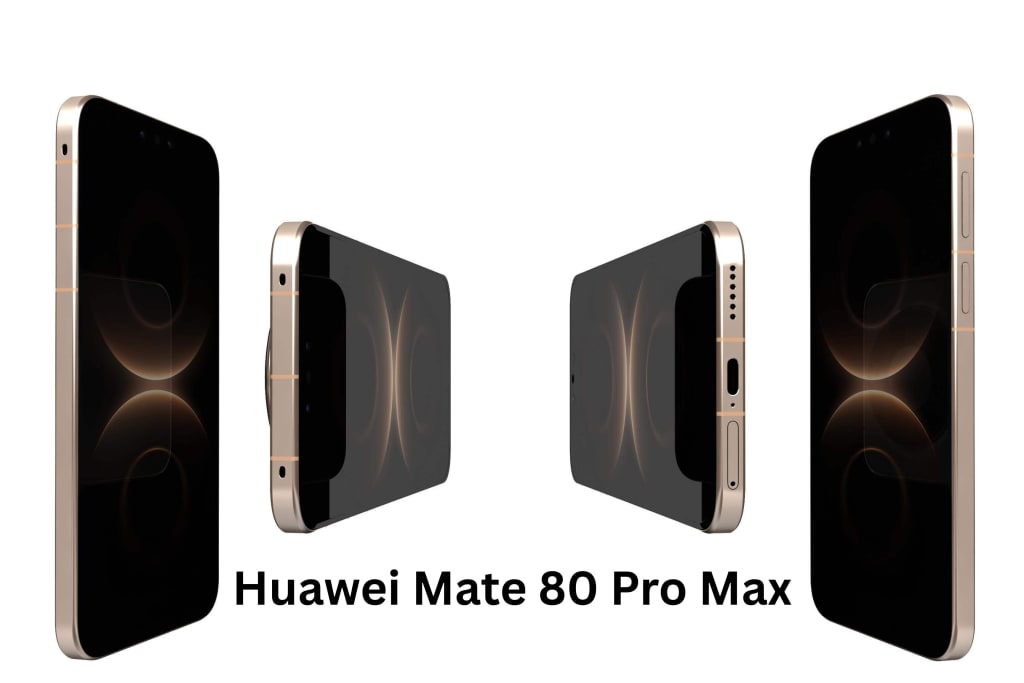
Every year, a few phones come along that feel like they were built to prove a point, not just fill a product lineup. The Huawei Mate 80 Pro Max is one of those devices.
On paper, it’s a monster: dual periscope cameras, a custom Kirin chip built on China’s most advanced process so far, a massive battery, and a huge, ultra-bright LTPO display. In practice, it’s even more interesting because of where it doesn’t launch.
Right now, the Mate 80 series is officially limited to China, with Huawei promising global markets “soon” but offering no clear timeline.
In the meantime, anyone outside those regions is left watching from the sidelines while Huawei keeps building some of the boldest hardware in the game.
And at the top of that stack sits the Mate 80 Pro Max.
A Flagship Built for Huawei’s Home Turf
Huawei didn’t just drop one phone—it launched a full Mate 80 family: Mate 80, Mate 80 Pro, Mate 80 Pro Max, and Mate 80 RS Ultimate. All of them are powered by Huawei’s in-house Kirin chips, all of them run HarmonyOS, and all of them are, at least for now, China-first devices.
The Mate 80 Pro Max is the one that quietly steals the spotlight:
it takes the Mate 80 Pro’s solid base
stretches the display
adds a second periscope camera
packs in a larger battery
It feels less like a simple “bigger Pro” and more like Huawei asking, “What happens if we turn everything up one more notch?”
Design and Display: Big, Bright, and Built to Show Off
Visually, the Mate 80 Pro Max looks every bit like a modern Huawei flagship—clean lines, premium materials, and a big emphasis on the screen itself.
The phone comes in around 239 grams, with dimensions roughly 164.4 x 79 x 8.3 mm, and uses full metal on the outside for a solid, high-end hand feel. This isn’t a small device; it’s built for people who like big phones and don’t mind using two hands when needed.
The display is where it really leans into the “Max” name:
about 6.9 inches
LTPO AMOLED
120 Hz refresh
FHD+-class resolution around 1320 × 2848
pixel density in the mid-400s
peak brightness reportedly up to 8,000 nits
That brightness figure is the kind of spec you don’t really appreciate until you’re outdoors on a bright day. At that point, it’s not just a number; it’s the difference between squinting at a washed-out screen and comfortably seeing your frame, your subject, and your controls.
It’s a very “Huawei” sort of display: not chasing crazy resolutions for their own sake, but tuning refresh rate, brightness, and viewing quality in a way that feels balanced and premium.
The Camera System: Dual Periscope Means Business
The camera setup is where the Mate 80 Pro Max becomes genuinely unusual.
Huawei starts with the same basic configuration as the Mate 80 Pro—a triple rear camera array with:
a 50 MP main camera with variable aperture and optical stabilization
a 40 MP ultra-wide camera for wide scenes
a periscope telephoto with optical zoom and OIS
Then, on the Pro Max, it does something extra: it adds a second periscope lens.
The Mate 80 Pro Max includes an additional 50 MP periscope camera with real optical zoom up to about 6.2x, also with OIS. Paired with the first telephoto, this gives Huawei a lot of flexibility in how it handles mid-range and long-range zoom.
In simple terms:
one periscope is tuned for more everyday telephoto distances
the second is tuned for longer reach and more specialized zoom shots
This dual-periscope approach lets the phone avoid relying too heavily on digital zoom at either end. Instead of stretching one lens beyond its ideal range, the system can switch between lenses intelligently and fill the gaps with processing.
It’s the kind of setup you’d expect from a company that still wants to compete in the camera arms race, even if it’s not competing in every market anymore.
Front Camera and Sensors: Not Just the Back Doing the Work
Huawei doesn’t ignore the front of the phone either. The Mate 80 series uses a 13 MP selfie camera paired with 3D sensors like a ToF unit, which helps with both secure face unlock and more accurate depth mapping.
That means:
more reliable face ID-style unlocking
cleaner portrait selfies with more natural background blur
better separation between subject and background in tricky lighting
Combined with Huawei’s XMAGE processing, the front camera feels like part of a serious imaging package rather than a feature tacked on at the last minute.
The Chip: Kirin 9030 Pro and China’s Most Advanced Process (So Far)
Under the hood, the Mate 80 Pro Max uses Huawei’s Kirin 9030 Pro chipset—the more powerful version of the Kirin 9030 that powers the standard Mate 80 and base Pro variants.
This chip is manufactured by SMIC on its N+3 process, which is effectively a heavily optimized 7 nm-class node, pushed as far as possible without EUV tools.
From a camera perspective, that matters more than it might sound:
more CPU and GPU headroom for real-time processing
better AI performance for scene detection, noise reduction, and HDR
improved efficiency so the phone doesn’t overheat as quickly during long shooting sessions
Huawei claims big performance gains over older Kirin generations, and while it’s still behind the absolute leading 5 nm and 3 nm chips from other vendors, the story here isn’t about being “fastest in the world.” It’s about how far Huawei can push domestic silicon—and then build a flagship camera experience on top of it.
Battery and Charging: Built for Long, Heavy Use
A big screen and powerful camera mean nothing if the battery can’t keep up. Huawei clearly knows this, because the Mate 80 Pro Max is equipped with a substantial 6,000 mAh battery.
On top of the capacity, Huawei supports:
very fast wired charging
high-wattage wireless charging
reverse wireless charging
On the Mate 80 Pro, charging speeds reach around 100 W wired and 80 W wireless, and the Pro Max follows in the same high-end direction. In reality, this means you can drain the phone hard—camera, data, gaming, navigation—and still top it back up quickly with the right charger.
It fits Huawei’s pattern: these devices are built for people who actually use their phones heavily all day, not just for occasional scrolling and messaging.
Durability and Extras: A Serious Flagship, Not a Spec Demo
Beyond the headline features, the Mate 80 series backs up its flagship label with the kind of details that matter over a two- or three-year lifespan:
IP68 / IP69 water and dust resistance
stereo speakers
in-display fingerprint reader
IR blaster for controlling home devices
NFC, 5G, and dual-SIM support
The Pro Max leans even more into the premium feel, with a full metal build and configurations that go as high as 1 TB storage and 16 GB RAM. This isn’t a phone designed to feel “just enough.” It’s designed to feel like the absolute top of Huawei’s slab-style lineup before you get into foldables and special editions.
HarmonyOS and the Global Catch
For all the impressive hardware, the Mate 80 Pro Max has one unavoidable complication: software and availability.
In China, the phone runs HarmonyOS, Huawei’s own operating system that has been moving away from the Android base and Google ecosystem. Outside of China, that creates friction.
Even when Huawei does release models globally, they come:
without Google Mobile Services
with limited app store choice
with fewer carrier deals
And in many regions, they simply don’t arrive at all.
Right now, the Mate 80 series is China-only, with vague mentions of a later rollout. For a lot of users, that means the Mate 80 Pro Max will exist mostly in reviews, camera comparisons, and videos—not in carrier shops or local online stores.
It’s a strange place for such a capable device to be: technically advanced, commercially constrained.
Why a China-Only Phone Still Matters to the Rest of the World
You might look at all of this and think, “If I can’t even buy it easily, why should I care?”
Because phones like the Mate 80 Pro Max still push the whole industry forward.
When Huawei experiments with:
dual periscope zoom
extremely bright LTPO panels
big batteries in mainstream flagships
high-end domestic chips focused on AI and imaging
Other manufacturers pay attention. Some will respond by pushing their own Zoom systems further.
Others will think differently about battery sizes, display brightness, or how to balance performance and efficiency for camera workloads.
The point isn’t that the Mate 80 Pro Max will outsell Galaxy or iPhone worldwide. It won’t.
The point is that it shows what a major player can do when it builds for its strongest markets first and doesn’t design around Western restrictions.
Final Thoughts
The Huawei Mate 80 Pro Max is the kind of phone that reminds you the smartphone world is bigger than what you see in your local store.
It packs:
a huge, bright LTPO display
a dual-periscope camera system that takes zoom seriously
a large 6,000 mAh battery with fast charging
Huawei’s latest Kirin 9030 Pro silicon
a premium build and all the flagship extras you’d expect
And yet, for now, it mostly lives in China, with the rest of the world watching from a distance.
You might never put a Mate 80 Pro Max in your pocket.
But if you care about where mobile photography, battery tech, and in-house silicon are heading, it’s a device worth paying attention to—even if you only ever meet it through other people’s cameras.

About the Creator
abualyaanart
I write thoughtful, experience-driven stories about technology, digital life, and how modern tools quietly shape the way we think, work, and live.
I believe good technology should support life
Abualyaanart
Keep reading
More stories from abualyaanart and writers in Lifehack and other communities.
How we can make our body healthy
Introduction Health is the foundation of a happy and successful life. A healthy body not only allows us to work productively but also gives us the energy to enjoy every moment with family, friends, and ourselves. In today’s busy world, many people ignore their health, leading to diseases like obesity, diabetes, and heart problems. The good news is, by following simple steps, we can build a strong and healthy body.
By Ihtisham Ulhaq4 days ago in Lifehack
Field of the Fallen
Sunlight danced softly across the frost-crusted fields, making the little blades of grass sparkle like emeralds. The faraway chirrup of a songbird was the only disruption to the quiet of the morning. An icy chill, the last vestige of the dying winter, clung to the air, settling in a thick white mist at the far side of the open field. The heavy stench of decay hung in that mist, punctuation by the sharp tang of freshly spilled blood.
By A. J. Schoenfeld7 days ago in Fiction



Comments
There are no comments for this story
Be the first to respond and start the conversation.