
In Brazil, a well-liked trumpet tree became invasive.
From the curb to the nation

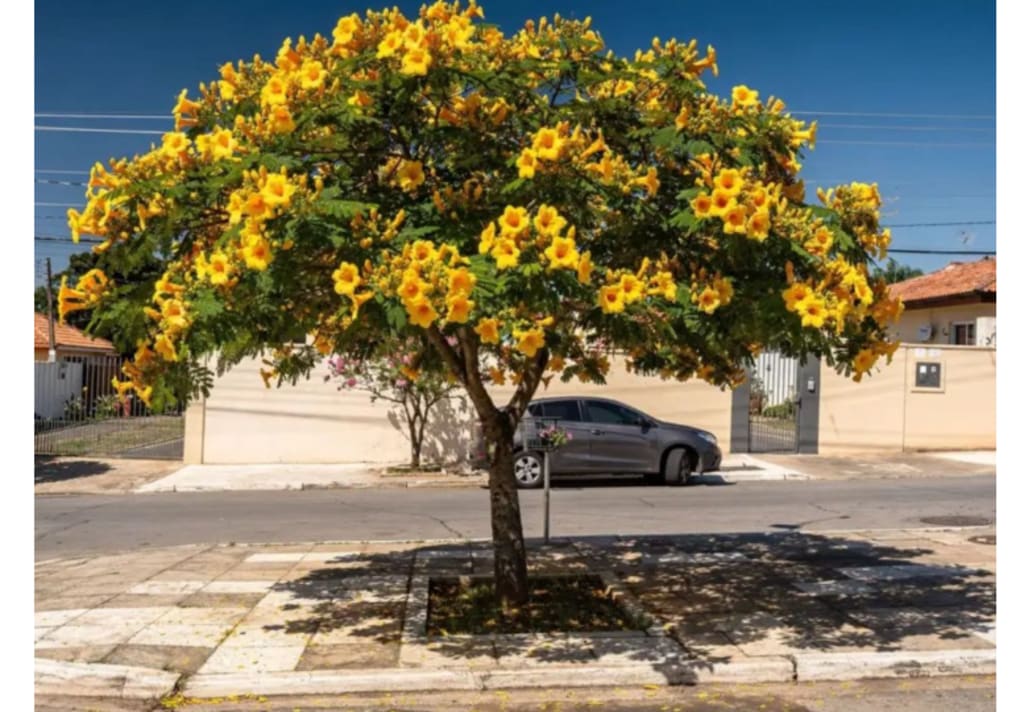
Following thousands of records confirming its growth outside of gardens, a pavement tree that is commonly planted has been officially listed as one of Brazil's most ubiquitous invasive species.
Despite widespread planting fuelled by months of vibrant flowers and excellent heat tolerance, there is unmistakable evidence that the tree is spreading to landscapes far beyond its intended growing range.
From the curb to the nation
Yellow-flowering Tecoma stans have been reported to appear far beyond cultivated yards and pavements throughout Brazil.
The Horus Institute for Environmental Development and Conservation verified that the species had established itself in natural and disturbed environments without intentional planting by aggregating field reports from several regions.
It was listed as one of the most extensively dispersed invasive species in the nation by over 3,000 independent records, demonstrating that ornamental use has resulted in long-term dispersion.
Every new planting contributes to a growing community of trees that no longer rely on gardeners for survival once they cross the threshold from ornamentation to self-propagation.
Clarity and scientific labels
The scientific name is what connects stories from various locations, but garden centers promote the tree for its yellow blossoms.
An invasive species is defined by ecologists as a non-native organism that expands and damages ecosystems by continuing to reproduce on its own. To avoid confusion with natural ipe trees, which are a separate group, the plant is called Tecoma stans.
Cities can identify repeat offenders and determine whether a pavement pattern aligns with their environmental objectives by using accurate labels.
blooms all year long
Fresh shoots continue to grow in warm, sunny weather, and the tree repeatedly produces blossoms on those new tips. For the majority of the year, flowers emerged with every flush of new growth, according to a University of Florida publication.
Since each cluster might develop into a dry capsule containing seeds, longer flowering also results in more seed pods. The plant continues to produce possible seedlings even after the last blossoms have faded since those capsules can hang for weeks.
Some ornamentals collapse, a city zone becomes hotter than surrounding surroundings, and heated streets produce an urban heat island. In order to prevent water loss and let Tecoma stans remain erect on sweltering afternoons, leaves have the ability to seal small pores.
Slower growth is frequently caused by dry conditions, but if watering or rain arrives, the stored energy still supports flowering. That resilience enables the tree to thrive in roadside soil and abandoned sites even with minimal care.
Avoiding damage to pavement
When roots seek oxygen close to the surface, particularly in areas where soil is compacted beneath concrete, sidewalk slabs rise. Compared to many options, surface roots are typically not an issue for this tree, according to University of Florida writers.
The arborisation guidebook for São Paulo recommended a permeable planting strip and around four feet (1.22 meters) of unobstructed walking space. When there is only water and air at the edge, any tree can heave pavement, but good site design can reduce cracking.
Planting to survive
It is advised to plant in full sun because intense shade inhibits the new growth that eventually bears the majority of the blooms. In order to level the trunk base, many gardeners begin by digging a hole that is at least 16 inches (41 cm) deep.
Young roots are fed by compost placed into loose ground, and they gain grip with consistent watering over the first several weeks. Low places and moist soil frequently lead to failure because poor drainage can drown roots even in hot weather.
Keeping flowers healthy
Light trimming enhances air circulation across the canopy and eliminates dead branches once the tree is established. Long periods of sunlight helped new shoots grow buds by replacing nutrients with slow-release fertiliser or regular compost.
Mulch, which is a layer of organic material deposited over soil to retain moisture, cools roots and suppresses weed growth. Although homeowners must continue trimming to prevent problems with signs and wires, that practice keeps the blooms coming.
How seeds proliferate
Roadside bare soil provides the first foothold for the seeds that are released when narrow pods split open. According to horticultural experts at the University of Florida, seedlings spread more quickly locally because they were easy to transplant and might blossom in two years.
Because construction and roadside cleaning continuously remove plant cover that would obstruct seedlings, disturbed areas suffer the most. After the tree takes root, the surrounding natural ecosystem serves as a seed supply, making control more difficult each season.
Trade-offs and city regulations
Because communities bear the expense when a species expands into parks, tangles cables or breaks pavements, street-tree regulations were established. Tecoma stans were labelled as "an invasive exotic" and inappropriate in São Paulo by the same planting advice.
Although cities can still strive for aesthetics, long-term decisions are best made when planners consider sidewalk trees to be an ecological component.
Selecting trees carefully
Simple planting guidance is complicated by the pavement trumpet tree's escape record, despite its heat resilience and months of golden blossoms. When cities plant trees that remain in regulated areas, monitor for spread, and update approved lists, urban forests remain healthy.
About the Creator
Keep reading
More stories from Francis Dami and writers in Lifehack and other communities.
Targeting microorganisms linked to stomach cancer, a new chocolate innovation
It has been demonstrated that chocolate truffles manufactured from grape waste suppress the stomach microbe most closely associated with gastric cancer. The discovery gives discarded winemaking materials a new biological purpose while redefining a familiar meal as a possible tool for lowering infection risk.
By Francis Dami7 days ago in Lifehack
Embracing Change in St. Louis Park: The Subtle Art of Moving Home
Moving is often described as a task, a list of chores that includes packing, loading, transporting, and unpacking belongings. Yet anyone who has moved knows that relocation is far more than the physical transfer of objects. It is a deeply human experience, entwined with emotion, memory, and transformation. In places like St. Louis Park, where neighborhoods balance historical charm and modern development, moving represents both continuity and change. It is an opportunity to reflect, adapt, and envision the next chapter of life.
By House Doctor6 days ago in Lifehack
How Rapid Tool Evolution Is Reshaping the Software Economy?
Software once followed a predictable rhythm. Programming languages matured slowly, frameworks lasted for years, and tooling changes happened gradually enough for companies to build long-term strategies around them. Developers invested heavily in mastering specific stacks, and organizations relied on stable ecosystems to plan growth.
By Mike Pichaiabout 15 hours ago in Lifehack
Craft Over Catharsis Challenge Winners
Craft Over Catharsis? What the hell does that even mean? The phrase came out of a curation meeting as a genuine question. We had been noticing that many challenge entries, across prompts, naturally gravitate toward trauma, grief, and personal reckoning. That makes sense. Writing is often cathartic. It's one of the ways we process what we've lived through.
By Vocal Curation Team6 days ago in Resources



Comments
There are no comments for this story
Be the first to respond and start the conversation.