
Progressive Web App (PWA) Development: A Complete Guide
Progressive Web App (PWA) Development
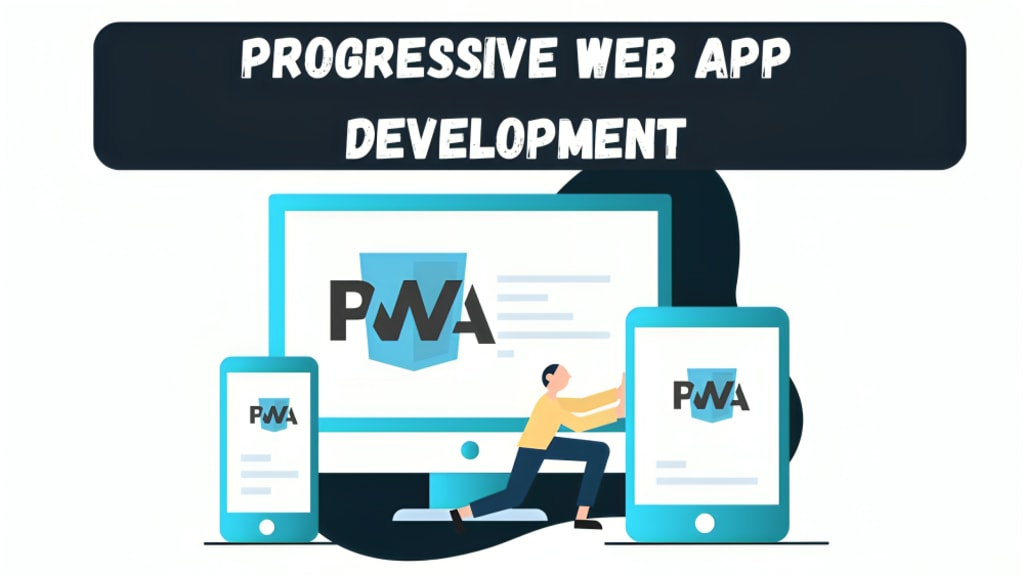
In today’s digital world, users demand fast, engaging, and reliable web experiences. Traditional websites often struggle with slow load times, limited offline functionality, and inconsistent device user experiences. Progressive Web Apps (PWAs) solve these challenges by combining the best features of web and mobile applications to offer a seamless, app-like experience.
PWAs are revolutionizing e-commerce, social media, and business productivity by providing faster performance, offline access, and cross-platform compatibility. Many top brands, including Twitter, Starbucks, and Pinterest, have successfully adopted PWAs to improve user engagement and retention.
In this guide, we will explore why businesses are adopting PWAs, their key benefits, and different types of PWAs, along with insights into PWA development and implementation.
Why Do Businesses Choose Progressive Web Apps?
Progressive Web Apps offer a lightweight, responsive, and engaging user experience, making them an ideal choice for businesses looking to enhance customer engagement and improve web performance. Companies that invest in PWA development experience higher conversion rates, faster load times, and increased user retention.
Here’s why businesses are adopting PWAs:
✔ PWAs provide native app-like experiences without downloads
✔ They reduce bounce rates by improving page load speeds
✔ PWAs work offline and provide smooth navigation on low networks
✔ They ensure seamless cross-platform compatibility (mobile, tablet, desktop)
✔ Push notifications increase user engagement and retention
By implementing PWAs, businesses can cut development costs, reach wider audiences, and deliver superior user experiences compared to traditional web or mobile apps.
What is Progressive Web App Development?
PWA development involves building web applications that function like native apps while leveraging the power of modern web technologies. These apps use HTML, CSS, JavaScript, service workers, and web manifests to create highly responsive, app-like experiences on the web.
Key Technologies Used in PWA Development:
✅ Service Workers – Enable offline functionality and background synchronization
✅ Web App Manifest – Allows apps to be installed on home screens without an app store
✅ Responsive Design – Ensures smooth performance across various screen sizes
✅ HTTPS Security – Protects user data and ensures secure transactions
✅ Push Notifications API – Keeps users engaged with real-time alerts
By integrating these PWA features, businesses can create lightweight, high-performing applications that enhance user experiences and boost conversions.
Types of Progressive Web Apps
1. E-Commerce PWAs
E-commerce businesses benefit from faster load speeds, push notifications, and offline access, leading to higher conversion rates and reduced cart abandonment.
Example: Alibaba’s PWA increased conversion rates by 76% and saw 4× higher interaction rates compared to their native app.
2. News and Media PWAs
Media websites use PWAs to deliver content instantly, enable offline reading, and improve mobile browsing experiences.
Example: The Washington Post PWA loads 88% faster than its previous mobile site, ensuring real-time news updates with minimal data usage.
3. Social Networking PWAs
Social platforms rely on PWAs to provide a seamless user experience across devices, reducing app bloat while maintaining interactive features.
Example: Instagram’s PWA allows users to upload photos, send messages, and browse feeds without needing to install the native app.
4. Business and Productivity PWAs
Enterprise software and business productivity tools benefit from cross-platform accessibility, offline features, and seamless collaboration.
Example: Google Docs PWA enables users to edit, save, and share documents in real time, even without an internet connection.
Differentiating Between PWAs and Native Apps
Feature Progressive Web Apps (PWAs) Native Mobile Apps
Performance & User Experience Fast, lightweight, and works across devices Optimized for specific OS, better graphics
Installation & Accessibility No app store required, install via browser Requires app store download
Offline Functionality Works offline using service workers Fully functional offline
Development Time & Cost Lower cost, faster development with web technologies Higher cost, longer development for multiple platforms
Push Notifications Supported on Android, limited on iOS Fully supported on both Android & iOS
Updates & Maintenance Automatic updates without user intervention Users must download updates from the app store
Key Features of Progressive Web App Development
1. Reliable and Fast Performance
PWAs use service workers to cache data and enable lightning-fast loading speeds even on slow networks.
2. Offline Mode and Service Workers
Service workers store essential resources, allowing users to access content and features offline, enhancing the user experience.
3. Responsive and Mobile-Friendly Design
PWAs are designed to adapt seamlessly to any screen size, providing a smooth experience on desktops, tablets, and mobile devices.
4. Push Notifications for User Engagement
PWAs support real-time push notifications, encouraging users to return and interact with the app, improving engagement rates.
5. Secure and HTTPS-Enabled
PWAs are served over HTTPS, ensuring data security and protection from cyber threats.
6. Seamless Integration with Web and Mobile Ecosystems
PWAs work across all devices and integrate smoothly with existing web platforms, APIs, and payment gateways.
Progressive Web App Development Process: 5 Easy Steps
1. Planning and Requirement Analysis
● Identify business goals, target audience, and key features needed in the PWA.
● Select a technology stack (HTML, CSS, JavaScript, React, Angular, or Vue.js).
2. UI/UX Design and Frontend Development
● Create a mobile-first, responsive UI for optimal user experience.
● Implement progressive enhancement techniques to improve accessibility.
3. Backend Development and API Integration
● Develop a robust backend with Node.js, Python, or PHP for seamless data management.
● Integrate RESTful APIs, payment gateways, and cloud storage solutions.
4. Testing and Quality Assurance
● Conduct cross-browser compatibility tests on Chrome, Safari, Edge, and Firefox.
● Optimize load times, caching, and performance for smooth operation.
5. Deployment and Maintenance
● Deploy the PWA on a secure HTTPS server.
● Continuously monitor and update the app to ensure stability and security.
Common Challenges in PWA Development and How to Overcome Them
1. Browser Compatibility Issues
Solution: Use feature detection techniques to ensure compatibility across different browsers.
2. Optimizing for Performance and Speed
Solution: Implement lazy loading, caching, and CDN services to enhance speed and reduce latency.
3. Handling Offline Functionality and Caching
Solution: Utilize service workers to cache critical data and provide an offline experience.
4. Ensuring Security and Data Privacy
Solution: Serve PWAs over HTTPS, implement data encryption, and follow GDPR compliance.
How Much Does Progressive Web App Development Cost?
Factors Influencing Development Costs
● App complexity – Basic PWAs cost less, while feature-rich apps require more investment.
● Third-party API integrations – Adding payment gateways, analytics, and AI-driven features increases cost.
● Customization and UI/UX Design – More advanced, unique designs require additional resources.
Estimated Cost Range Based on Features and Complexity
PWA Type Estimated Cost
Basic PWA (Static Content, No Offline Mode) $5,000 - $10,000
Intermediate PWA (Offline Access, Push Notifications) $15,000 - $30,000
Advanced PWA (E-commerce, Custom APIs, AI Features) $40,000 - $100,000+
How Moon Technolabs Can Help with PWA Development?
Moon Technolabs is a leading PWA development company specializing in building fast, secure, and scalable web applications.
Why Choose Moon Technolabs?
✔ Expertise in Custom PWA Solutions – Tailored PWA development for e-commerce, finance, healthcare, and social platforms.
✔ End-to-End Development & Support – From planning and design to deployment and maintenance.
✔ High Performance & Security – Optimized for speed, SEO, and compliance with industry security standards.
Transform your web experience with a high-performance PWA – contact Moon Technolabs today! 🚀
Conclusion
Progressive Web Apps are reshaping digital experiences by offering the speed, reliability, and engagement of native apps while being cost-effective and web-friendly. By investing in PWA development, businesses can reduce development costs, improve SEO, and reach a wider audience without app store limitations.
If you're looking to develop a fast, engaging, and scalable web app, Moon Technolabs provides expert custom PWA development solutions tailored to your business needs.
FAQs
1. Are Progressive Web Apps better than native mobile apps?
PWAs offer cross-platform accessibility, faster load times, and offline functionality, but native apps provide better performance and full device integration.
2. Can PWAs work offline like native apps?
Yes, PWAs use service workers to cache data, allowing limited offline access. However, native apps provide more extensive offline functionality.
3. How long does it take to develop a PWA?
Development time varies, but basic PWAs take 4-6 weeks, while complex PWAs with custom integrations can take 3-6 months.
4. Can PWAs be listed on app stores?
Yes! PWAs can be submitted to Google Play Store via Trusted Web Activity (TWA), but iOS has limitations on full PWA app store integration.
5. What security measures do PWAs offer?
PWAs use HTTPS encryption, secure APIs, and authentication protocols to ensure data protection and prevent cyber threats.
About the Creator
Keep reading
More stories from Rizwan Jerry and writers in Lifehack and other communities.
The Ultimate Guide to Stylish and Functional Keychains by Rosa Keychains
Introduction Keychains have evolved from simple accessories to essential everyday items that combine functionality, style, and security. Whether you are looking for a trendy keychain to complement your personality or a self-defense keychain to enhance your safety, Rosa Keychains offers a diverse collection of premium designs. In this guide, we will explore why keychains are more than just decorative items, how they can elevate your everyday convenience, and why Rosa Keychains is the go-to store for quality and style.
By Rizwan Jerry12 months ago in Lifehack
EHR Interoperability and Data Integration: The Future of Connected Care
Electronic Health Record (EHR) integration has become a foundational requirement for modern healthcare organizations striving to deliver coordinated, data-driven care. As hospitals, clinics, and specialty practices increasingly rely on digital tools, the ability to seamlessly connect systems is no longer optional—it is essential. EHR integration enables disparate healthcare platforms to communicate with each other, ensuring that patient data flows securely and accurately across departments, facilities, and third-party applications. By eliminating data silos and enabling real-time access to critical medical information, integrated systems significantly improve clinical decision-making, operational efficiency, and patient outcomes.
By Steve Waugh5 days ago in Lifehack




Comments
There are no comments for this story
Be the first to respond and start the conversation.