
Semantic Search vs. Keyword Search: Understanding the Differences and Their Impact
The main difference between semantic search and keyword search is how they interpret queries. Keyword search matches exact words, while semantic search understands context and user intent. Semantic search improves accuracy by analyzing relationships between words, making it more effective for natural language queries and delivering relevant results.

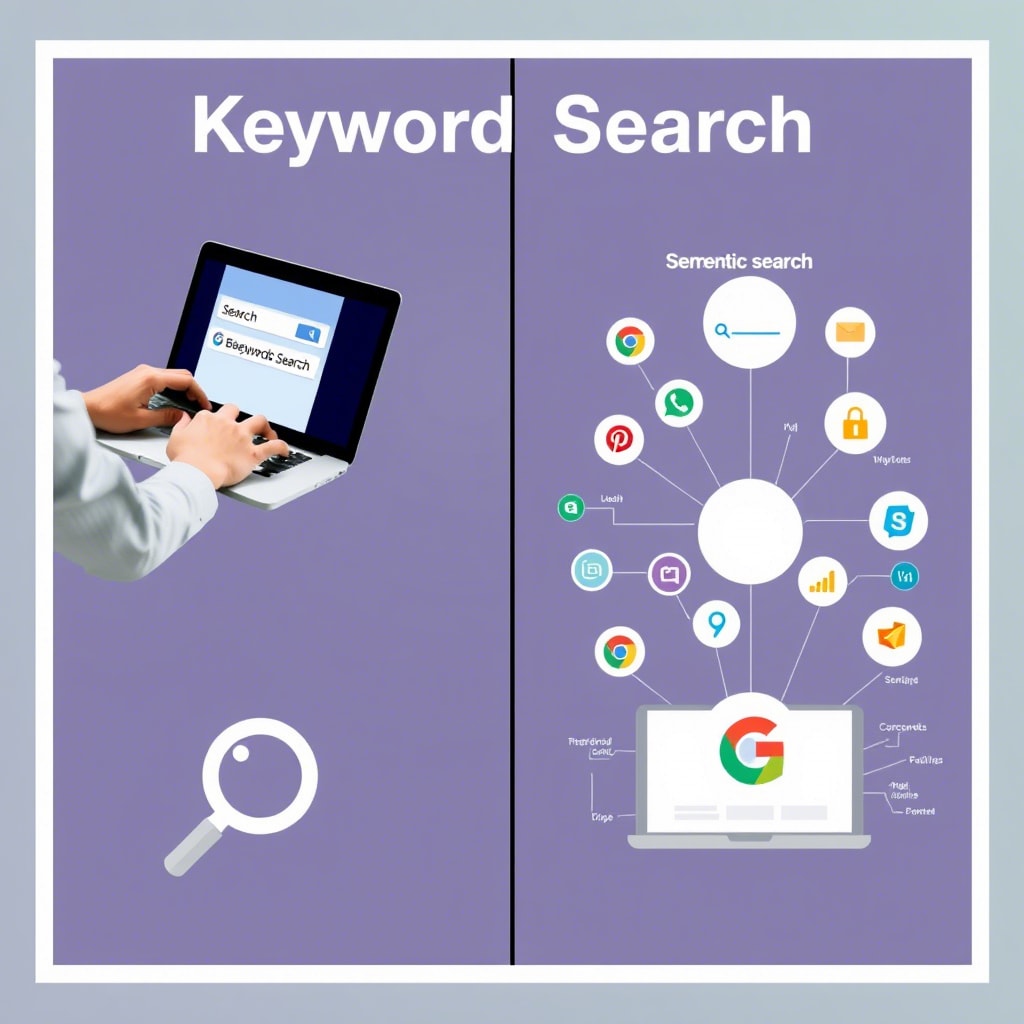
What Is Keyword Search?
Keyword search is the traditional way search engines work. It focuses on finding exact matches for the words or phrases a user types into a search bar. For example, if you type "best pizza near me," a keyword-based search engine looks for web pages that contain those exact words: "best," "pizza," and "near me." It doesn’t try to understand the meaning behind your query; it just matches the words.
This method relies heavily on word frequency and placement. Pages with the search terms appearing in titles, headings, or multiple times in the text often rank higher. Search engines like early versions of Google (in the 1990s and early 2000s) used this approach. It was simple and worked well when the internet was smaller, and most content was straightforward.
However, keyword search has limitations. It struggles with understanding context or intent. For instance, if you search for "apple," a keyword search might return results for both the fruit and the tech company, with no way to know which one you meant. It also doesn’t handle synonyms well. Searching for "car" might not show results for "automobile" unless the page uses both words.
What Is Semantic Search?
Semantic search is a newer, more advanced approach. Instead of just matching words, it tries to understand the meaning and intent behind a user’s query. It looks at the context, relationships between words, and even the user’s search history or location to provide more relevant results. Semantic search uses technologies like natural language processing (NLP) and machine learning to interpret queries as a human might.
For example, if you search "best pizza near me," a semantic search engine like modern Google understands that you’re likely looking for local pizza restaurants with good reviews, not just any page with the words "pizza" and "near." If you search "apple" while browsing tech websites, it might prioritize results about Apple Inc. over the fruit because it infers your intent based on context.
Semantic search also handles synonyms, related terms, and even questions better. Typing "how to fix a flat tire" might pull up step-by-step guides or videos, even if they use words like "repair" or "puncture" instead of "fix" and "tire."
How Keyword Search Works
Keyword search is like looking for a specific book in a library by checking the index cards for exact words. Search engines break down a user’s query into individual words or phrases (called tokens). They then scan their database of web pages to find matches for these tokens. The process involves:
Indexing: Search engines crawl websites and store information about their content, like words and phrases, in a database called an index.
Matching: When you search, the engine checks the index for pages containing your exact query terms.
Ranking: Pages are ranked based on factors like how often the keywords appear, where they appear (e.g., title or body text), and how popular the website is.
For example, if you search for "dog training tips," the engine looks for pages with those exact words. A page with "Dog Training Tips" in the title and repeated in the text might rank higher than one that only mentions "dog" once.
This method is fast and straightforward but can miss the mark if the query is vague or the user’s intent isn’t clear from the words alone.
How Semantic Search Works
Semantic search is more like having a conversation with a librarian who understands what you’re really looking for. It uses advanced techniques to interpret queries. Here’s how it works:
Natural Language Processing (NLP): This technology helps the search engine understand language as humans do. It breaks down sentences to find meaning, not just words. For example, it knows that "fix" and "repair" are related.
Context Analysis: Semantic search looks at the context of the query. It might consider your location, previous searches, or trending topics to guess what you mean.
Knowledge Graphs: Many search engines use knowledge graphs, which are like maps of information. They connect related concepts (e.g., "pizza" to "Italian food" or "restaurants"). Google’s Knowledge Graph is a famous example.
Machine Learning: Algorithms learn from user behavior to improve results over time. If many users click on a specific result for "apple" when searching for tech, the engine learns to prioritize those results.
For example, if you search "what’s the capital of France," a semantic search engine knows you want a direct answer ("Paris") rather than a list of pages with the words "capital" and "France." It might even show a map or related facts about Paris.
Comparing Strengths and Weaknesses
Keyword Search: Strengths
Speed: Keyword search is fast because it only looks for exact matches, requiring less computing power.
Simplicity: It’s easy to implement and works well for specific, clear queries like product names or exact phrases.
Predictability: Results are based on strict rules (e.g., word frequency), so website owners can optimize content by using specific keywords.
Keyword Search: Weaknesses
Limited Understanding: It doesn’t grasp synonyms, context, or intent, leading to irrelevant results.
Keyword Stuffing: Some websites overuse keywords to rank higher, even if the content isn’t helpful. This was a big problem in the early days of the internet.
Poor Handling of Complex Queries: Questions or vague searches often return mixed results because the engine doesn’t understand the user’s goal.
Semantic Search: Strengths
Better Relevance: By understanding intent, semantic search delivers results that match what the user is really looking for.
Handles Complex Queries: It’s great for questions, conversational searches, or vague terms.
Improved User Experience: Results feel more natural, like getting advice from a friend who understands you.
Semantic Search: Weaknesses
Complexity: It requires advanced technology like NLP and machine learning, which are harder to build and maintain.
Privacy Concerns: To understand context, semantic search often uses personal data like search history or location, which some users may not like.
Less Predictable: Because it relies on algorithms that learn and adapt, results can vary, making it harder for businesses to optimize their websites.
Real-World Examples
To see the difference, let’s look at two search scenarios:
Searching for "Jaguar":
Keyword Search: A keyword search might show a mix of results about the animal, the car brand, and maybe even the Jacksonville Jaguars football team. It doesn’t know which one you want unless you add more specific words like "jaguar car."
Semantic Search: A semantic engine might guess your intent based on context. If you’re in a car-related forum, it prioritizes results about the Jaguar car brand. If you’re on a wildlife site, it shows information about the animal.
Searching for "How to make a cake":
Keyword Search: The engine looks for pages with "how," "make," and "cake." You might get a list of recipes, but some could be low-quality or unrelated (e.g., a blog mentioning cake in passing).
Semantic Search: The engine understands you want a recipe and might show a step-by-step guide, a video, or even a list of ingredients. It could also suggest related searches like "chocolate cake recipe" based on popular trends.
Impact on Users and Businesses
For Users
Keyword search can be frustrating when results don’t match what you want. If you’re looking for quick answers or exploring a topic, you might have to rephrase your query several times. Semantic search, on the other hand, feels more intuitive. It saves time by delivering relevant results, especially for casual users who don’t know how to craft precise queries. For example, students researching a topic or parents looking for local services benefit from semantic search’s ability to understand intent.
For Businesses
For businesses, keyword search was easier to game. By stuffing a website with keywords, companies could rank higher, even if their content wasn’t great. Semantic search makes this harder. Search engines now reward high-quality, relevant content that answers users’ questions. Businesses need to focus on creating helpful articles, videos, or product pages that align with what users are looking for. This shift has led to better content online but requires more effort from companies to understand their audience.
A Python Example: Calculating Word Similarity
To show how semantic search differs from keyword search, let’s use a simple Python example. Keyword search relies on exact word matches, while semantic search understands word relationships. We can simulate this with a basic word similarity check using Python’s nltk library, which includes tools for natural language processing.
This code calculates how similar two words are based on their meanings, something semantic search does but keyword search doesn’t.
import nltk
from nltk.corpus import wordnet
from nltk.metrics import edit_distance
# Download WordNet data (needed for semantic similarity)
nltk.download('wordnet')
def get_word_similarity(word1, word2):
# Get synsets (sets of synonyms) for both words
synsets1 = wordnet.synsets(word1)
synsets2 = wordnet.synsets(word2)
# If no synsets exist, use edit distance (how many letters differ)
if not synsets1 or not synsets2:
return 1.0 / (1.0 + edit_distance(word1, word2))
# Find the maximum similarity between any pair of synsets
max_similarity = 0.0
for syn1 in synsets1:
for syn2 in synsets2:
similarity = syn1.wup_similarity(syn2)
if similarity and similarity > max_similarity:
max_similarity = similarity
return max_similarity
# Example usage
word1 = "car"
word2 = "automobile"
similarity = get_word_similarity(word1, word2)
print(f"Similarity between '{word1}' and '{word2}': {similarity:.2f}")
word3 = "car"
word4 = "dog"
similarity2 = get_word_similarity(word3, word4)
print(f"Similarity between '{word3}' and '{word4}': {similarity2:.2f}")
Explanation:
The code uses wordnet, a database of English words and their meanings, to find how similar two words are.
The wup_similarity function measures similarity based on how closely related the words are in meaning (e.g., "car" and "automobile" are very similar, while "car" and "dog" are not).
If no meaning is found, it falls back to edit_distance, which checks how many letters differ (like keyword search would do).
Running this code might output:
Similarity between 'car' and 'automobile': 0.94 (high because they mean almost the same)
Similarity between 'car' and 'dog': 0.20 (low because they’re unrelated)
This shows how semantic search can understand that "car" and "automobile" are related, even if the exact words don’t match, while keyword search would treat them as different.
The Future of Search
Semantic search is becoming the standard because it better meets user needs. As artificial intelligence and NLP improve, search engines will get even better at understanding complex queries, answering questions directly, and personalizing results. For example, voice assistants like Siri or Alexa rely heavily on semantic search to understand spoken questions.
However, keyword search still has a place. It’s useful for technical searches, like finding exact error codes in programming or specific product names. Some search engines, like those for academic databases, still rely on keyword matching for precision.
In the future, we might see a blend of both approaches. Semantic search could handle everyday queries, while keyword search remains an option for users who need exact matches. Businesses will need to adapt by creating content that’s both keyword-optimized and rich in meaning to rank well in both systems.
Conclusion
Keyword search and semantic search represent two eras of information retrieval. Keyword search is simple and fast but limited by its focus on exact words. Semantic search, with its ability to understand meaning and intent, offers a more natural and helpful experience, though it’s more complex and raises privacy questions. For users, semantic search makes finding information easier, while businesses must focus on quality content to stay visible. The Python example above shows how semantic search can go beyond word matching to understand relationships, a key advantage over keyword search.
As technology advances, semantic search will likely dominate, but keyword search will remain useful for specific tasks. Understanding both helps us appreciate how far search technology has come and how it continues to shape our access to information.
About the Creator
Akaeid al akib
I am very passionate about SEO, Web design and digital marketing. I am always up to date with the latest and most advanced SEO strategies. whatsapp: +8801773821395
Keep reading
More stories from Akaeid al akib and writers in Lifehack and other communities.
Semantic Search vs Vector Search: What’s the Difference?
The way we search for things online has changed a lot over the years. At first, search engines used simple methods to find web pages. They looked for exact words that people typed. But now, search engines are much smarter. They try to understand what people really mean when they ask a question. This new way of searching is called semantic search. Another method that helps make searches better is vector search.
By Akaeid al akib9 months ago in Lifehack
Moving in Palm Beach Gardens: How to Choose the Right Moving Company
Relocating in Palm Beach Gardens, Florida, is often associated with a calm and orderly lifestyle, but the moving process itself requires careful preparation. While the city is known for its planned communities and wide roads, local moves still involve details that can easily be overlooked. Understanding these factors ahead of time can help residents avoid unnecessary stress and delays.
By House Doctor5 days ago in Lifehack



Comments
There are no comments for this story
Be the first to respond and start the conversation.