
Through the Lens of Innovation: A Journey into Optical Lenses
Exploring the science, precision, and artistry behind modern optical design

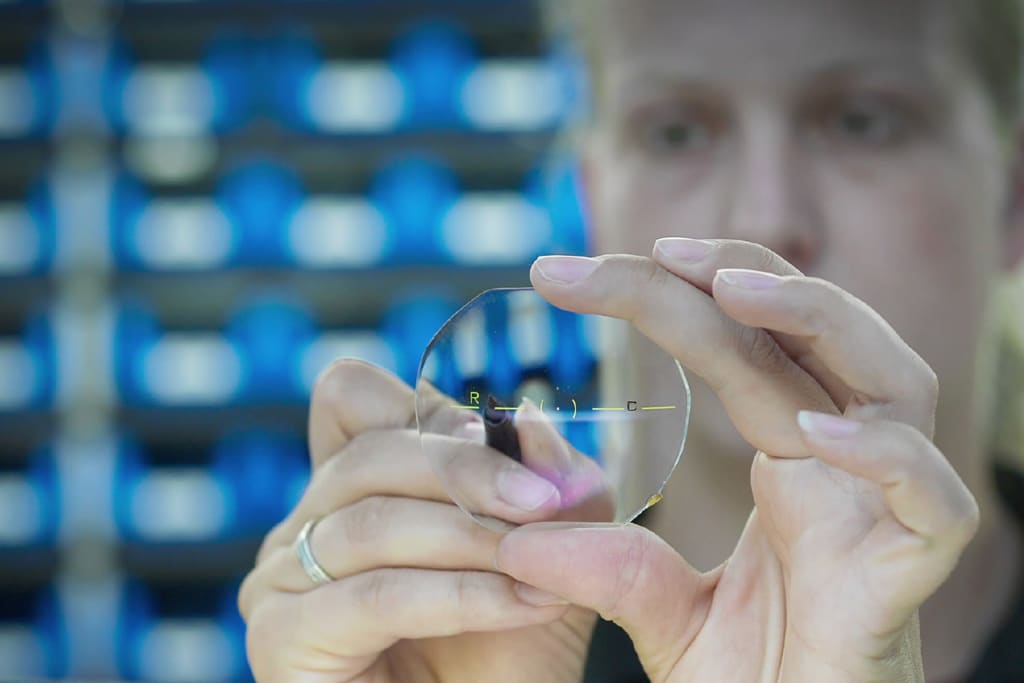
In a quiet workshop in Chengdu, a group of engineers huddle around a microscope, adjusting minute prisms, polishing tiny glass surfaces, and inspecting curvature with interferometers. Their goal is not merely to produce lenses, but to push the boundaries of what we can see, measure, and imagine. This is the hidden world behind optical lenses, where science, art, and industry converge.
1. A Subtle Bridge Between Vision and Technology
Our everyday experience with lenses tends to be simple: eyeglasses to help us see, camera lenses to capture a moment, or magnifying glasses to inspect a detail. But behind each of these lies a vast spectrum of design, materials, coatings, and tolerances.
In fields spanning astronomy, microscopy, optical communications, and instrumentation, lenses must meet far stricter demands. Aberrations must be minimized, surface quality must be near perfect, and materials must withstand temperature shifts or ultraviolet exposure.
In that workshop mentioned above, the team works on custom lenses for scientific instruments, optical prisms, and flat windows (transparent surfaces maintaining a precise form). They test each piece under microscopes and interferometers to ensure peak performance. This kind of precision work is what distinguishes mere glass shapes from truly engineered lenses.
2. The Foundation: What Makes a Lens "Optical"
At its heart, an optical lens is a body of transparent material whose surfaces are shaped so as to refract (bend) light rays in a desired way. The two surfaces—front and back—may be convex, concave, aspheric, or flat, depending on the application.
Key parameters include:
- Refractive index: How strongly the material bends light.
- Surface quality: Microscopic deviations from ideal shape can degrade performance.
- Coatings: Anti-reflective, hydrophobic, or protective layers that enhance performance.
- Material type: Beyond ordinary glass, lenses may use fused silica, sapphire, or infrared-transparent media.
In industrial or research contexts, one often finds optical lenses forming part of more complex assemblies—prism systems, beam expanders, focusing chains, or wavefront shaping setups.
3. From Concept to Craft: The Lifecycle of a Lens
a) Design & Simulation
A new lens begins on the drawing board. Engineers select shapes, materials, and coatings to meet criteria like minimal aberration and stability.
b) Fabrication
Raw glass or crystal blanks are cut and ground to shape, then finely polished to achieve sub-micrometer accuracy.
c) Coating and Treatment
Surfaces may receive coatings that reduce reflection or block unwanted wavelengths.
d) Inspection & Metrology
Tools like interferometers and microscopes ensure each lens meets strict tolerances.
e) Assembly & Integration
Many lenses are part of assemblies like triplets or prisms. Alignment and mounting preserve optical performance.
4. Why Customization Matters
Generic lenses work for many uses, but advanced systems often need custom designs:
- Unique sizes or shapes
- Special coatings or filters
- Environmental resistance (temperature, vacuum, radiation)
- Tight alignment tolerances
A company like the one in Chengdu offers custom optical lenses with precision machinery and strict quality control, appealing to researchers and OEMs worldwide.
5. Use Cases: Where These Lenses Matter
Custom optical components play key roles in:
- Microscopy
- Laser systems
- Astronomy and telescopes
- Spectroscopy
- Consumer electronics
- Industrial sensing
All of these depend on the quiet, patient work of lens designers, fabricators, and inspectors.
6. The Balance: Quality, Cost, and Speed
Tradeoffs define optical engineering:
- Performance vs. Price: Higher precision costs more.
- Lead time: Custom work takes longer.
- Yield: Complex shapes risk higher rejection rates.
- Scalability: Producing a few prototypes differs from mass production.
To stay competitive, lens manufacturers combine quality control, efficient logistics, and flexible production systems.
7. Challenges and Frontiers
Emerging innovations include:
- Aspheric and freeform surfaces
- Adaptive optics
- Nanostructured metamaterial lenses
- Large-scale precision optics
- Integration with electronics
Engineers must keep evolving as new demands arise for better imaging and higher energy resistance.
8. A Day in the Life: The Making of a Lens
Consider a single custom lens order: engineers define parameters, cut glass blanks, grind and polish surfaces, inspect results, apply coatings, and test final performance. Each step involves precision, patience, and quality assurance.
9. Why It Matters Beyond the Lab
From medical imaging to space exploration, better lenses enable clearer vision, sharper data, and faster innovation. Every clear image or microscopic discovery depends on the craftsmanship behind lenses.
10. The Subtle Role of Transparency
Websites like optlenses.com demonstrate expertise not through sales language, but by sharing specifications, certifications, and detailed product information. Transparency builds credibility and trust among technical partners and clients.
11. Tips for Commissioning Optical Lenses
When ordering custom optical lenses, consider:
- Provide detailed specifications.
- Request drawings and tolerances.
- Ask for prototypes.
- Verify inspection data.
- Clarify delivery and packaging.
- Allow for design iteration.
These steps ensure collaboration success and optimal results.
12. Looking Ahead: The Vision Beyond
The future of optical lenses includes metasurfaces, wafer-scale optics, and active lens technologies. These advances may soon reshape imaging, augmented reality, and quantum optics.
Conclusion
Optics lies at the intersection of science and art—a field where light becomes both a tool and a mystery. Behind every precision instrument or imaging device are countless hours of meticulous design and polishing. Companies like optlenses.com represent a continuing legacy of human curiosity and engineering skill. As optical technologies evolve, so too does our ability to see, measure, and understand the world in ever more profound ways.
About the Creator
Roy
I am a professional content writer.
Understanding Life in North Potomac, Maryland: Culture, Planning, and Everyday Transitions
North Potomac, Maryland, is often described as a quiet suburban community, but daily life here is shaped by more than calm streets and residential neighborhoods. The area has developed a culture rooted in organization, respect for shared spaces, and long-term planning. These values influence how residents interact, manage their homes, and handle major life changes such as relocating within or into the community.
By House Doctor4 days ago in Lifehack




Comments
There are no comments for this story
Be the first to respond and start the conversation.