
A Beginner's Guide to Kratom Strains: What the Colors Mean
Understanding red, green, white, and gold vein kratom to make informed choices about strains and effects.

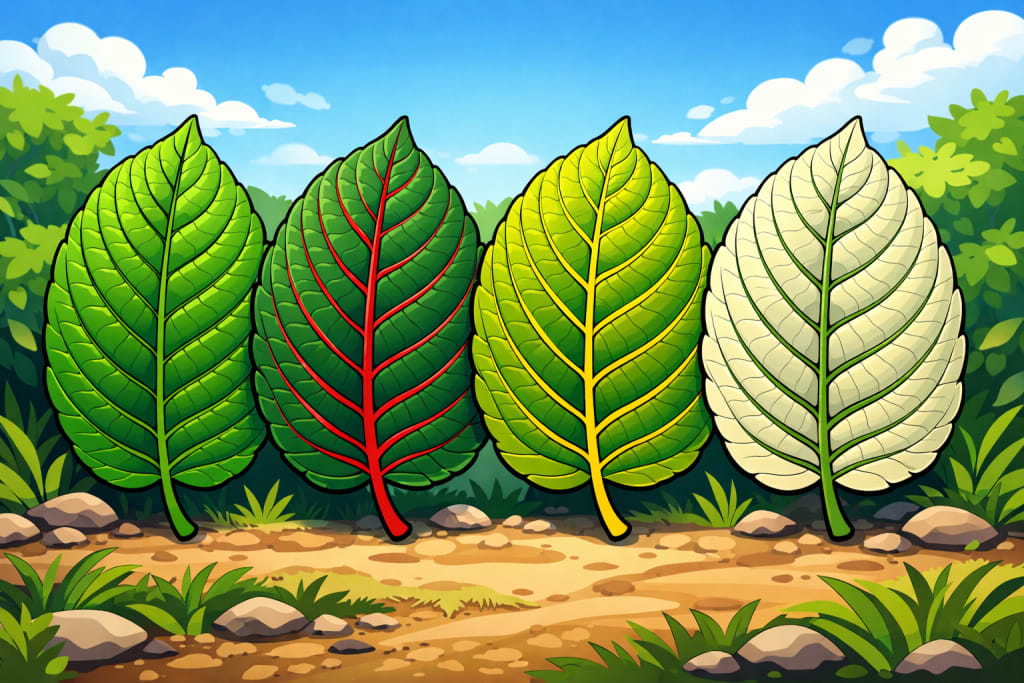
If you’re new to Kratom, the array of strain names and color designations can feel overwhelming. You’ll see labels like “Red Bali,” “Green Maeng Da,” “White Borneo,” and “Yellow Gold Thai,” but what do these names actually tell you?
Understanding Kratom strains and their color classifications is the foundation for finding products that match your needs and preferences. Here’s a quick overview of the four main categories:
• Red Vein — The most popular category among newcomers, known for its mature leaf harvest
• Green Vein — A middle-ground option harvested at mid-stage maturity
• White Vein — Harvested from younger leaves earlier in their development
• Yellow/Gold — Red vein Kratom processed through fermentation or extended drying
The Reality of Kratom Color Classification
Kratom comes from the leaves of Mitragyna speciosa trees, and the color designation refers to the color of the leaf veins — not the color of the powdered product itself. Despite their names, most Kratom powders appear greenish or brownish once dried and ground.
The vein color is determined by when the leaves are harvested and how they’re processed, which affects the alkaloid profile of the final product. Three primary vein colors exist: red, green, and white. Yellow and gold strains are typically red vein Kratom that has been processed differently, often fermented, to create a distinct alkaloid balance.
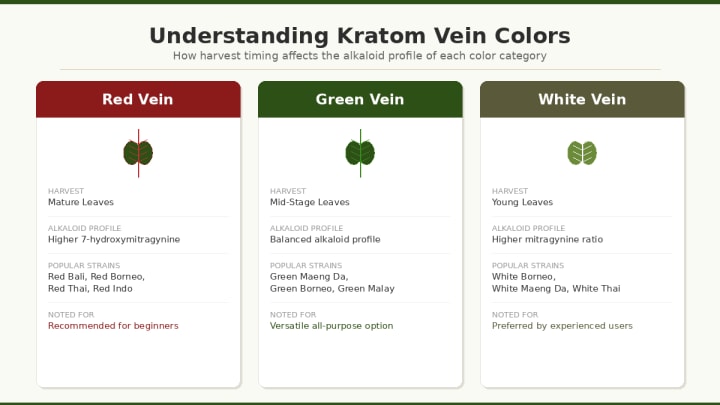
Red Vein Kratom
Red vein Kratom is harvested when the leaf veins have turned red and the leaves are more mature. This timing creates a higher concentration of certain alkaloids, particularly 7-hydroxymitragynine.
“Red veins are frequently recommended for beginners — they’re generally considered the most forgiving and approachable option for those just starting to explore Kratom.”
Common red vein strains include:
- Red Bali — One of the most popular and accessible options, widely available online.
- Red Dragon - A strain known for its balanced alkaloid profile.
- Red Borneo — A well-known variety from the island of Borneo
- Red Thai — Originating from Thailand’s Kratom-growing regions
- Red Indo — A general Indonesian red vein variety
The red category encompasses a wide range of alkaloid profiles even within the same color designation, so individual batches and sources matter significantly.
Green Vein Kratom
Green vein Kratom sits somewhere between red and white varieties in terms of alkaloid content. These leaves are harvested at a mid-stage maturity, creating what many users describe as a balanced alkaloid profile — with both mitragynine and 7-hydroxymitragynine present in moderate amounts.
Green strains are often chosen by those looking for an all-purpose option. Maeng Da is perhaps the most well-known green strain, originating from Thailand. Other popular green options include:
- Green Borneo
- Green Indo
- Green Thai
- Green Malay
Many users appreciate green strains for their versatility and range of alkaloid profiles, which can vary depending on individual sensitivity and preference.
White Vein Kratom
White vein Kratom comes from younger leaves harvested earlier in their development. This earlier harvest creates an alkaloid profile higher in mitragynine relative to 7-hydroxymitragynine.
White strains are typically chosen by experienced users who are familiar with how different alkaloid profiles work with their individual body chemistry. Popular white strains include White Borneo, White Maeng Da, White Thai, and White Indo.
Because of their distinct profile, white veins might be more challenging for beginners compared to red options — most newcomers start with red or green varieties first.
Yellow and Gold: The Processed Variations
Yellow and gold vein Kratom aren’t technically a different vein color — they’re typically red vein Kratom that has undergone a fermentation or extended drying process. This specialized processing creates a unique alkaloid profile that falls somewhere between red and green characteristics.
These strains have gained popularity among users seeking variety beyond the three primary vein colors. They’re also sometimes noted for having a different taste profile than other categories.
Understanding Strain Geographic Origins
Beyond vein color, Kratom strains are named after their geographic origins:
• Bali — From Indonesia, one of the most widely available origins
• Maeng Da — From Thailand, known as a premium grade
• Borneo — From the island shared by Indonesia, Malaysia, and Brunei
• Sumatra — From Indonesia’s western island
• Indo — A general designation for Indonesian varieties
These geographic distinctions matter because different growing regions, soil conditions, and harvest practices create variation within each color category.
Finding Lab-Tested Kratom
When exploring Kratom options, sourcing matters tremendously. Not all Kratom is created equal, and variations in growing conditions, processing, and storage can significantly affect quality and consistency. Here’s what to look for when evaluating vendors:
• Third-party lab testing results published for every batch
• Certificates of analysis (COAs) showing alkaloid content
• Heavy metals and microbiology testing
• AKA GMP Qualified Vendor status

"I've worked in this industry for years, and I've seen how a lot of vendors operate — minimal testing, no facility standards, and little accountability. It's part of why I'm proud to work at Kraken Kratom. We operate out of a regularly inspected facility, publish COAs for every batch, and hold AKA GMP certification. If you go with someone else, just make sure they can say the same."
Starting Your Kratom Exploration
Beginning with Kratom doesn’t require deep technical knowledge, but understanding vein colors and strain names gives you a framework for exploration. A few tips for getting started:
• Start with red or green varieties, as these tend to feel most intuitive to newcomers
• Research reputable sources that prioritize testing and quality
• Start with small amounts to understand your individual response
• Keep in mind that individual responses vary — what one person prefers might not be the same for another
The color classification system provides a useful shorthand for understanding differences between products. Now that you understand what red, green, white, and yellow actually mean, you can approach Kratom selection with greater confidence and make choices based on knowledge rather than guesswork.
About the Creator
Jacob from Kraken Kratom
Botanical industry advocate and Kraken Kratom team member. Writes about Kratom strains, lab testing, and sourcing. Based in Florida. Also into crypto, ancient history, and exploring nature.
Keep reading
More stories from writers in Longevity and other communities.
As more farmers seek assistance, the mental health crisis in farming communities continues to grow.
As the emotional toll of modern farming increases, more farmers in agricultural communities in the UK and Canada are seeking mental health support. According to recent reports, not only is there a growing need for assistance, but also the underlying difficulties that cause a lot of people in the farming industry to struggle with stress, isolation, financial anxiety, and deteriorating health. According to recent reports from farming communities, farmers are turning to charities and agricultural support organizations that offer listening services, helplines, and outreach to those in distress for mental health support.
By Raviha Imran5 days ago in Longevity




Comments
There are no comments for this story
Be the first to respond and start the conversation.