
PRP Hair Restoration Cost
PRP Hair Restoration Cost: Everything You Need to Know

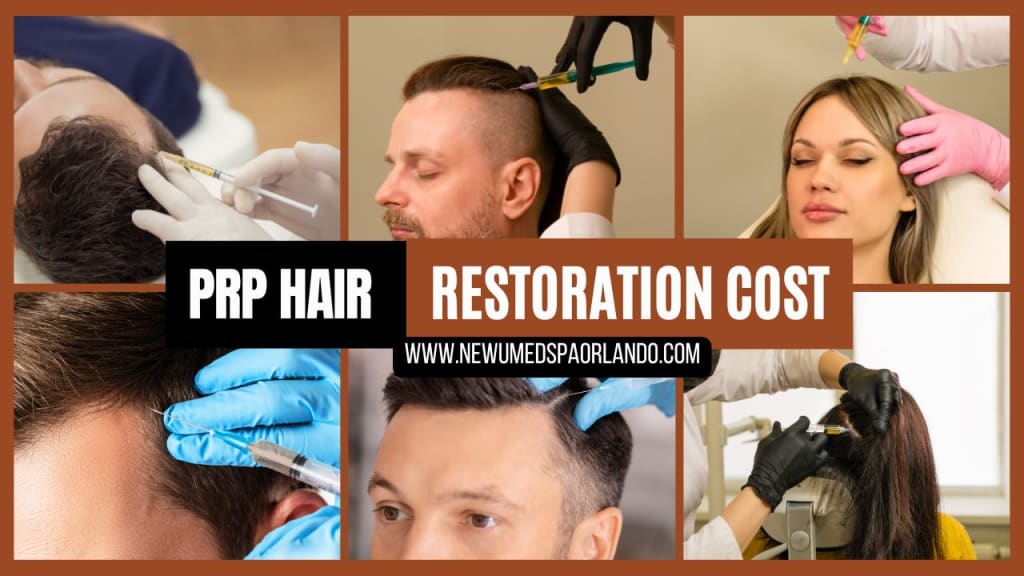
PRP (Platelet-Rich Plasma) hair restoration is an innovative, non-surgical treatment for hair loss that has gained popularity due to its effectiveness and safety. The cost of PRP hair restoration is a key consideration for those exploring this option. PRP therapy uses the body’s natural healing properties to rejuvenate hair follicles, promoting thicker, healthier hair. Many patients also pair PRP with Botox injections to enhance scalp health and improve blood circulation, further boosting results.
In this guide, we’ll cover everything you need to know about PRP hair restoration, including costs, benefits, risks, and why it’s becoming a preferred choice for hair regrowth.
1. What is PRP Hair Restoration?
PRP therapy is a cutting-edge hair restoration technique that uses the patient’s own blood to stimulate natural hair regrowth. The process involves extracting a small amount of blood, isolating the platelet-rich plasma, and injecting it into the scalp to activate dormant hair follicles. PRP hair restoration costs vary depending on the number of sessions required, but it is generally more affordable than surgical hair transplants.
How PRP Therapy Works:
A small blood sample is taken from the patient.
The blood is spun in a centrifuge to separate the platelet-rich plasma.
The PRP is injected into the scalp to stimulate hair follicles.
This process enhances hair thickness and reduces excessive shedding.
Some patients combine PRP with Botox injections to improve scalp hydration and maximize results.
2. Why Choose PRP Hair Restoration?
PRP therapy is a popular choice for hair restoration due to its non-surgical nature and proven effectiveness. While the upfront cost may seem high, the long-term benefits make it a worthwhile investment.
Reasons to Choose PRP:
Non-surgical and minimally invasive: No incisions or stitches are required.
Uses the body’s natural healing process: No foreign chemicals or substances are used.
Minimal downtime: Patients can resume daily activities immediately.
Proven effectiveness: Visible results are often seen within a few months.
Combines well with Botox: Botox improves blood circulation, enhancing PRP results.
PRP therapy is particularly effective for individuals experiencing early-stage hair loss.
3. PRP Hair Restoration Cost Breakdown
The cost of PRP hair restoration depends on factors such as the clinic’s reputation, the doctor’s expertise, and the number of sessions required. Most patients need multiple sessions to achieve optimal results.
PRP Hair Restoration Cost: Treatment Plans & Pricing
Single PRP Session:
400–
400–800
3-Session Package:
1,200–
1,200–2,500
6-Session Package:
2,000–
2,000–4,500
Factors Affecting PRP Hair Restoration Cost:
Number of sessions: Most patients require 3–6 treatments.
Clinic reputation & doctor’s expertise: Established clinics may charge more.
Combination with Botox: Adding Botox for scalp health may increase costs.
Additional treatments: Some clinics offer microneedling or laser therapy to enhance results.
Purchasing session packages often reduces the cost per treatment.
4. Benefits of PRP Hair Restoration
PRP therapy is widely recognized for its ability to stimulate natural hair growth. Many patients find the cost justified due to its numerous benefits.
Key Benefits of PRP Therapy:
Stimulates natural hair growth by reviving dormant follicles.
Thickens existing hair, making it look fuller.
Reduces excessive hair shedding.
Improves scalp health by boosting blood flow, oxygenation, and collagen production.
Painless and safe, with minimal side effects.
Combines effectively with Botox to enhance scalp circulation.
Most patients notice visible improvements within 3–6 months of starting treatment.
5. Risks & Side Effects of PRP Hair Restoration
While PRP therapy is generally safe, some patients may experience mild side effects. Understanding these risks helps determine if the cost is worth it.
Common Side Effects:
Mild redness and swelling at the injection site.
Temporary scalp tenderness.
Bruising, which typically fades within a few days.
Rare Risks:
Infection (if performed in an unsterile environment).
Lack of visible hair regrowth in some cases.
Allergic reactions (extremely rare, as PRP uses the patient’s own blood).
To minimize risks, always choose a certified and experienced professional for PRP therapy.
6. How Many PRP Sessions Are Needed?
The number of PRP sessions required varies by individual. The total cost depends largely on the number of treatments needed.
Typical PRP Treatment Schedule:
Initial Phase: 3 sessions, one per month.
Maintenance Phase: 1 session every 4–6 months.
For long-lasting results, many patients continue maintenance treatments every 6–12 months.
7. PRP vs. Other Hair Restoration Treatments
When comparing PRP hair restoration to other treatments, PRP is often seen as a cost-effective, natural alternative.
PRP vs. Hair Transplant vs. Medications:
PRP Therapy
Type: Non-surgical
Cost:
400–
400–4,500
Results Timeline: 3–6 months
Hair Transplant
Type: Surgical
Cost:
5,000–
5,000–15,000
Results Timeline: 6–12 months
Minoxidil (Rogaine)
Type: Topical
Cost: $30/month
Results Timeline: Ongoing use
Finasteride (Propecia)
Type: Oral
Cost: $50/month
Results Timeline: 3–6 months
For those seeking a non-invasive, natural solution, PRP therapy is an excellent choice.
8. Is PRP Hair Restoration Worth the Cost?
While the upfront cost of PRP hair restoration may seem high, its long-term benefits make it a worthwhile investment for many.
Why PRP is a Smart Investment:
Long-lasting results, with improvements lasting 12–18 months.
No surgery required, meaning no downtime or scarring.
Boosts confidence by restoring fuller, healthier hair.
Combines well with Botox to enhance scalp circulation and results.
PRP is particularly effective for individuals with thinning hair or early-stage hair loss.
9. PRP Hair Restoration Process Breakdown
PRP hair restoration is a state-of-the-art, non-surgical treatment that uses platelet-rich plasma from the patient’s own blood to stimulate hair growth. The cost varies based on the number of sessions and the provider’s expertise.
Key Steps in PRP Hair Restoration:
Blood Extraction: A small blood sample is taken from the patient.
Centrifuge Process: The blood is spun to isolate platelet-rich plasma.
Injection Phase: PRP is injected into targeted areas of the scalp.
Hair Growth Stimulation: PRP activates dormant follicles and strengthens existing hair.
Many patients combine PRP with Botox for scalp rejuvenation to enhance results.
10. What is PRP Therapy for Hair Restoration?
PRP therapy for hair restoration is a non-surgical treatment that uses the patient’s own platelet-rich plasma to encourage hair growth. This innovative process improves blood circulation to the scalp and activates dormant hair follicles.
How PRP Therapy Works:
Blood Extraction: A small blood sample is drawn.
PRP Separation: The blood is processed to isolate platelet-rich plasma.
Scalp Injection: PRP is injected into thinning areas of the scalp.
Hair Follicle Stimulation: PRP releases growth factors to strengthen and revive follicles.
The cost of PRP hair restoration depends on the clinic, provider expertise, and number of sessions. Many patients combine PRP with Botox to improve scalp health and enhance results.
Conclusion: Is PRP Hair Restoration Worth the Cost?
PRP hair restoration costs vary based on factors such as the number of sessions, clinic reputation, and provider expertise. However, PRP therapy is a safe, effective, and non-invasive solution for hair regrowth. By leveraging the body’s natural healing process, PRP stimulates hair follicles, resulting in thicker, healthier hair. Many patients also combine PRP with Botox to further enhance results. If you’re seeking a natural way to restore hair and boost confidence, PRP hair restoration is worth considering. Consult a certified professional to determine if this treatment is right for you.
About the Creator
Keep reading
More stories from Tara westover and writers in Men and other communities.
Side Effects of Lip Enhancement
Lip enhancement is the addition of volume to a person's lips and smoothing the area around the mouth. Using such techniques entails certain risks and complications. Weighing such risks is necessary because they can affect your safety during the procedure. This article will look into how lip enhancement can go wrong and the reasons that cause those symptoms as well as what can be done to avoid or treat such side effects.
By Tara westover12 months ago in Men
The Silent Saboteur Wrecking Your Prostate Health (And It's Not the Beer You Think)
Prostatitis. The word itself can make a man clench up. It’s not cancer, but its relentless, nagging presence can feel just as draining. It’s not like a cold that comes and goes; it’s more like a stubborn, unwelcome guest who overstays their welcome, often flaring up just when you think you’ve finally shown them the door. For many men navigating this frustrating condition, life becomes a game of "whodunit," trying to pinpoint the trigger for the latest bout of pain, urgency, or discomfort.
By Amanda Chou2 days ago in Men
The Strength in Gentle Hands
Daniel was known in his neighborhood as a strong and hardworking man. He had a broad frame, a loud voice, and could lift almost anything. People often admired his physical strength, but Daniel sometimes wondered if that was all he had to offer. He wanted to be respected not just for his muscles, but for who he was as a person.
By Sudais Zakwanabout 4 hours ago in Men
Self Help: Grifters' Gospel
On Self-Help, Snake Oil, and the Illusion of Change Psychology professionals and students can be imagined on two opposite sides of a line called self-help books: likely a larger group opposes pop-science and step-by-step manuals filled with talk of success, journaling, and not giving a f**k; others love them, but they aren’t many.
By Avocado Nunzella BSc (Psych) -- M.A.P 4 days ago in BookClub


Comments
There are no comments for this story
Be the first to respond and start the conversation.