
Why Some Men Are Treated Differently?
A quiet shift in style changed how the world treated him.
For a long time, people talked over him.
Not deliberately. Not cruelly. Just enough to remind him where he stood. In meetings, his ideas were acknowledged late - usually after someone else repeated them louder. At social gatherings, conversations drifted past him like he wasn’t an anchor point, just a pause.
He wasn’t unnoticed because he lacked substance. He was unnoticed because he looked like he didn’t expect to be seen.
His wardrobe reflected that belief. Safe. Forgettable. Designed to blend into rooms instead of shaping them. He told himself it didn’t matter - until it did.
The moment came quietly. A promotion he deserved went to someone less capable but more visible. More present. Someone who carried himself like he belonged at the head of the table, not the side.
That night, something hardened into clarity.
He didn’t want attention. He wanted alignment - between who he was and how he appeared.
The changes were subtle, almost private. Better fit. Fewer pieces. Sharper lines. Then one detail at a time.
A tailored jacket replaced the soft, shapeless layers he used to hide behind. Shirts fit closer at the shoulders, cleaner at the collar. Nothing flashy - just intentional. Shoes with weight. Fabrics that held structure instead of collapsing. He stood differently in them, as if the clothes expected something from him.
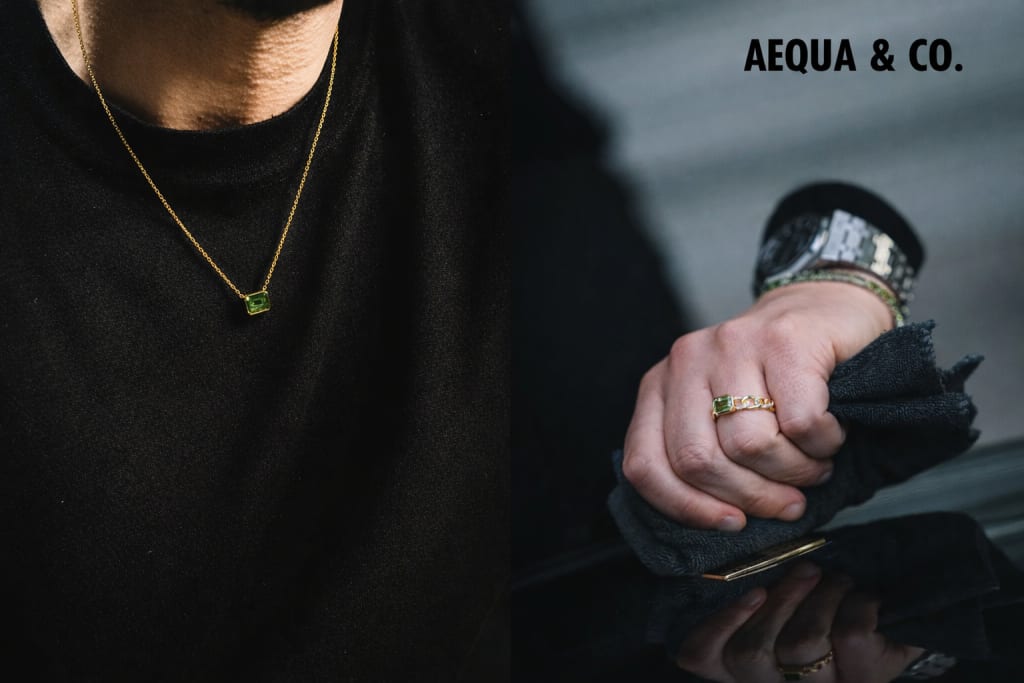
A man’s gemstone bracelet found its way onto his wrist - cool blue stones, precise and composed. It didn’t demand attention. It clarified it. When his hand rested on the table, the bracelet held its line - calm, balanced, quietly assured.
Later came a gold chain necklace, thin and restrained, catching light only when he moved. It sat close to the body, often hidden beneath the shirt, but always felt - like a quiet reminder that discipline and restraint could carry real authority.
Together, the clothes and details did what volume never could. They didn’t ask for attention. They organized it.
Nothing about him became louder.
But everything became clearer.
People began reacting before speaking. Interruptions slowed. Eye contact held longer. In meetings, his ideas were met with pauses - consideration - before responses. At dinners, strangers asked what he did without glancing elsewhere mid-sentence.
The difference wasn’t the jewelry.
The difference was that he no longer dressed like someone waiting for permission.
He had learned what his grandfather once tried to explain while polishing an old watch at the kitchen table: things that last are treated differently. Heirlooms don’t beg for attention - they command care.
That principle applied to people too.
Now, when he entered a room, conversations adjusted. Not because he demanded space - but because he occupied it fully.
He hadn’t changed who he was.
He had changed how seriously the world took him. And once that shift happens, there’s no going back.
He noticed it most in silence.
The way rooms seemed to register him before he spoke. The way people waited—not out of politeness, but instinct. As if something unspoken had settled into place. He didn’t rush anymore. He didn’t fill gaps. He let moments breathe, and somehow they bent toward him.
What surprised him wasn’t how others changed. It was how little effort it took to maintain the shift. Authority, he realized, wasn’t something you performed daily. It was something you set, once, and then lived inside.
He stopped over-explaining. Stopped softening his opinions to make them easier to accept. When he disagreed, he did it cleanly. When he agreed, he didn’t rush to prove it. His presence had weight now—earned, not asserted.
The bracelet stayed cool against his wrist. The chain rested where it always had. Not symbols. Anchors. Small, deliberate reminders that intention compounds.
He understood then that confidence wasn’t about becoming visible everywhere. It was about being undeniable where it mattered.
Some people still spoke louder. Some still chased attention. He let them. He had no interest in noise anymore.
He had learned how to stand.
And when a man knows how to stand—how to occupy his space without apology—the world doesn’t need convincing. It adjusts.
Quietly. Permanently.
About the Creator
Keep reading
More stories from writers in Men and other communities.
Common Health Issues Affecting Men After 30
Turning 30 marks a major turning point in men’s physical and mental health. While many men feel healthy and active, emerging medical evidence highlighted by Stories Today shows that a number of health conditions begin to become more common or show early warning signs after age 30. Understanding these issues early can help men take proactive steps to stay well over the long term.
By Stories Today4 days ago in Men
Prostatitis Is Not a "Monster": Shattering the 6 Myths That Fuel Male Anxiety
Look around your office, your gym, or your local pub. Statistically speaking, one out of every two men you see will grapple with inflammation of the prostate at some point in his life. It is the phantom ache that rarely gets discussed over beers, a "silent struggle" that strikes particularly hard during the prime years of youth and middle age.
By Amanda Chou4 days ago in Men


Comments
There are no comments for this story
Be the first to respond and start the conversation.