
Betrayal
Learning to trust my body again after it betrayed me

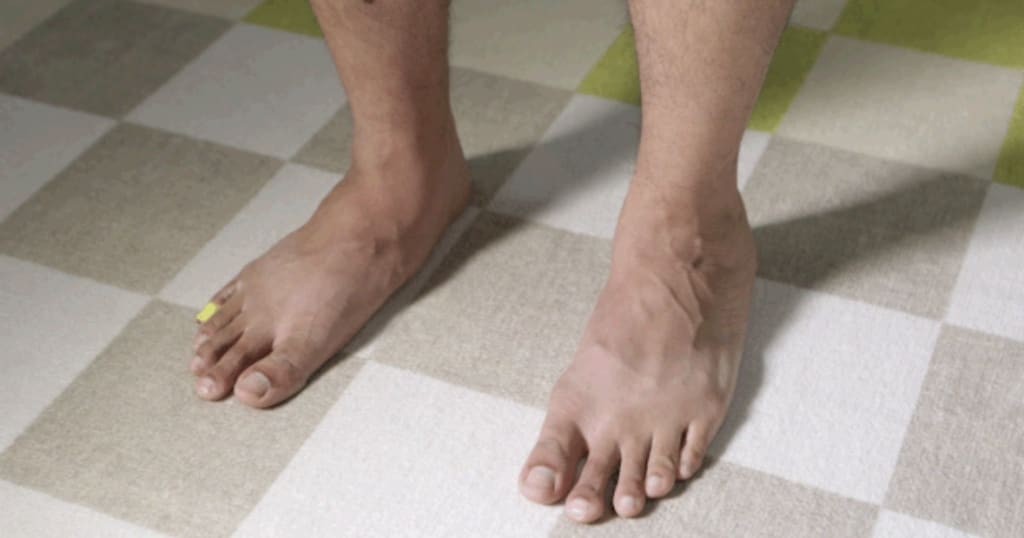
There was a time when I never thought about my body.
It existed quietly in the background of my life, carrying me from place to place without resistance or negotiation. Walking, standing, planning, committing — none of it required thought. My body was reliable. It was neutral. It was mine, and I trusted it completely.
That trust was never something I consciously built. It was something I assumed would always be there.
Multiple sclerosis took that assumption away.
The first symptoms were subtle enough to dismiss. Fatigue that felt disproportionate. Sensations that didn’t quite make sense. Moments of instability that could be explained away. Denial felt easier than acknowledgement. My body had always worked before. There was no reason to believe it would stop.
Diagnosis changed everything.
Suddenly, my body was no longer something I could rely on without question. It became unpredictable. Fatigue arrived without warning. Energy disappeared halfway through tasks I had completed effortlessly before. Signals I could not see or control were interrupting the communication between my brain and the rest of me.
The body I had trusted became unfamiliar.
Trust is difficult to lose. It is even harder to rebuild.
In the early months after diagnosis, I felt a quiet resentment toward my body. It had failed me without explanation. It had disrupted the future I assumed I would have. It had introduced limitations I did not choose.
Every symptom felt like evidence of betrayal.
Simple things became uncertain. Leaving the house required calculation. Standing for too long carried consequences. Committing to plans meant accepting the risk that my body might not cooperate when the time came.
Certainty disappeared. Doubt replaced it.
I began to question everything. Every sensation felt like a warning. Every moment of fatigue felt like confirmation that my body was no longer safe to rely on. The relationship I had with myself became defined by caution.
Fear lived in the space where trust used to be.
For a long time, I responded by pushing against my body rather than listening to it. I tried to override fatigue. I tried to reclaim control through effort. I believed that determination could restore what illness had taken.
The opposite happened.
Pushing past my limits deepened exhaustion. Ignoring warning signs created instability. Resistance created more distance between myself and the body I lived in.
Trust cannot be rebuilt through force.
Rebuilding trust required something far more difficult: acceptance.
Acceptance did not mean approval. Acceptance did not mean giving up. Acceptance meant recognising reality without fighting it. It meant acknowledging that my body had changed, and that survival required adaptation rather than resistance.
Listening became essential.
Fatigue stopped being something to ignore. It became information. Pain stopped being something to minimise. It became communication. My body was no longer betraying me. It was telling me what it needed.
Understanding that shift changed everything.
My body was not the enemy. It was not acting against me. It was responding to damage I could not see. It was protecting itself in the only ways it could.
Trust began to return slowly.
Small moments helped rebuild it. Resting when I needed to rest. Using support when I needed support. Respecting limitations rather than testing them. Each act of listening reinforced the idea that my body and I were still on the same side.
The relationship became collaborative rather than adversarial.
There are still moments of frustration. There are still days when unpredictability returns. Chronic illness does not disappear because trust improves.
The difference now is understanding.
My body is not betraying me. It is surviving with me.
Trust looks different now. It is quieter. It is less certain. It is built on communication rather than assumption.
I trust my body to tell me when it needs rest. I trust it to signal when something is wrong. I trust it to carry me as far as it safely can.
Trust no longer means believing my body will never fail.
Trust means knowing I will listen when it speaks.
The body I live in is not the body I once had. It has been reshaped by illness, by adaptation, by survival.
It is still mine.
It is still worthy of trust.
Learning to trust my body again has not meant returning to who I was before.
It has meant learning to live honestly with who I am now.
About the Creator
Keep reading
More stories from Millie Hardy-Sims and writers in Motivation and other communities.
Invisibility
There was a time when hiding felt easier. Before the walking stick. Before the Blue Badge. Before the quiet, irreversible shift in how I moved through the world. My disability existed in a space that could be concealed. I could choose when to mention it, when to acknowledge it, when to allow it to exist publicly.
By Millie Hardy-Simsabout 20 hours ago in Motivation
One Hard Thing
Stop me if you’ve heard this one before: You have the number, you know your schedule- you’ve even picked out the perfect day and time to make this appointment. Shoot, you’ve even picked out alternative days and times just in case their schedules can’t accommodate you!
By Taylor Rigsby22 days ago in Motivation
Actions Build Success: Why Consistent Effort Turns Dreams Into Reality
Success never arrives because of powerful words alone. It comes from consistent action, daily discipline, focused effort, and patient persistence. You can talk about your dreams for years—but until you act on them, nothing changes.
By Adil Ali Khana day ago in Motivation




Comments
There are no comments for this story
Be the first to respond and start the conversation.