
Building a Wood Shelter & Campfire Cooking
Bushcraft Living & Campfire Grilled Meat

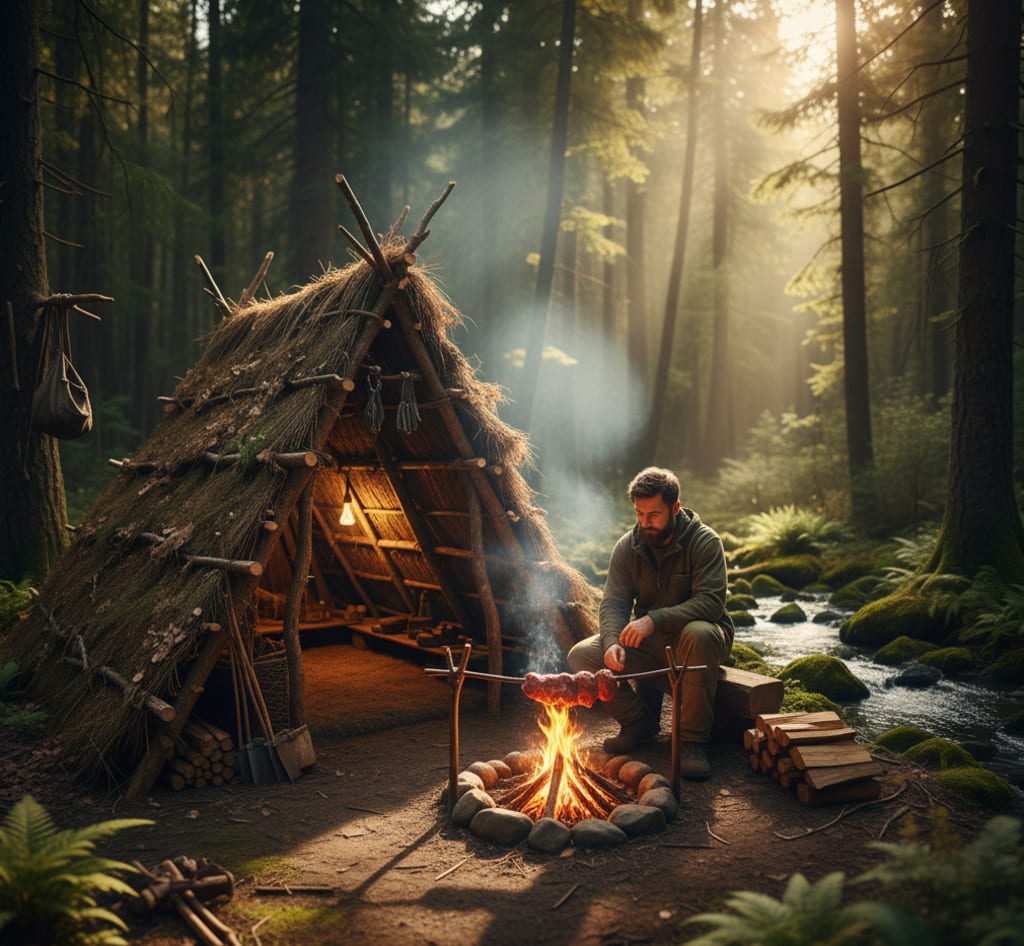
Building a survival shelter in the forest is not just about staying alive—it is the art of truly understanding and living in harmony with nature. The story begins with exploring the forest to find a suitable location for the shelter, focusing on safety above all else. The area must be on high ground, safe from flooding, away from rotten trees, not in strong wind paths, and close to a clean water source. Wind direction, animal trails, and natural drainage patterns are also carefully observed to avoid danger and disturbances. Once the location is chosen, the surrounding area is cleared of branches, leaves, and debris to prepare a stable and organized foundation for construction, ensuring both safety and long-term usability.
The next step is collecting wood and natural materials. Only dry wood that has fallen naturally is used—no living trees are cut—to preserve the balance of the forest ecosystem. Logs of different sizes are sorted for main supports, beams, and roof structures. Flexible vines, strong roots, and natural fibers are gathered for binding and reinforcement. The shelter frame is then built in a simple form, using leaning logs in a triangular or A-frame shape. Wooden poles are fixed into the ground and tied together with vines or natural rope to create a structure strong enough to withstand weight, wind, and rain. After the main frame is complete, branches, leaves, dry grass, and bark are layered over the roof and walls in thick layers to protect against wind and rain while keeping warmth inside the shelter. Thicker insulation layers are added on the wind-facing side to increase protection from cold and storms.
Once the outer structure is finished, the interior is arranged for living. The ground is covered with dry leaves, grass, bark, and soft plant fibers to protect from ground moisture and add insulation. Raised sleeping areas are created using wooden platforms or thick natural bedding to prevent heat loss and insect contact. Separate zones are organized for sleeping, storing tools, drying wood, and resting, making the small shelter practical, comfortable, and efficient for short-term survival in the forest.
When the shelter is ready, the next step is building a campfire. A safe spot is chosen at a proper distance from the shelter, taking wind direction into account. A small pit is dug and lined with stones and soil to control heat and prevent fire spread. Dry firewood is sorted by size for easy fire management, and natural materials such as dry leaves, bark, resin, or natural tinder are used to start the fire. The campfire provides warmth, light, cooking ability, insect protection, and psychological comfort, while also serving as a survival signal if needed.
Next comes bushcraft-style cooking. Meat or food gathered from nature is prepared simply, without complex seasoning. The food is skewered on sticks or placed on stones and grilled slowly over low heat. The fire is carefully controlled to ensure even cooking and food safety. The smell of smoke mixed with grilled meat creates a raw, natural, and comforting forest atmosphere. The food is not just for taste—it provides energy, strength, and survival nutrition.
The final step is organizing the entire area. The shelter’s strength, the safety of the fire zone, the storage of dry firewood, food protection from animals, and resting space are carefully checked. Emergency tools, water containers, and basic survival supplies are placed within easy reach. Once everything is in order, the wooden survival shelter in the forest is complete—becoming a place of safety, warmth, and peace, surrounded by true wilderness.
Bushcraft shelter building is not only about construction; it is about learning to live with nature, using resources wisely, minimizing impact, relying on oneself, and embracing a simple way of life. This small shelter is not just a refuge—it is a symbol of skill, patience, sustainability, and deep understanding of nature, a true lesson in real survival in the great forest, where humans become part of the ecosystem instead of dominating it.
About the Creator
Keep reading
More stories from Kenneth Ethan Carl and writers in Motivation and other communities.
A man built a tiny house inside a tree trunk by himself
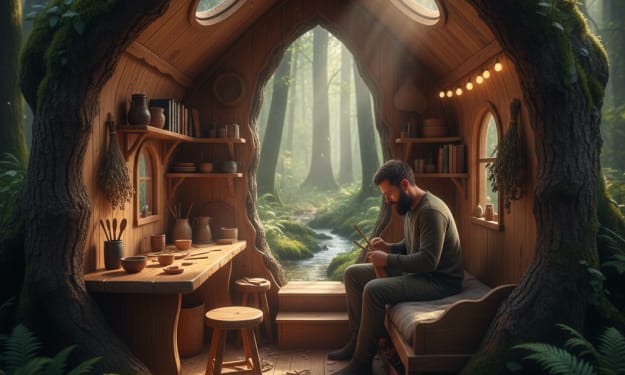
Building a house in the forest is a dream for many people because it represents a life truly close to nature, far from the chaos of the city and the noise of modern society. This story begins with a man who chose a simple way of living and decided to build a tiny house inside the hollow of a giant tree deep in the forest, using only his own strength, effort, and determination. He began by carefully exploring the forest area, selecting a tree with a strong trunk and a natural hollow, located in a safe position away from floods, landslides, and strong winds. Once the right location was chosen, he cleared the surrounding area to prepare the construction site and defined the boundaries of the living space from the very beginning, ensuring safety, stability, and harmony with the natural environment.
By Kenneth Ethan Carlabout 4 hours ago in Motivation
One Hard Thing
Stop me if you’ve heard this one before: You have the number, you know your schedule- you’ve even picked out the perfect day and time to make this appointment. Shoot, you’ve even picked out alternative days and times just in case their schedules can’t accommodate you!
By Taylor Rigsby20 days ago in Motivation



Comments
There are no comments for this story
Be the first to respond and start the conversation.