
Dear Past Me
Mourning the person I used to be

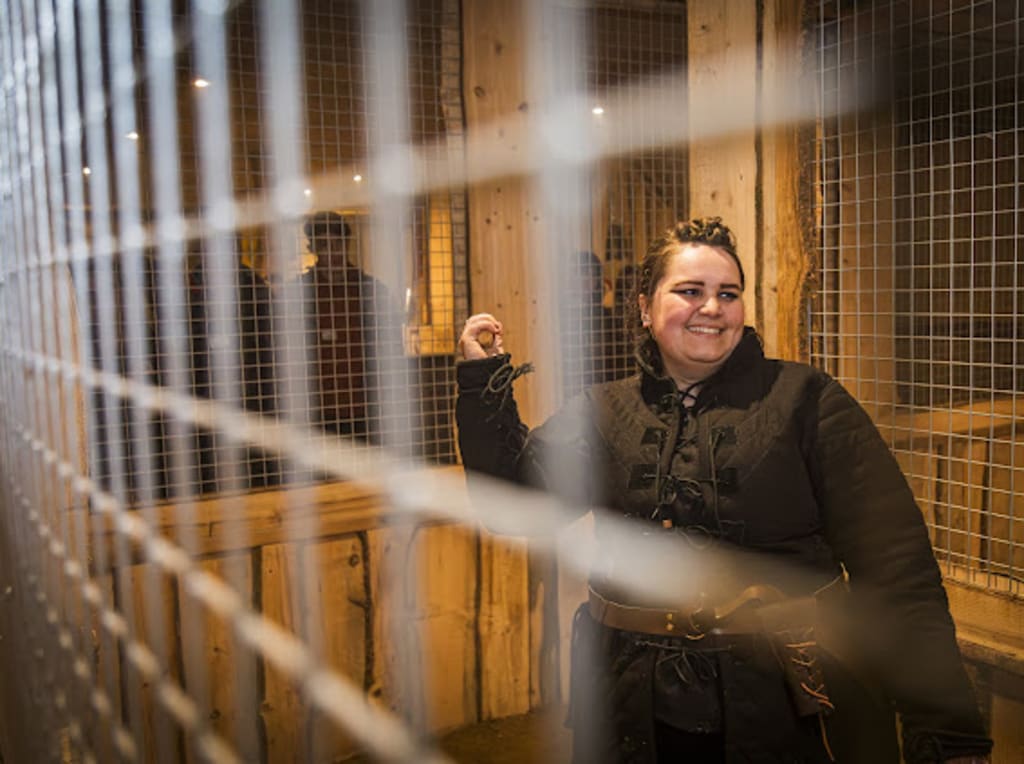
There is a version of me that still exists in my memory.
She moves quickly. She makes plans without hesitation. She says yes without calculating the cost. Her body is not something she negotiates with or questions. It simply works. It carries her forward without resistance, without interruption, without fear.
She does not know what is coming.
I miss her in ways that are difficult to explain, because she is not entirely gone. She lives in photographs, in old routines, in the quiet instinct to believe I can still do everything the same way. She appears in moments of muscle memory, when I reach for a pace my body can no longer sustain.
Grief, I have learned, is not always about losing someone else. Sometimes, it is about losing yourself.
When I was diagnosed with multiple sclerosis, the most obvious changes were physical. Fatigue became constant. Energy became unpredictable. My body, once reliable, became something I had to listen to carefully. These changes were visible, measurable, explainable.
What was harder to articulate was the identity I lost alongside them.
Before diagnosis, my future felt stable. It existed as an open path stretching forward, shaped by effort and intention. I assumed my body would cooperate with whatever life I chose to build. I assumed I could rely on myself in the same way I always had.
Diagnosis introduced uncertainty where certainty once lived.
The person I used to be did not have to think about accessibility. She did not wonder whether she would have the energy to follow through on plans. She did not hesitate before committing to something simple. Her independence was invisible because it was unquestioned.
I did not realise how much of my identity was built on that invisible foundation until it shifted beneath me.
There is grief in losing effortlessness. Grief in losing spontaneity. Grief in realising that the person you thought you would always be no longer exists in the same form.
This grief is complicated because it exists alongside survival. I am still here. I am still myself. The loss is not total, and yet it is profound.
For a long time, I resisted acknowledging this grief. It felt disloyal to the person I was becoming. It felt ungrateful to mourn something when I was still alive, still capable, still moving forward. I told myself that acceptance meant letting go completely.
Acceptance, I have learned, is not the absence of grief. It is the willingness to live alongside it.
Missing the person I used to be does not mean I reject who I am now. It means I recognise the magnitude of what has changed. It means I honour the reality that transformation, even when necessary, comes with loss.
The person I am now moves differently through the world. She plans carefully. She rests when her body asks. She understands limits in ways her younger self never needed to. She has learned to listen instead of override, to adapt instead of push, to protect instead of ignore.
She is still strong.
Strength looks different now. It exists in restraint rather than endurance. It exists in honesty rather than denial. It exists in the quiet decision to keep building a life within new boundaries.
There are moments when the past feels painfully close. Moments when I remember how easy everything once felt. Moments when grief rises unexpectedly, triggered by something ordinary—a long walk, a busy day, a memory of effortlessness.
These moments do not mean I am stuck. They mean I am human.
Grief is not a sign of weakness. It is a sign of love for the life I lived and the person I was.
Over time, my relationship with that former version of myself has changed. I no longer see her as someone I need to return to. I see her as someone who brought me here. She exists as part of me, not as a standard I must meet.
The person I am now is not lesser. She is altered. She is shaped by experience, by adaptation, by survival.
She understands things her younger self never had to understand.
She understands fragility. She understands resilience. She understands the value of rest, of access, of listening to her body instead of fighting it.
She understands that identity is not fixed. It evolves in response to what life demands.
I am still becoming myself.
The grief has not disappeared completely. It has softened. It exists as a quiet acknowledgement of what was lost, without overshadowing what remains.
I carry both versions of myself forward.
Not as opposites.
As continuations.
I did not stop being myself when I became disabled.
I became someone new, built from the same foundation, shaped by different realities.
The person I used to be deserved love.
The person I am now deserves it too.
And learning to hold both truths at once has been one of the most difficult and most important parts of survival.
About the Creator
Keep reading
More stories from Millie Hardy-Sims and writers in Motivation and other communities.
Permission to Rest
Rest used to feel like failure. Before my diagnosis, rest was something I earned after productivity. It was a reward waiting at the end of a finished task list, something to allow myself once everything else had been completed. Rest was optional. It was negotiable. It was something I could postpone in favour of being useful, being present, being enough.
By Millie Hardy-Simsabout 21 hours ago in Motivation
One Hard Thing
Stop me if you’ve heard this one before: You have the number, you know your schedule- you’ve even picked out the perfect day and time to make this appointment. Shoot, you’ve even picked out alternative days and times just in case their schedules can’t accommodate you!
By Taylor Rigsby19 days ago in Motivation




Comments
There are no comments for this story
Be the first to respond and start the conversation.