
Mind Over Everything
One Thought at a Time, Everything Changed

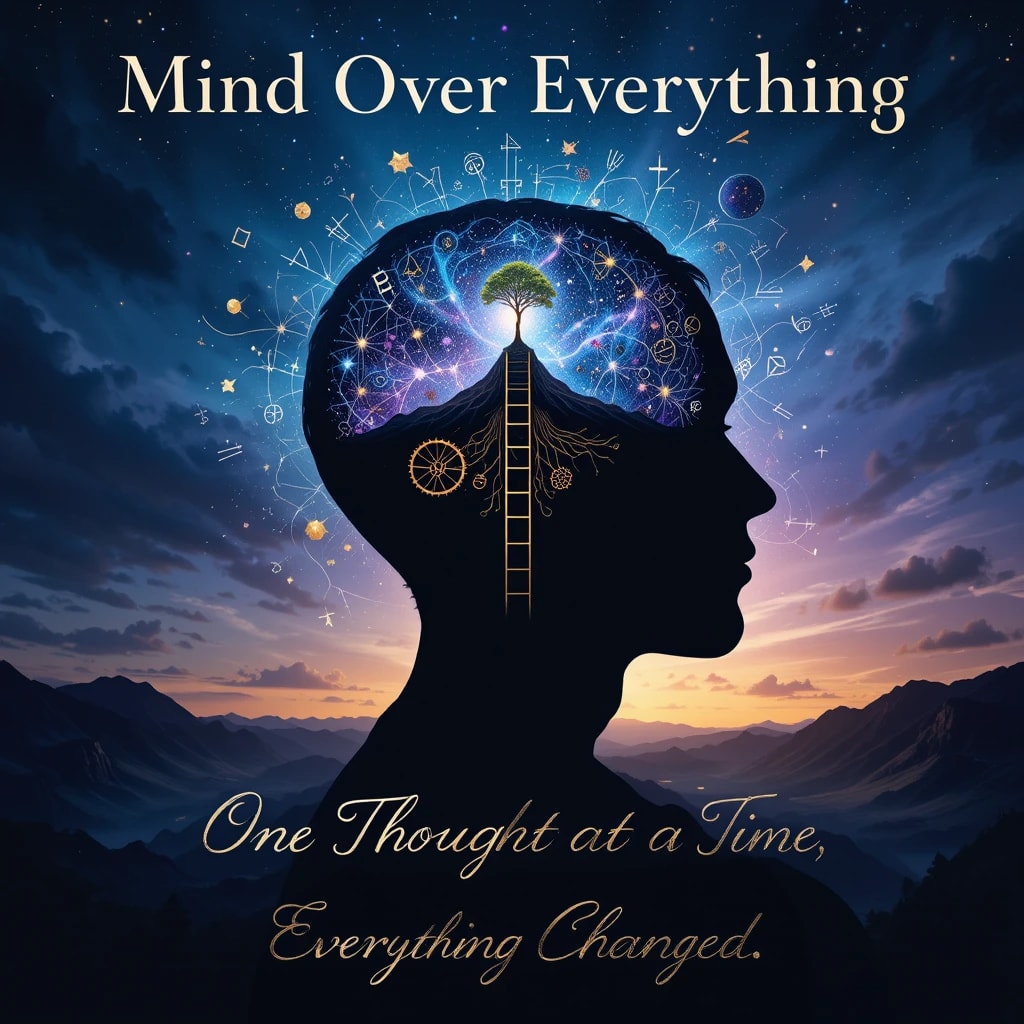
For as long as he could remember, Ayan had been told what he wasn’t.
“You’re not smart enough.”
“You’re not fast enough.”
“You don’t belong here.”
The voices came from teachers, classmates, relatives — and eventually, from inside his own head. It wasn’t that he lacked potential. It was that no one had helped him believe in it. In school, he sat in the back, avoided eye contact, and rarely spoke unless called upon. In sports, he was the last to be picked. In life, he was invisible.
At sixteen, Ayan stood at the edge of a rooftop — not to jump, but to escape. The world below bustled with noise, honking cars, flashing lights, people with purpose. He felt like a pause in a fast-forwarding film. Quiet. Stuck. Forgotten.
But something strange happened that night. As the cold breeze brushed against his face, and the stars blinked above like silent witnesses, a single thought cut through the noise:
“What if I’m not broken… just unfinished?”
That thought, tiny and almost laughable, stayed with him. It was the first time he didn’t fully accept the narrative the world had written for him. The next day, instead of rushing to avoid school, he walked slower. He looked at the cracked sidewalk, the peeling paint on the school gates, the stray cat under the canteen table — and for the first time, he noticed. And in noticing, he cared.
He began asking questions — not to others, but to himself.
Why do I think I can’t do math?
Why do I believe I’m weak in sports?
Why does failure feel permanent?
There were no immediate answers. But the questions themselves were powerful.
He started small. A new notebook labeled “Mindset”. In it, every morning, he wrote one sentence:
> “I can improve.”
At first, it felt silly. But writing it daily turned it into belief. From there, he made a deal with himself — every time he failed, he’d try one more time before quitting. Just once.
In class, when a math problem stumped him, he stayed ten extra minutes after school watching free YouTube tutorials. Slowly, patterns emerged. Concepts clicked. One day, when the teacher handed back a quiz, Ayan wasn’t the lowest score — he was in the middle.
Middle wasn’t excellence. But it wasn’t failure either. And for him, that was a win.
In P.E., he volunteered to run. He still came in last. But he didn’t walk. He ran — lungs burning, legs aching, but finishing.
That evening, he wrote a new sentence:
> “I am becoming stronger.”
His changes weren’t dramatic. He didn’t transform into a genius overnight. But momentum — like a snowball — builds silently at first. One thought becomes two. Two habits become routine. And one mindset shift changes everything.
Soon, people noticed. His math teacher asked him to tutor a struggling student. A classmate invited him to join a group project. His mom, usually distracted by her own exhaustion, began sitting beside him during homework. “You’re different now,” she said one night. “What happened?”
He smiled. “I started thinking differently.”
By the time Ayan reached university, he had developed a strange kind of hunger. Not for grades or praise — but for growth. He pursued psychology, fascinated by how thoughts shape reality. He read about neural plasticity, learned how the brain rewires through effort, and realized — his story wasn’t unique. It was possible for anyone to change. To shift from limitation to liberation.
He launched a blog called Mind Over Everything and began writing about his journey — not the highlights, but the struggles: the panic before public speaking, the frustration when habits broke, the fear of slipping back. But he also wrote about tools that helped — journaling, mindfulness, reframing thoughts, and practicing self-kindness.
To his surprise, thousands began reading. Some messaged him saying, “You wrote exactly what I needed today.”
Years passed. His blog became a platform. He gave TEDx talks. Started community workshops in underfunded schools. One day, he returned to his old school — not as a student, but as a guest speaker.
He stood in front of the class, heart pounding, a mix of nerves and pride in his chest. He looked at the students — many with the same tired eyes he once had.
“I used to sit in the last row,” he began. “I thought I wasn’t good enough. I believed I had no future. But one thought changed everything.”
He paused and let the silence speak.
“Not because I became smarter or luckier. But because I stopped believing the lies. I learned that thoughts are like seeds. What you water, grows. And I started watering hope.”
He ended his talk with a question:
“What will you choose to believe about yourself today?”
---
That night, Ayan returned to his apartment. He made tea, sat by the window, and opened the first page of his old notebook. It was worn, the pages curled and stained with time. On the first line was his old handwriting:
> “I can improve.”
He smiled.
From that one sentence, he had built a new life.
Not one without struggle.
But one powered by belief.
One thought at a time.
About the Creator
Keep reading
More stories from Kim Jon and writers in Motivation and other communities.
From Nothing to Everything
Zayan was born in a forgotten corner of the city—the kind of place where dreams came to die quietly. The streets were narrow, the houses crumbling, and hope seemed like something people once had but misplaced long ago. His father worked two jobs that barely paid for food, and his mother stitched clothes late into the night under a flickering bulb.
By Kim Jon8 months ago in Motivation
One Hard Thing
Stop me if you’ve heard this one before: You have the number, you know your schedule- you’ve even picked out the perfect day and time to make this appointment. Shoot, you’ve even picked out alternative days and times just in case their schedules can’t accommodate you!
By Taylor Rigsby9 days ago in Motivation
Dead and Wearing Green
She was wearing that green dress when I first saw her, five years ago to the day. Flowing meadow fabric draped over long legs, thick auburn hair flowing down her back. That smile. Of course, she is still beautiful now. But now she is no longer alive.
By Karen Cave6 days ago in Fiction



Comments (1)
Next