
My Choice to be Seen
Navigating the world with a walking stick - at 31

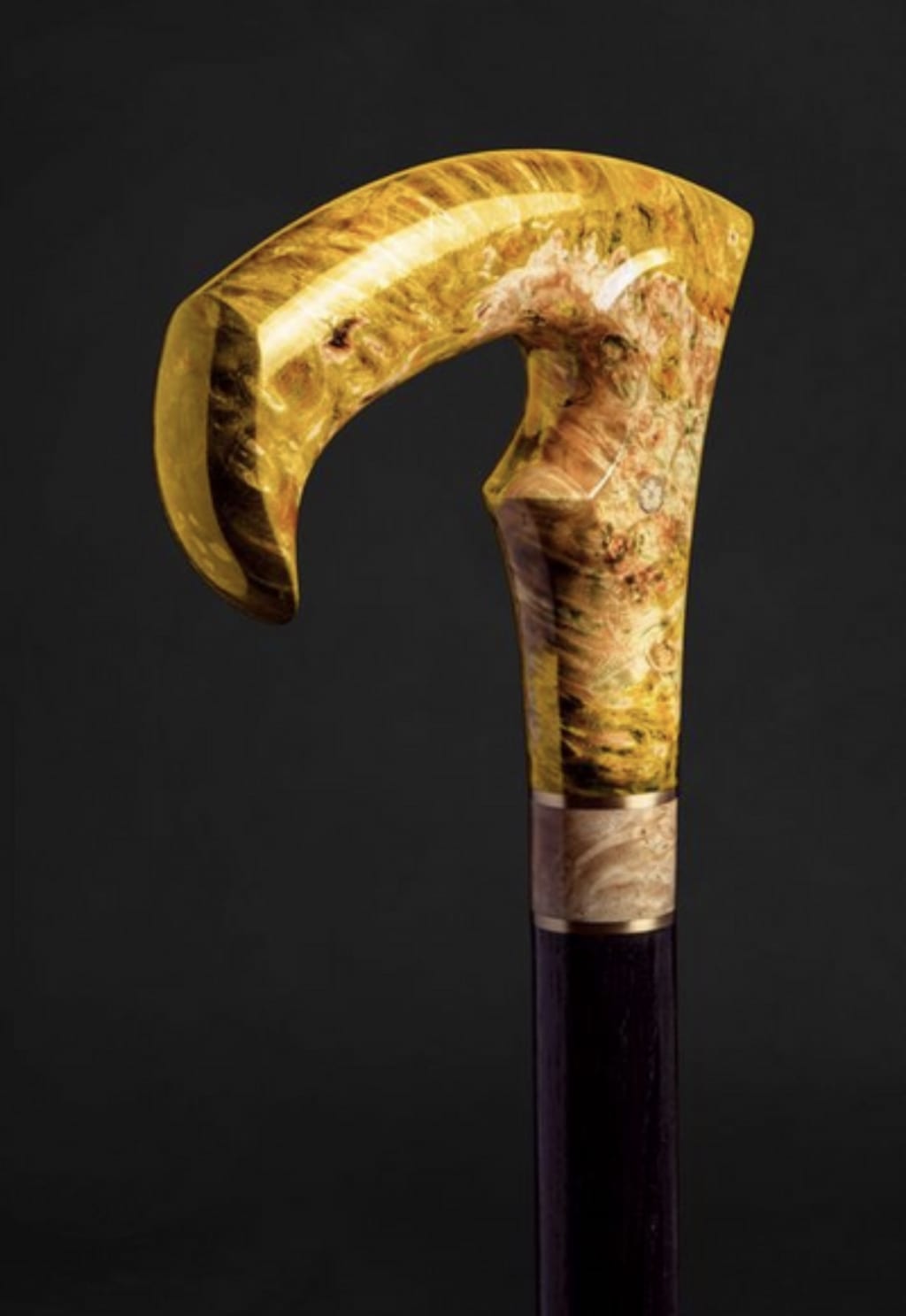
The first time I used my walking stick in public, I felt like every eye was on me.
I was 31—too young, I thought, for something so visible, so loaded with assumptions. The stick wasn’t just a mobility aid; it felt like an announcement. An explanation I hadn’t prepared. A story strangers would finish for me in their own heads.
I worried about the looks before I even noticed them.
People stared. Some tried not to. Others glanced, then looked again, as if checking they’d seen correctly. A few offered pitying smiles. Some avoided eye contact entirely. I became hyper-aware of myself in ways I’d never been before—how I walked, how slowly, how much space I took up.
The walking stick made my disability visible. And visibility, I learned quickly, can be uncomfortable.
What unsettled me most wasn’t curiosity—it was the assumptions. That I must be injured. That I must be elderly. That I must be exaggerating. That I must be fragile. Invisible illness teaches you how quickly the world categorises bodies that don’t fit expectations.
Before the stick, I blended in. I struggled quietly. I risked falls, pain, and exhaustion to avoid attention. I told myself I was managing. In reality, I was shrinking my life to avoid being seen.
The fear of other people’s opinions weighed heavily. Would they think I was being dramatic? Would they judge me for needing help? Would they stare if I stumbled? Would I cause a scene if I fell?
And that fear kept me home more often than I want to admit.
Using a walking stick meant accepting that some people would look. It meant letting go of the illusion that I could control how others perceived me. It meant choosing safety over pride, and function over fear.
The turning point wasn’t confidence—it was practicality.
I realised I had a choice. I could stay home, isolated and frustrated, trying to protect myself from imagined judgments. Or I could go out, live my life, and use the support that allowed me to do so safely. The risk of being stared at was suddenly less frightening than the risk of falling.
A walking stick doesn’t make me weaker. It makes me steadier.
It doesn’t limit my independence. It gives me more of it.
Over time, the looks mattered less. Not because they stopped—but because I stopped centring them. I learned that most people’s opinions are fleeting, unspoken, and ultimately irrelevant to my wellbeing. Their discomfort is not my responsibility.
What matters is this: I can go out. I can move through the world. I can reduce pain, prevent injury, and conserve energy. I can participate instead of watching life pass by from the sidelines.
Using a mobility aid at 31 has taught me that dignity doesn’t come from pretending you don’t need help. It comes from giving yourself permission to live fully, even if it looks different than expected.
I still notice the looks sometimes. I still feel a flicker of self-consciousness now and then. But it no longer stops me.
I would rather be seen with a walking stick than unseen at home.
I would rather move carefully than fall publicly.
I would rather live visibly than disappear quietly.
And that choice—choosing access over approval—is one I’ll make every time.
About the Creator
Keep reading
More stories from Millie Hardy-Sims and writers in Motivation and other communities.
I Am More Than Enough.
For most of my life, my body felt like a problem I was expected to solve. I learned early that being plus-size came with conditions. I could be confident, but not too confident. Stylish, but only if I dressed to “flatter” myself. Visible, but preferably quieter than everyone else. My body was treated as a work in progress—something that would be acceptable once it was smaller, tighter, or more socially palatable.
By Millie Hardy-Simsa day ago in Motivation
One Hard Thing
Stop me if you’ve heard this one before: You have the number, you know your schedule- you’ve even picked out the perfect day and time to make this appointment. Shoot, you’ve even picked out alternative days and times just in case their schedules can’t accommodate you!
By Taylor Rigsby15 days ago in Motivation




Comments
There are no comments for this story
Be the first to respond and start the conversation.