
Rich Dad Poor Dad book reviews
What the Rich Teach Their Kids About Money – That the Poor and Middle Class Do Not

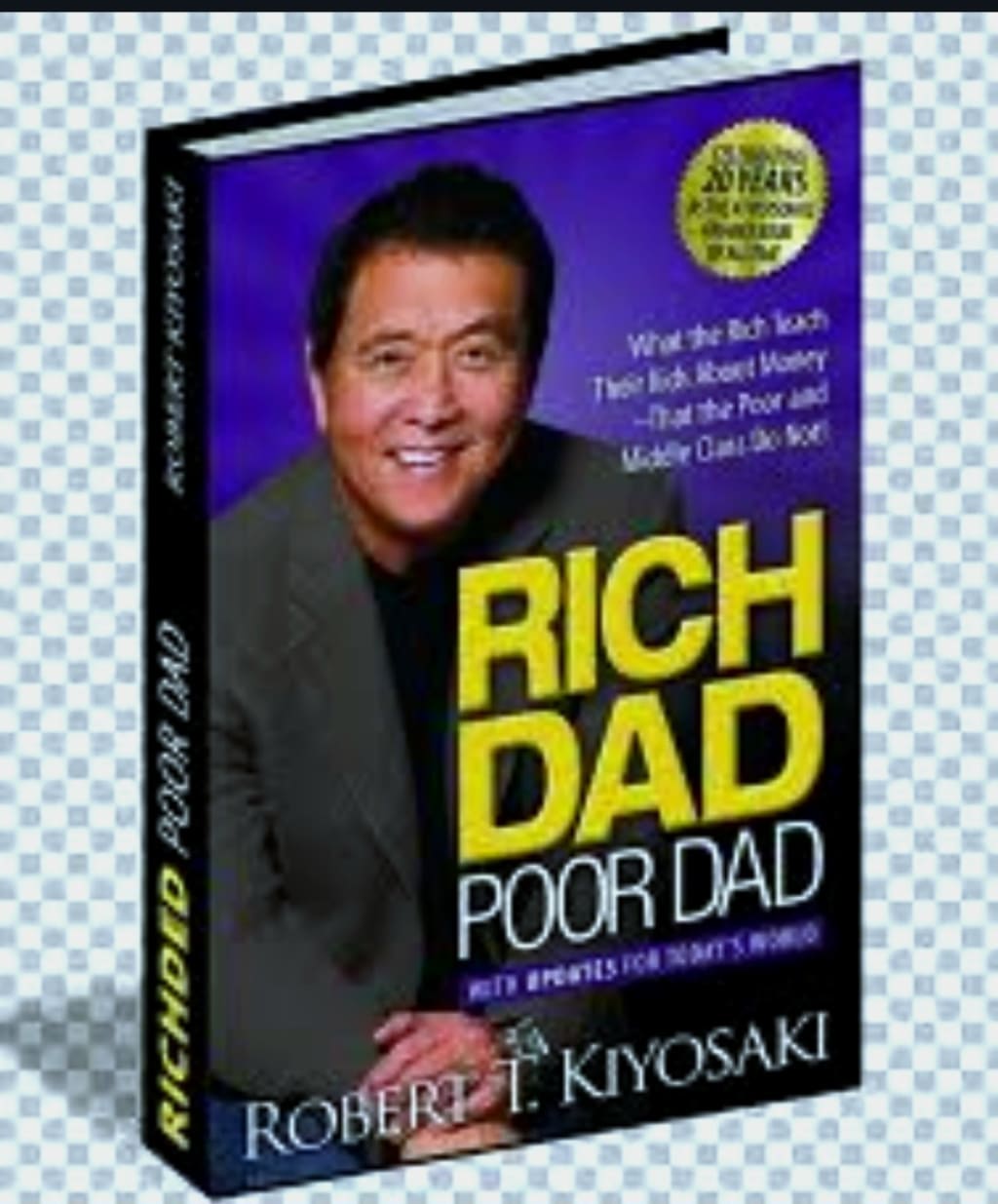
"Rich Dad Poor Dad" is a personal finance classic that compares two father figures in Robert Kiyosaki's life:
His biological father (Poor Dad) – educated, hardworking, but financially insecure.
His best friend’s father (Rich Dad) – not highly educated, but financially wise and wealthy.
Through the contrasting teachings of these two "dads", Robert learns key lessons about money, wealth, mindset, and success.
---
🧠 1. The Importance of Financial Education
Poor Dad believed:
> "Go to school, get good grades, and find a secure job."
Rich Dad taught:
> "Learn how money works, and make money work for you."
The core idea is that schools teach academic and professional skills, but not financial literacy. According to Robert, this gap keeps many people poor or stuck in the rat race.
---
💸 2. The Rich Don’t Work for Money
Poor Dad worked hard for a paycheck.
Rich Dad taught that working only for money makes you a slave to your job.
Instead:
The rich build assets that generate passive income (e.g. real estate, stocks, businesses).
The poor and middle class often buy liabilities, thinking they are assets (like big homes or new cars).
Key Quote:
> “The poor and the middle class work for money. The rich have money work for them.”
---
🏠 3. Know the Difference Between Assets and Liabilities
This is one of the most important lessons in the book.
Assets: Put money in your pocket.
Example: Rental property, stocks, business.
Liabilities: Take money out of your pocket.
Example: Car loans, mortgages, credit card debt.
Rich people focus on buying assets, while poor people often accumulate liabilities, thinking they’re investing.
---
🧾 4. Mind Your Own Business
Rich Dad encouraged Robert to build his own business, even while working for others.
This doesn’t mean you must quit your job immediately, but you should:
Start a side hustle.
Build passive income streams.
Invest in your own assets.
Lesson: Don't just climb the corporate ladder—own the ladder.
---
📚 5. The Power of Financial Education
You don’t need to be a math genius. You just need to:
Understand basic accounting (know what’s an asset/liability).
Learn how to invest wisely.
Recognize opportunities.
Rich Dad emphasized continuous learning:
> “The single most powerful asset we all have is our mind. If trained well, it can create enormous wealth.”
---
🐀 6. Escape the Rat Race
The rat race is the endless cycle of:
1. Earning a salary
2. Paying bills
3. Getting into debt
4. Repeating it every month
Rich Dad taught that you must break this cycle by:
Creating passive income
Spending less than you earn
Investing wisely
---
📉 7. Overcoming Fear, Laziness, and Doubt
Kiyosaki says:
Fear keeps people in jobs they hate.
Laziness makes people ignore opportunities.
Doubt stops people from taking action.
Rich Dad taught Robert to be bold, to learn from failure, and to use fear as motivation, not limitation.
---
💡 8. Work to Learn – Don’t Work Just for Money
Rich Dad advised Robert to take jobs for what he could learn, not earn.
Skills to develop:
Sales
Communication
Leadership
Marketing
These make you more valuable and better prepared to run your own ventures.
---
💬 Final Thoughts
"Rich Dad Poor Dad" is not about quick wealth. It’s about:
Changing your mindset
Learning how to build and grow wealth
Taking responsibility for your financial future
Key Takeaway:
> “It’s not how much money you make. It’s how much money you keep.”
---
✅ Main Lessons Recap:
Lesson Summary
1. Rich don’t work for money They build assets that earn for them
2. Buy assets, not liabilities Know the difference
3. Be financially educated Learn about money
4. Escape the rat race Build passive income
5. Face fears Take risks and learn from failure
6. Mind your business Don’t rely only on a job
7. Learn valuable skills Work to grow, not just earn
---
About the Creator
Misbah
Collector of whispers, weaver of shadows. I write for those who feel unseen, for moments that vanish like smoke. My words are maps to places you can’t return from
Keep reading
More stories from Misbah and writers in Motivation and other communities.
What I Learned After Failing Multiple Times
There was a time in my life when I believed that failure was something to be ashamed of. Something to hide. Something that meant I wasn’t good enough. I carried that belief with me like a heavy backpack, and every time I stumbled, it felt like I was collecting more weight to carry.
By Misbah 6 months ago in Motivation
One Hard Thing
Stop me if you’ve heard this one before: You have the number, you know your schedule- you’ve even picked out the perfect day and time to make this appointment. Shoot, you’ve even picked out alternative days and times just in case their schedules can’t accommodate you!
By Taylor Rigsby14 days ago in Motivation
My Voice, Rebuilt with AI
I felt so happy that at last I had started using my writing power. Most of my time goes into the kitchen, house chores, and shopping. I hardly have any communication with the outside world, and slowly I felt myself losing vocabulary. Or simply, I started feeling a communication gap.
By Uzma2 days ago in Motivation
Public Announcement Challenge Winners
For the Public Announcement Challenge, writers were asked to work inside voices built for control. These were notices, warnings, and updates meant to inform rather than confess. The strongest entries committed to that form and didn't break from it. Corporate memos, formal government alerts, and internal policy language were held consistently, allowing emotion, fear, grief, or humor to surface indirectly through pressure rather than declaration. The following poems recognize the voice of authority, and let human feeling slip through despite all its rules and restraint.
By Vocal Curation Team2 days ago in Resources



Comments
There are no comments for this story
Be the first to respond and start the conversation.