
Rich Thinker vs Poor Thinker
A Tale of Mindsets That Shape Destiny

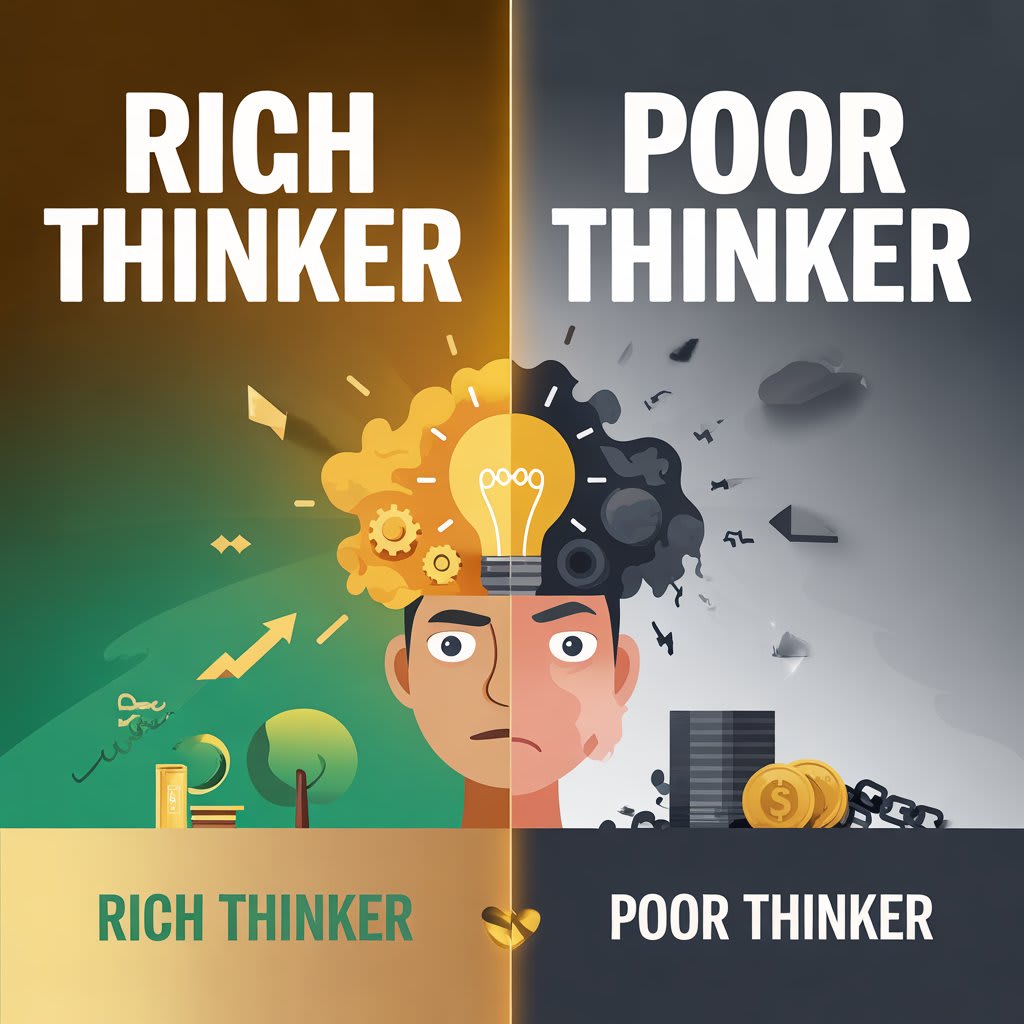
In a small town lived two men, both born into modest circumstances but destined for very different lives. Their names were David and Tom. Both had similar education, grew up in the same neighborhood, and faced the same hardships. Yet, the choices they made in their minds would lead them down drastically different paths.
David was what people called a “Rich Thinker.” He believed that his thoughts had the power to shape his reality. Every morning, he started his day with a habit—he looked in the mirror and told himself, “I am capable. I will find opportunities today.” David believed that failures were not dead ends but lessons. When a business idea failed, he analyzed what went wrong and tried again, smarter this time. He saw money not just as a goal but as a tool to create more value.
On the other hand, Tom was a “Poor Thinker.” Not because he lacked intelligence or talent, but because his mindset was trapped in scarcity. He often thought, “I’m just unlucky. I don’t have what it takes.” When faced with failure, Tom blamed external forces—bad luck, unfair systems, or lack of connections. He avoided risks and held tightly to his small paycheck, fearing any investment or change. Money, to him, was something to be feared and hoarded, a symbol of insecurity.
One day, both men heard about a new opportunity—an old warehouse was being sold at a low price. The town was growing, and many believed the property could be turned into a thriving business hub. David saw it as a chance to invest, to build, and to grow wealth. Tom, however, only saw the risks and the high upfront cost.
David sat down and ran the numbers. He envisioned a co-working space combined with a café and small shops—a place where entrepreneurs, artists, and freelancers could gather. He talked to people, researched market needs, and wrote a detailed plan. He approached banks and investors with confidence, showing them his vision and the potential returns.
Tom, however, worried about losing his savings. “What if the business fails? What if I’m left with nothing?” he thought. His fear paralyzed him, and he chose to keep his money in a savings account with almost no growth.
Months passed. David’s warehouse project became a local hotspot. The co-working spaces filled up quickly, the café became popular, and small businesses flourished. David reinvested his profits, learned from mistakes, and expanded his reach. He wasn’t just growing his bank account; he was building relationships, reputation, and influence.
Tom’s savings grew slowly, if at all, trapped in a low-interest account. He continued to work the same job, dreaming of a better life but feeling stuck. Occasionally, he would look at David’s success with envy but tell himself it was just luck or privilege.
One evening, Tom invited David to a café and asked, “How did you do it? How did you turn that warehouse into a success while I’m stuck?”
David smiled and said, “It all starts in the mind. I chose to believe I could find a way. When I hit obstacles, I asked myself, ‘What can I learn?’ not ‘Why me?’ I took risks, but calculated ones, and I never stopped learning.”
Tom frowned. “But what about money? I don’t have much to start with.”
“That’s where mindset matters the most,” David replied. “Rich thinkers see money as a tool, not the goal. We focus on creating value, which attracts money. Poor thinkers see money as a limited resource to guard. That fear blocks opportunity.”
Tom sat quietly, realizing the truth in David’s words. For years, his mindset had been his greatest obstacle.
The next morning, Tom decided to change. He started small—he read books on personal finance, attended free workshops, and began saving with a purpose, not fear. When a chance arose to partner in a small online business, he took it. He stumbled, made mistakes, but learned each time. Slowly, Tom’s mindset shifted from scarcity to growth.
Years later, the two men met again—not as rivals, but as friends who had walked different journeys. Tom’s business was growing, and he thanked David for opening his eyes to the power of mindset.
“Rich or poor, it all begins with how you think,” David said. “Your mind is the first investment you make.”
---
Lessons from Their Story:
1. Mindset Shapes Reality: How you think influences the decisions you make and the actions you take. A positive, growth-focused mindset opens doors.
2. Failure Is a Teacher: Rich thinkers see failure as feedback, not final judgment. Poor thinkers often see it as confirmation of limitations.
3. Money Is a Tool, Not a Goal: Focusing on creating value and solving problems attracts wealth naturally.
4. Fear Blocks Opportunity: Scarcity thinking leads to inaction and missed chances. Courage combined with knowledge drives growth.
5. Change Is Possible: Even if you start as a poor thinker, mindset can be changed with awareness and effort.
About the Creator
YOUNG MINDSET
BE CREATIVE WITH SMILE
Keep reading
More stories from YOUNG MINDSET and writers in Motivation and other communities.
One Hard Thing
Stop me if you’ve heard this one before: You have the number, you know your schedule- you’ve even picked out the perfect day and time to make this appointment. Shoot, you’ve even picked out alternative days and times just in case their schedules can’t accommodate you!
By Taylor Rigsby9 days ago in Motivation
Kevin Warsh Selected to Lead the Federal Reserve
Washington, D.C. — The United States is preparing for a significant transition in economic leadership as Kevin Warsh has been selected to lead the Federal Reserve, the country’s central banking authority. His selection signals a major shift in monetary policy direction at a time when the global economy faces inflationary pressure, geopolitical uncertainty, and growing concerns over financial stability.
By Md Johirul Islam4 days ago in Motivation
One Unchecked Box
"Republished" because it was the only way to add the embed for the newly recorded audio version of this story due to the Top Story badge. Plus it serves as a nice, informal announcement of the podcast's revival for another season (go subscribe!):
By Stephen A. Roddewig7 days ago in Fiction



Comments
There are no comments for this story
Be the first to respond and start the conversation.