
The Climb Within
Overcoming Inner Battles to Reach New Heights
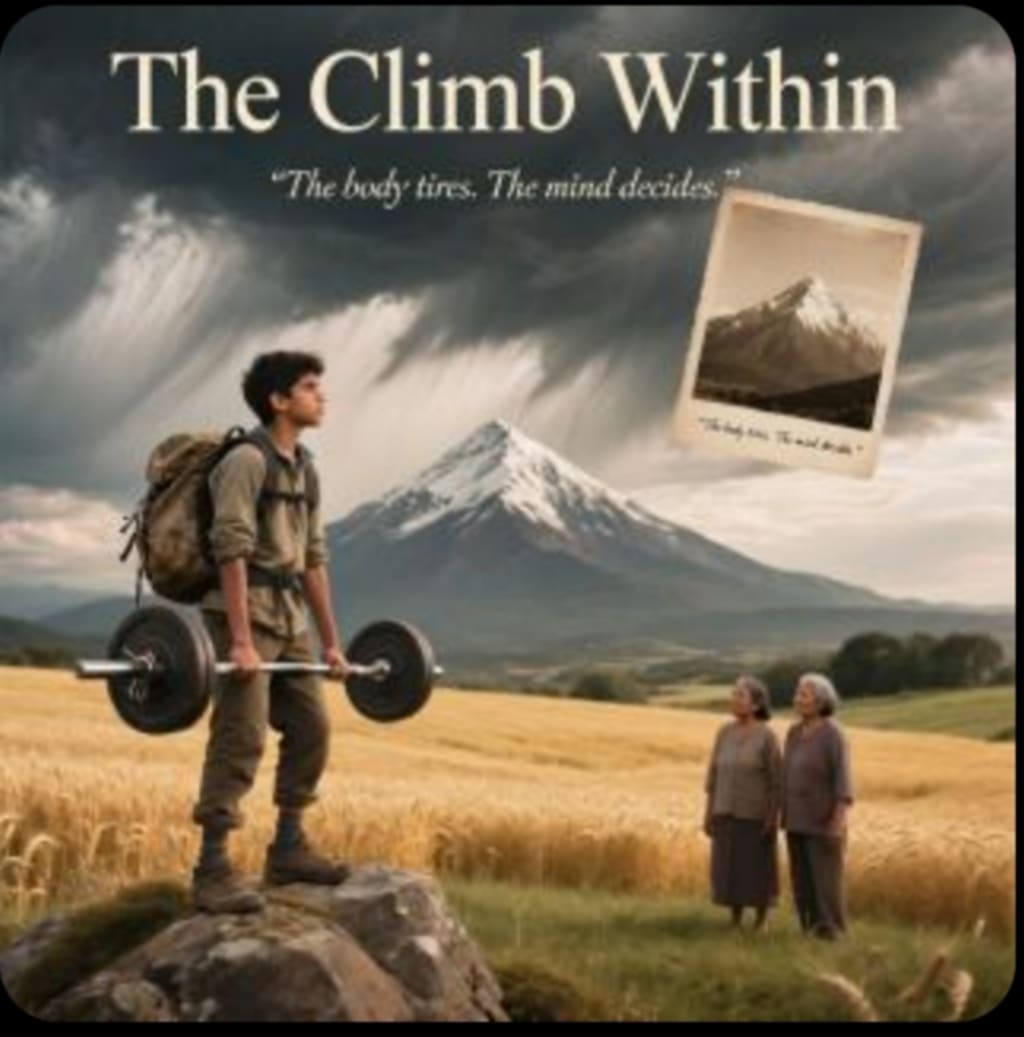
Zayan grew up in a quiet village tucked between sleepy hills and fields of wheat that swayed with the wind. Life moved slowly there—predictable, familiar, safe. He wasn’t the brightest student in class, nor the fastest runner. He didn’t stand out in the way heroes do in stories. But inside him lived a quiet fire, one that had been lit years ago by a single photograph.
It was in an old, dusty book at the school library. A black-and-white image of Falak Peak, its summit piercing the clouds, snow clinging to its sides like a second skin. Something about it called to him. It wasn’t just the height—it was the silence, the solitude, the idea that someone could stand that high and see the world so clearly.
He didn’t tell many people about his dream. When he did, laughter followed.
“You? Climb Falak?” his classmate Arif had said, slapping his knee. “You get tired walking up the hill to school.”
Even his mother worried. “Beta, dreams are good, but so is eating dinner every night,” she’d say, stirring lentils on the stove. His father, a tailor who worked ten hours a day, only sighed. “The world doesn’t reward dreamers, Zayan. It rewards those who work.”
But Zayan believed there was room for both.
So he began—small, unseen, day after day. He ran before dawn, his breath fogging in the cold air, his feet pounding the dirt paths. He carried sacks of rice and flour for his uncle’s shop, not just for the few coins, but because it made his shoulders stronger. He did push-ups on the cracked floor of his room, counting each one like a promise.
One afternoon, while resting under a neem tree, he met Rehan—a man with a limp and eyes that had seen too much sky. A retired climber, injured on a failed expedition, now living quietly with his sister.
“You want to climb Falak?” Rehan asked, peeling an orange slowly.
“Yes,” Zayan said, without hesitation.
Rehan studied him. “It’s not just about strength. It’s about what happens when you’re cold, alone, and your body screams at you to stop.”
“I know,” Zayan said. “But I also know I won’t know if I don’t try.”
Something in the way he said it made Rehan nod. “Then I’ll help you. Not because I think you’ll make it. But because you deserve the chance.”
And so began the real journey.
Rehan taught him how to read the weather, how to tie knots that wouldn’t slip, how to breathe in thin air. He made Zayan walk with weighted bags, sleep with less blanket, eat simple food. But more than that, he taught him to listen—to his body, to the mountain, to the voice inside that either whispered give up or keep going.
Two years passed. Zayan applied to join an official expedition. The team leader flipped through his file—thin, almost blank.
“No certifications. No prior climbs. You’re not even twenty.”
“No,” Zayan said. “But I’ve trained every day for two years. I can carry my weight. I won’t slow anyone down.”
The leader hesitated. Then, something in Zayan’s calm gaze reminded him of younger days, of dreams that once felt impossible. “Alright,” he said. “But the mountain doesn’t care how much you want it. It only cares if you’re ready.”
The climb was harder than Zayan imagined.
The air thinned. His lungs burned. On the fifth day, a sudden storm hit. Wind howled like a wounded animal. In the chaos, Zayan slipped on ice, twisting his ankle hard. Pain shot up his leg.
“We should radio for help,” one climber said.
Zayan sat on a rock, breathing slowly, pressing his hand to the swelling. “Not yet,” he said. “I can still move.”
That night, wrapped in a frozen sleeping bag, he thought of home—the smell of bread in the morning, his mother’s voice calling his name. He thought of giving up. But then he remembered Rehan’s words: “The body tires. The mind decides.”
So he decided—to keep going.
On the eighth day, they reached the final camp. The summit was close, but only the strongest would attempt it. The leader looked at Zayan. “You’re hurt. This is your choice.”
Zayan stood, adjusted his pack, and stepped forward.
The last stretch was a battle—each step a test, each breath a victory. Ice cracked underfoot. The wind tried to push him back. But he moved like a shadow against the snow, steady, silent, sure.
And then—light.
The sun broke over the horizon as he reached the top. Falak Peak. He stood there, trembling, not from cold, but from awe. Below him, the world stretched endlessly—rivers like threads, clouds at eye level, his village a speck in the distance.
He didn’t shout. He didn’t cry. He simply stood, and breathed, and felt peace settle in his chest.
He had not conquered the mountain.
He had faced himself—and kept walking.
When he returned, people gathered. Children stared. Old men nodded in respect. His parents held him tightly, their tears warm against his cold cheeks.
Someone asked, “What was it like up there?”
Zayan looked at the hills around his village, so small compared to what he’d seen.
“It wasn’t the mountain I climbed,” he said softly. “It was the fear I carried all my life.”
And in that moment, no one laughed.
---
*Moral:*
You don’t need permission to believe in yourself. You don’t need applause to begin. What you need is the quiet courage to take one more step—even when no one else sees the path.
About the Creator
meerjanan
A curious storyteller with a passion for turning simple moments into meaningful words. Writing about life, purpose, and the quiet strength we often overlook. Follow for stories that inspire, heal, and empower.
Reader insights
Outstanding
Excellent work. Looking forward to reading more!
Top insights
Compelling and original writing
Creative use of language & vocab
Easy to read and follow
Well-structured & engaging content
Excellent storytelling
Original narrative & well developed characters
Expert insights and opinions
Arguments were carefully researched and presented
Eye opening
Niche topic & fresh perspectives
Heartfelt and relatable
The story invoked strong personal emotions
Masterful proofreading
Zero grammar & spelling mistakes
On-point and relevant
Writing reflected the title & theme
Keep reading
More stories from meerjanan and writers in Motivation and other communities.
The Silent Climb
In a small village cradled between gentle hills and glassy lakes, there lived a boy named Ayan. He wasn’t loud or bold, but he carried a stillness about him that made people notice. While other children played games or chattered in the square, Ayan often sat by the edge of the meadow, watching the distant mountains catch the first light of morning. There was something in the way the peaks touched the sky that made his chest tighten—not with fear, but with longing.
By meerjanan28 days ago in Motivation
One Hard Thing
Stop me if you’ve heard this one before: You have the number, you know your schedule- you’ve even picked out the perfect day and time to make this appointment. Shoot, you’ve even picked out alternative days and times just in case their schedules can’t accommodate you!
By Taylor Rigsby9 days ago in Motivation


Comments (1)
Party good message