
The Lighthouse Keeper’s Daughter
How One Small Choice Changed a Life Forever

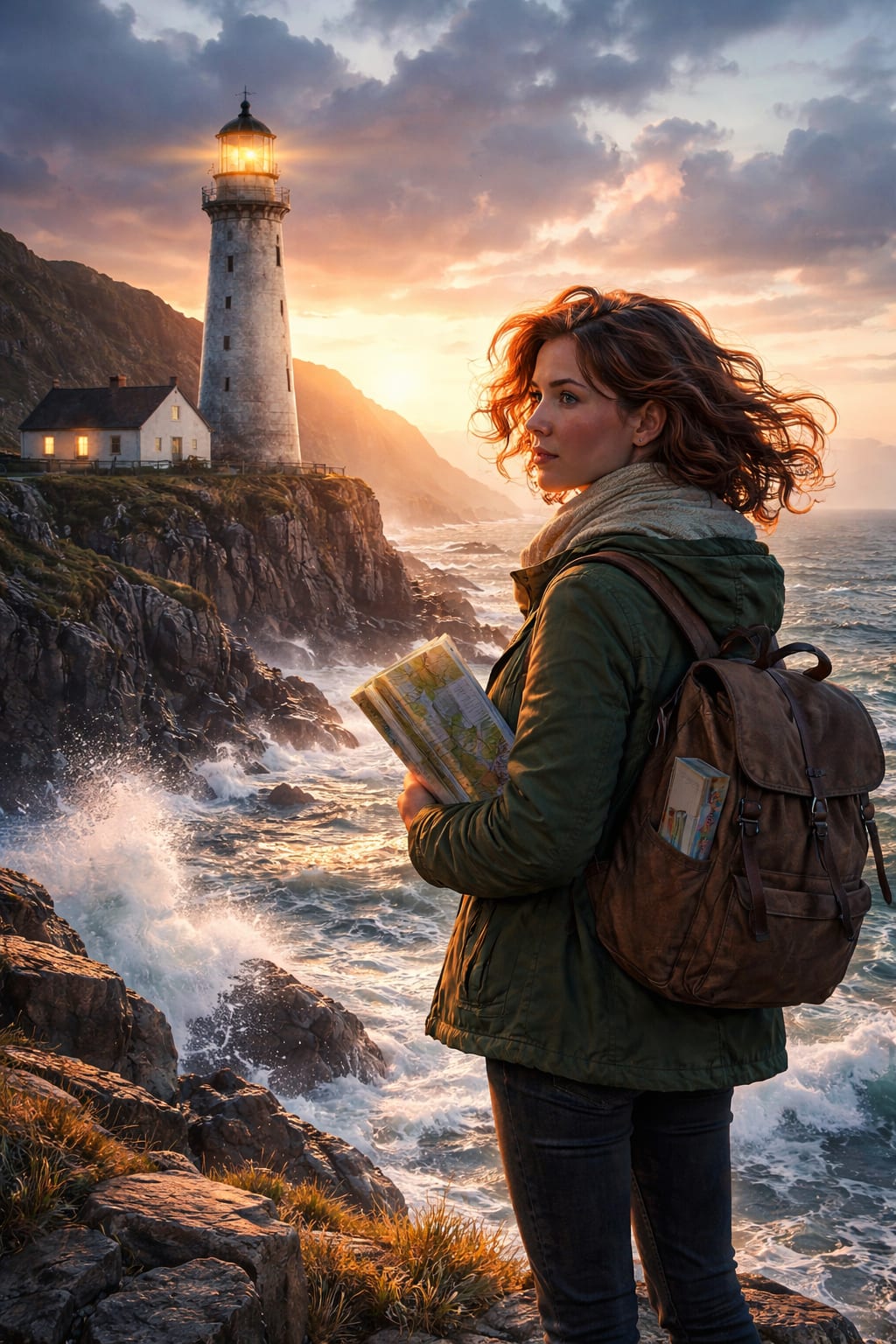
On the western edge of Ireland, where the Atlantic Ocean crashed endlessly against black cliffs, stood an old lighthouse. It had guided ships safely for over a hundred years, and beside it lived a man named Thomas O’Riley and his daughter, Maeve.
Maeve grew up with the sound of waves instead of traffic and seagulls instead of alarms. Her father was the lighthouse keeper, responsible for ensuring the light never went out. Their home was small, painted white by salt and wind, and surrounded by nothing but sea and sky.
Most children in nearby towns dreamed of becoming doctors, engineers, or athletes. Maeve dreamed of maps.
She loved drawing coastlines, tracing countries, and learning how places connected. Her schoolbooks were filled with sketches of Europe’s rivers and borders. But dreams felt distant when your world ended at a cliff.
When Maeve turned sixteen, her father fell ill. Years of cold nights and strong winds had weakened his lungs. Doctors advised him to retire, but retirement meant losing the lighthouse home provided by the government.
“We’ll manage,” her father said, trying to smile. But Maeve saw fear in his eyes.
With no savings and no relatives nearby, Maeve took a job at a small grocery store in town after school. Each evening, she climbed the lighthouse stairs to light the lamp while her father rested. The work was tiring, but she never complained.
Still, she carried a secret wish: to study geography and environmental planning in Dublin.
University seemed impossible. Tuition, rent, and travel costs were far beyond what she earned stacking shelves.
One stormy night, while delivering groceries to an elderly woman named Mrs. Callaghan, Maeve noticed piles of old papers on the kitchen table—maps, ship logs, and weather charts.
“You like maps, don’t you?” the woman asked.
Maeve nodded shyly.
“My late husband was a naval surveyor,” Mrs. Callaghan said. “He used to say the sea keeps secrets unless you know how to read it.”
Maeve began visiting her every week. Mrs. Callaghan taught her how to read tides, wind patterns, and navigation charts. Slowly, Maeve learned something schools had never taught her: how geography shaped human survival.
One evening, Mrs. Callaghan showed her an article about coastal erosion threatening villages across Europe.
“They need young minds who understand both land and sea,” she said. “You could be one of them.”
The idea felt too big. But something inside Maeve refused to let it go.
She applied for a national scholarship for rural students. Her application essay told the story of the lighthouse, her father’s illness, and her wish to protect coastlines like her own.
Months passed without reply.
Then one afternoon, while the sky glowed orange over the ocean, a letter arrived.
She had been accepted.
Not only that—her tuition would be fully covered.
Her father cried for the first time since her mother had died years earlier.
“I kept the light burning,” he said. “Now you’ll light something bigger.”
A New World
Dublin overwhelmed her. Trams, crowds, glass buildings, and classrooms filled with students who spoke confidently and dressed neatly. Maeve felt small in her secondhand coat.
Her first semester was difficult. She worked nights cleaning offices to pay for food. She studied during bus rides. Many times, she wanted to quit.
But she remembered the lighthouse.
During her second year, she joined a research project studying rising sea levels along Europe’s Atlantic coast. Her professors noticed her practical knowledge of tides and storms.
“You’ve lived what others only read about,” one of them told her.
By the time she graduated, Maeve had helped design coastal protection plans for villages in Portugal and Spain.
Yet success did not feel complete.
Her father’s condition had worsened. And Valdora—no, her village—was now at risk. Storms were hitting harder. The cliffs were slowly collapsing.
She returned home with new skills and old love.
Lighting a Different Kind of Beacon
Maeve applied for government funding to protect her village’s shoreline. Many officials dismissed her proposal.
“Too small,” they said. “Too remote.”
So she started small herself.
She organized town meetings in the church hall. She showed photographs of erosion, maps of future floods, and simple solutions: natural barriers, relocated paths, reinforced foundations.
At first, people laughed.
“We’ve lived here for generations,” fishermen said. “The sea won’t beat us now.”
But when a storm destroyed three houses in one night, they listened.
Within two years, her village became a pilot project for coastal resilience. Engineers arrived. Eco-barriers were built. Tourism adapted instead of vanished.
Maeve was invited to speak at environmental conferences across Europe.
She always began the same way:
“I come from a lighthouse.”
Her story spread—not because it was dramatic, but because it was real.
What Success Meant to Her
Years later, when her father passed away peacefully, Maeve stood at the lighthouse one last time. The government had replaced the old lamp with automated systems, but the tower still stood strong.
She placed her hand on the cold stone and whispered, “You kept us safe. Now I keep others safe.”
Success, she realized, was not about money or fame.
It was about:
Turning struggle into skill
Turning loneliness into leadership
Turning fear into action
Maeve never became rich. She never became famous. But she became useful—and that was enough.
Today, her work protects coastlines across Europe. Small villages remain standing because one girl learned to read the sea instead of run from it.
And every time a lighthouse beam cuts through the night, somewhere along the coast, a child looks up and dreams beyond their cliff.
Final Message
Success is not always loud.
Sometimes, it is steady—like a light that refuses to go out.
About the Creator
Iazaz hussain
Start writing...
Keep reading
More stories from Iazaz hussain and writers in Motivation and other communities.
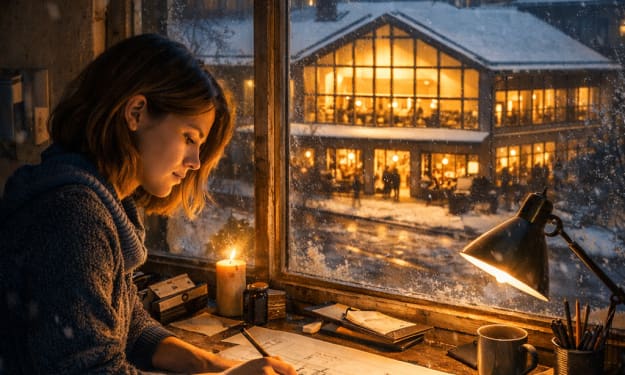
The Light in the Northern Window
In the coastal city of Reykhavn, where winter seemed to last forever and sunlight arrived like a rare guest, people walked quickly with their heads down. The wind from the sea cut through coats and scarves, and the streets often felt heavier than the clouds above them.
By Iazaz hussain3 days ago in Motivation
One Hard Thing
Stop me if you’ve heard this one before: You have the number, you know your schedule- you’ve even picked out the perfect day and time to make this appointment. Shoot, you’ve even picked out alternative days and times just in case their schedules can’t accommodate you!
By Taylor Rigsby18 days ago in Motivation
The Biggest Lies About Life We’re Taught — And the Truth No One Prepares You For
From childhood, we are fed comforting ideas about success, happiness, and fairness. These ideas sound good, feel safe, and give hope. But as life unfolds, many people realize something painful: some of the most repeated life lessons are incomplete—or outright lies.
By Adil Ali Khan5 days ago in Motivation


Comments
There are no comments for this story
Be the first to respond and start the conversation.