
Why Urgency Is a Trap and How the Eisenhower Matrix Can Save You
Why Urgency Is a Trap and How the Eisenhower Matrix Can Save You

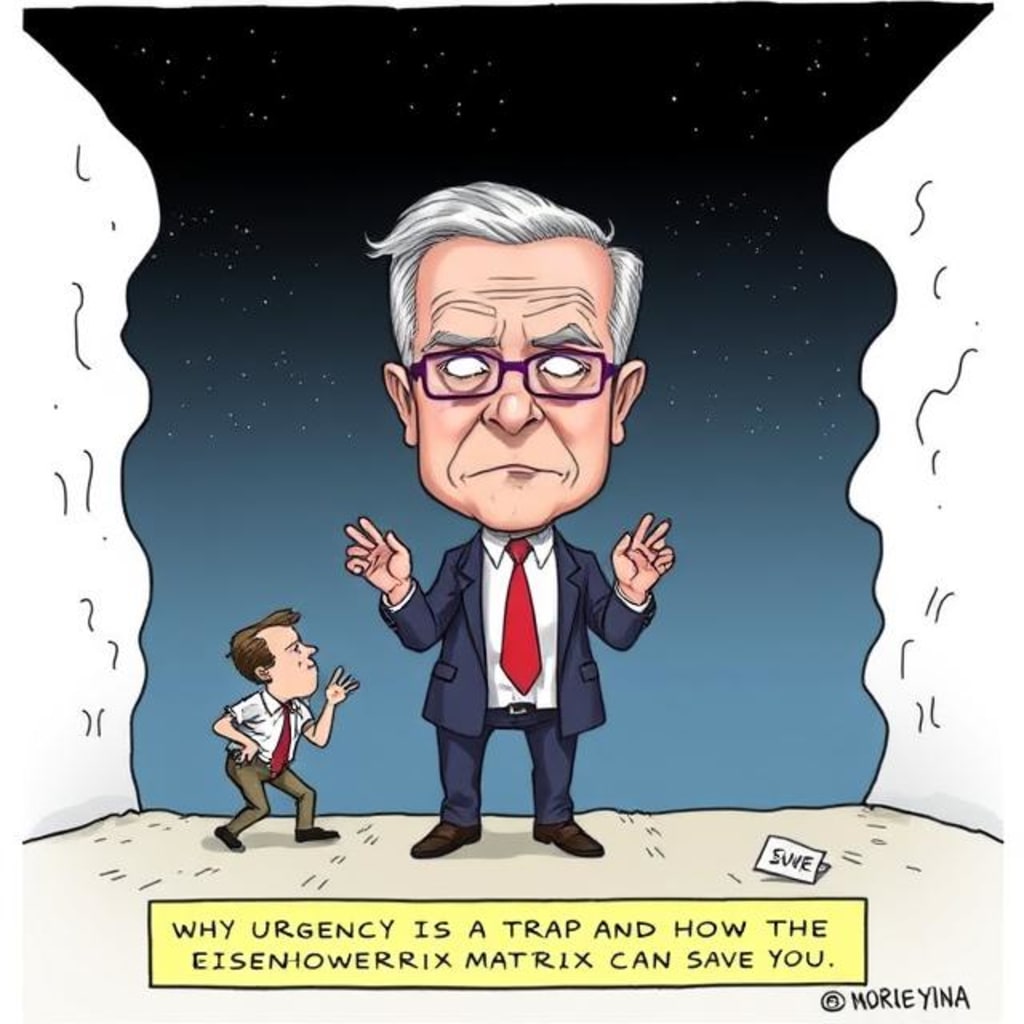
Emails flood your inbox, meetings demand your attention, and that big project deadline looms in the background. Without a system to manage your time and priorities, you can easily fall into the trap of being busy rather than productive.
Enter the Eisenhower Matrix, a simple but powerful decision-making tool designed to help you prioritize tasks based on urgency and importance. Named after President Dwight D. Eisenhower who famously said, “What is important is seldom urgent and what is urgent is seldom important” this matrix helps you cut through the noise and focus on what truly matters.
What Is the Eisenhower Matrix?
The Eisenhower Matrix, also known as the Urgent-Important Matrix, divides tasks into four categories:
Urgent and Important (Do First)
Important but Not Urgent (Schedule)
Urgent but Not Important (Delegate)
Neither Urgent nor Important (Eliminate)
Each category helps you determine how to handle a task in a way that keeps you proactive rather than reactive.
Quadrant 1: Urgent and Important Do First
These are the tasks that demand immediate attention and have significant consequences if delayed. Often, they involve deadlines or crises think project submissions, last-minute client requests, or urgent troubleshooting.
Examples:
Preparing for a presentation happening today
Fixing a critical system error
Responding to a time-sensitive email from a key client
How to handle: Do these tasks as soon as possible. They are your top priority.
Quadrant 2: Important but Not Urgent Schedule It
This is the sweet spot of long-term success. These tasks help you grow, improve, and prevent future problems, but they’re often neglected because they don’t scream for your attention.
Examples:
Strategic planning
Professional development and training
Building relationships with colleagues
Health and wellness activities
How to handle: Block time on your calendar and treat it as sacred. These are the tasks that move your career and life forward.
Quadrant 3: Urgent but Not Important Delegate It
These tasks feel urgent but don’t necessarily require your expertise or attention. They are often interruptions or responsibilities that can be handled by someone else.
Examples:
Scheduling meetings
Responding to non-critical emails
Routine reporting
Admin requests
How to handle: Delegate or automate these tasks where possible. If you’re in a leadership role, empower your team. If not, explore tools or processes that save time.
Quadrant 4: Neither Urgent nor Important Eliminate It
These tasks are time-wasters that add little to no value. They often provide momentary comfort or distraction but contribute nothing to your goals.
Examples:
Excessive scrolling through social media
Attending unnecessary meetings
Over-checking email or notifications
Busywork without clear outcomes
How to handle: Be ruthless. Eliminate or drastically reduce these activities.
How to Start Using the Eisenhower Matrix
List all your current tasks. Brain-dump everything you need to do.
Sort them into the four quadrants. Use a visual matrix or digital tool (such as Notion, Trello, or a whiteboard).
Take action based on the quadrant. Focus on Do First, schedule the Important but Not Urgent, delegate the rest, and cut out the clutter.
Repeat this process daily or weekly. The more consistently you apply the matrix, the more intuitive it becomes.
Why It Works
The Eisenhower Matrix promotes intentional decision-making. It forces you to pause and ask:
Is this task truly important, or does it just feel urgent?
That shift in perspective helps you manage your energy more wisely, reduce stress, and focus on outcomes that matter.
By regularly using the Eisenhower Matrix, you’ll not only improve your productivity you’ll gain clarity, protect your time, and build habits that align with your long-term goals.
In short: Don’t let urgency hijack your attention. Use the Eisenhower Matrix to work smarter, not just harder.
About the Creator
Fred Bradford
Philosophy, for me, is not just an intellectual pursuit but a way to continuously grow, question, and connect with others on a deeper level. By reflecting on ideas we challenge how we see the world and our place in it.
Keep reading
More stories from Fred Bradford and writers in Motivation and other communities.
How to Break Bad Habits Without Burning Out
We all have habits we'd rather live without doom scrolling, late-night snacking, skipping workouts, or hitting snooze one too many times. Yet breaking bad habits often feels like a battle of willpower, one that leaves us mentally drained and discouraged. The good news? You don't need to overhaul your life overnight or exhaust yourself with drastic measures. In fact, the key to lasting change is learning how to break bad habits without burning out.
By Fred Bradford9 months ago in Motivation
One Hard Thing
Stop me if you’ve heard this one before: You have the number, you know your schedule- you’ve even picked out the perfect day and time to make this appointment. Shoot, you’ve even picked out alternative days and times just in case their schedules can’t accommodate you!
By Taylor Rigsby14 days ago in Motivation
Khamosh Mehnat
The night in the city was silent, just like it always was. Yellow streetlights spread a dull glow across empty roads, and a cool breeze moved gently through the air. Inside a small room, Ayaan sat on a worn-out chair, staring at the screen of his laptop. The words in front of him felt heavy and familiar:
By Farmanullah6 days ago in Motivation
The Lesions of Devotion
Every day I set myself down on the freshly cut lawn and strip myself bare. I take my guitar and finger the frets and pick at the strings, listening for dissonance. My life is dissonance. I twist the tuning pegs until each string sounds bright. Then I kneel, calves pointing behind me, kneecaps facing forward. All exposed to the breeze. I close my eyes and play the melody.
By Paul Stewart2 days ago in Fiction



Comments
There are no comments for this story
Be the first to respond and start the conversation.