
A Chimpanzee's Love and Loss
A Mother's Relentless Love for Her Dead Child

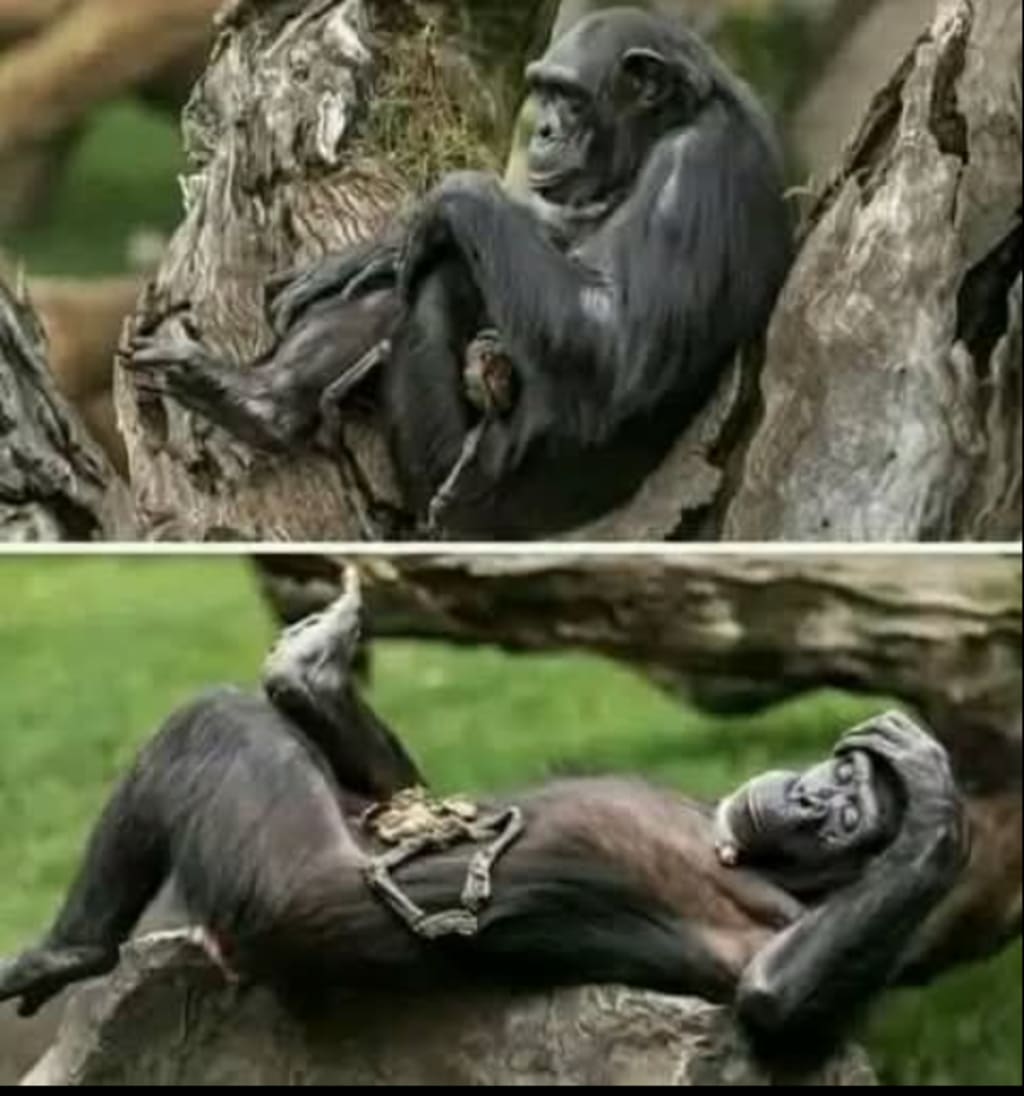
Mother's Unwavering bond with her deceased child.
Grief is not an experience that is unique to humans, though we frequently use its expression to claim our selfsame being.
Feelings of love, sadness, and the mourning of loss are emotions experienced by animal species themselves In the Biopark in Valencia, there is a particular example of a baby chimp that has been held by Natalia, its mother, for seven months and has been moved to the biopark in Valencia.
Demonstrating an immeasurable bond, this moving display of maternal love has touched the hearts of the zoo staff and guests and showcased the emotional connections animals can have with their young.
A Mother's Love Unbroken
A mother chimp named Natalia was devastated when her infant died, Rather than instinctively parting with the bodies of her young like many other animals would, Natalia instead responded with extreme attachment.
For months she held her dead infant, never once letting the corpse leave her arms. Maternal instincts run deep, but also in this instance, they ran deep enough to prevent the impulse to let go in death.
For seven months, Natalia would not let go of her baby, and even though the body started to rot, she couldn't bear to separate from the little one. She cradled it, as if still caring for it, as if it still breathed.
Her keepers, who are trained to care for sick wildlife, recognized this enduring bond and chose not to intervene in this atypical grieving process with deep empathy.
They let Natalia grieve, knowing that part of her mourning and emotional reaction was natural.
Honoring the Process of Grieving
In the wild, it is not unusual for animals to mourn the loss of their young, although the length and depths of such mourning may vary. In Natalia's story, her grief was so deep that her caregivers decided to let her alone, to let the chimpanzee grieve in her own way without interference.
This decision stemmed on their thorough comprehension of the intelligence and emotional capacity of the species. They knew that what was going on was not just animal instinct but a real expression of lament a sign that, like humans, chimpanzees have complex emotions.
It was clear to the Biopark staff that Natalia's bond with her baby was as real and strong as any human mother's bond with her child. While the zoo had witnessed other animals in mourning, the behavior of Natalia was an extraordinary testimony to the emotional capacity of primates.
The zoo said. Instead of imposing a separation, her caretakers allowed her to release her body when she was ready, when the bond had finally loosened enough to allow for surrender. They understood her grieving process, giving her space to move on when she was ready.
A Gripping Moment of Release
And then, finally, the day arrived when Natalia released her baby's body in the gentle embrace of the water. The corpse, a now frail vessel, had decomposed the time that had passed since she last saw then weighing heavily on his mind.
Staff and visitors, who'd been tracking the heartbreaking story of the grieving mother, sat with heavy hearts as she finally released.
Everyone who watched it felt the gravity of the moment a tacit acknowledgement that even in the animal kingdom, love transcends the boundaries of life and death.
As a mother, Natalia's behavior was an unfiltered manifestation of the intense, sometimes unfathomable feelings that follow the death of a child. Her capacity for mourning so profoundly and for forging such a powerful bond with her dead offspring lays bare the emotional world of animals, especially primates. Humans are long-time mourners, right, but the deep grief of animals like Natalia reminds us that sorrow isn't limited to the human species.
The Broader Implication of Animal Grief
Natalia's story, and her deep love for the baby she lost, also stands as a testament to the astonishing similarities between humans and animals. And although it may be easy to consider grief an exclusively human ordeal, studies have found that many animalshares, those capable of human like intellect such as chimpanzees, dolphins or elephants, can sense and respond to the loss of another in kind.
These behaviours indicate that those animals have some measure of consciousness such that they comprehend and feel the effects of death as humans do.
About the Creator
Keep reading
More stories from Rohitha Lanka and writers in Petlife and other communities.
The Summer I Was Chosen by a Northern Mockingbird
During the long, suspended days of the pandemic, a wild mockingbird began visiting my driveway and chose me, again and again. What started as a strange encounter became a brief, meaningful connection that I still carry with me.
By Erica Roberts 21 days ago in Petlife
from death into life
Young Aldin of Wiloh had never contemplated death. It was almost strange — so many around him had the tendency to obsess over it, to clamor and claw almost desperately at their own perceptions of the end to know death as much as they could: when it would come, why it would come, where it would take them when it did.
By angela hepwortha day ago in Fiction


Comments (2)
It is a very sad and touching story.
Well written 👏