
Birds around the world are stressed by human noise, but humans can assist.
Birds react differently.

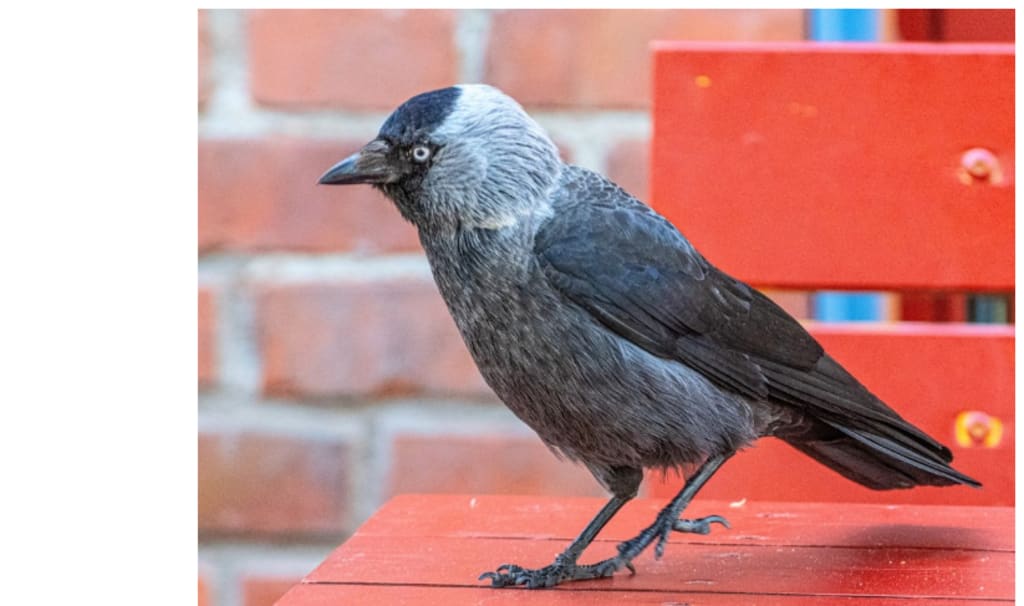
Birds don't simply tolerate human cacophony. According to a recent investigation, the noises of construction, traffic, and other human activities are altering the behaviour, stress levels, and even reproductive success of birds.
When taken as a whole, some of these changes may not seem like much, but they show how animals are always adapting to a noisier environment.
A group of researchers from the University of Michigan compiled findings from over 150 studies that have been published since 1990, encompassing 160 bird species and six continents.
Natalie Madden, the study's primary author, stated, "The main conclusion from this study is that anthropogenic noise affects many aspects of bird behaviour, with some responses more directly tied to fitness."
Many years of study
Many studies on birds and noise tend to focus on a single species, location, or source of noise. Madden's work attempted to take a broader view and consider what the entire trend looks like when everything is taken into account.
Madden, who is currently a conservation science and policy expert, stated, "A number of the studies from which we extracted data concentrate on a single species and a single source of noise."
We were able to produce a more comprehensive statement of the patterns we are observing based on our evaluation of this meta-analysis.
In essence, that more general assertion is that noise from humans bothers more than simply birds. Their physiology and behaviour may change as a result, which may have an impact on their ability to survive and reproduce.
The meta-analysis discovered impacts in a number of areas, such as behaviour, reproduction, and stress-related physiology.
Why birds are so affected by noise
Sound is not background for many birds. It serves as the primary means of communication. Noise can interfere with the timing of significant life events, obscure warnings, and muddle signals.
"Acoustic information is very important to birds. They utilise sounds to alert predators, songs to locate potential mates, and begging calls to communicate hunger to their parents, according to Madden.
"So, can they still hear signals from their own species if there is a lot of noise around?" That query reaches the heart of the issue. Birds may sing more loudly, sing differently, shift their habitat, or completely ignore signals if they are unable to hear one another.
These adjustments may disrupt defence, feeding, and pairing, and they may also cost time and energy.
There are other stressors than noise.
The study coincides with a concerning trend: a decline in bird populations. "Acoustic information is very important to birds. They utilise sounds to alert predators, songs to locate potential mates, and begging calls to communicate hunger to their parents, according to Madden.
"So, can they still hear signals from their own species if there is a lot of noise around?" That query reaches the heart of the issue. Birds may sing more loudly, sing differently, shift their habitat, or completely ignore signals if they are unable to hear one another.
These adjustments may disrupt defence, feeding, and pairing, and they may also cost time and energy.
There are other stressors than noise.
The study coincides with a concerning trend: a decline in bird populations. According to the study, there has been a significant drop since 1970, with an estimated 3 billion breeding adults across numerous species disappearing from North America alone.
While pesticides and habitat loss are undoubtedly important factors, this study contends that noise should also be included, albeit not as the primary cause but rather as a pervasive, ongoing stressor that might make life more difficult.
To put it another way, the soundscape surrounding a patch of habitat may be subtly reducing the ability of birds to utilise it, even while the habitat is still present.
Birds react differently.
The analysis's usefulness lies in its refusal to treat "birds" as a single homogeneous mass. The researchers also investigated if species-specific features may be used to predict which birds will be most affected.
For instance, they discovered that compared to birds in open nests, birds who nest in cavities seem to be more likely to suffer detrimental growth impacts. Additionally, the study discovered that urban birds typically had higher amounts of stress hormones than non-urban birds.
That does not imply that city birds cannot survive or that cavity-nesting birds are doomed. However, it does imply that the effects of noise are not arbitrary. Certain species are less able to compensate, more vulnerable, or more exposed.
This is important for conservation because it allows for more intelligent planning, including identifying which species may require more attention, where to prioritise quiet refuges, and which habitats require buffering.
A problem that we can truly lessen.
This study feels distinct from a lot of biodiversity news for a reason. It has the uncommon feeling that "we can do something about this."
The specialists contend that even if noise has detrimental effects, the problem is solvable since humans can recognise recurring patterns.
Senior author Neil Carter, an associate professor at the University of Michigan, stated, "We find that there are predictable effects by synthesising across these studies in a meta-analysis."
"And if we can anticipate them, we can lessen, mitigate, and even reverse them." That notion is significant since it implies that noise reduction is not a hunch. It can be incorporated into planning, measured, and targeted.
We already know how to lessen noise in the built environment, Carter adds. We constantly do it for others. Whether we think the same way about wildlife is the question.
"There are already solutions at our fingertips," Carter added. We may modify our physical environments to reduce noise, much as buildings are incorporating new materials and methods to improve visibility and keep birds from hitting windows.
Knowing all of this, together with the fact that noise can be managed and reduced technically, makes it seem like a reasonably easy task, he continued.
"We know how to use different materials and how to put things up in different ways to block sound, but so many of the things we're facing with biodiversity loss just feel inexorable and massive in scale."
"We just need to raise enough awareness and interest to use it effectively; we know what to use and how to use it."
Birds in a world with more noise
The reasoning is straightforward: sound can be controlled, even though the essay doesn't go into great depth about any particular actions.
The way noise spreads can be altered by a variety of factors, including road surfaces, obstacles, building materials, vegetation buffers, construction techniques, and urban planning.
If they occur in the appropriate locations, such as close to breeding grounds, migratory stopovers, or important habitats for birds, even small reductions could have an impact.
Additionally, noise reduction can occasionally have an instantaneous effect on the soundscape, in contrast to some conservation strategies that take decades to show results. "Immediate" is the key word for birds attempting to hear a mate, a rival, a predator, or a hungry chick.
The main lesson here is that birds are threatened by more than just noise. It's that it affects fundamental survival behaviours, it's real, and it's more treatable than most people realise. Though it doesn't have to be, the world is becoming louder.
About the Creator
Keep reading
More stories from Francis Dami and writers in Petlife and other communities.
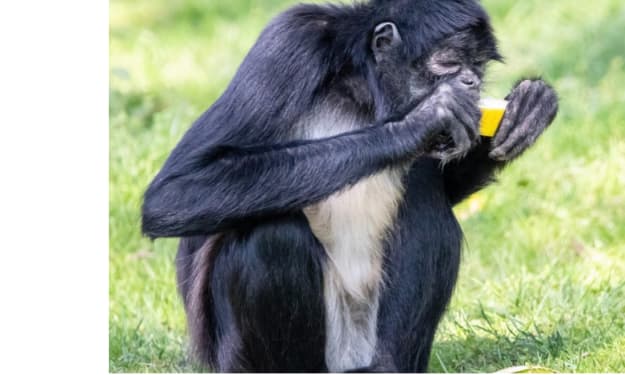
To locate food, spider monkeys employ collective intelligence.
It's difficult to find fruit in a tropical forest. Throughout the seasons, fruit trees come and go, and their places frequently shift. Due to their heavy reliance on fruit, spider monkeys must search wisely in order to succeed.
By Francis Dami22 days ago in Petlife
The Summer I Was Chosen by a Northern Mockingbird
During the long, suspended days of the pandemic, a wild mockingbird began visiting my driveway and chose me, again and again. What started as a strange encounter became a brief, meaningful connection that I still carry with me.
By Erica Roberts about a month ago in Petlife
Iran's Stray Dogs
Stray dogs on the edge of a city are the visible part of a hidden system. You can usually trace that system with boring inputs: food access, abandonment pressure, veterinary reach, and the incentives created by enforcement. When those inputs are misaligned, dogs become the output. People then argue about the dogs instead of the machinery that keeps generating them.
By Dr. Mozelle Martin5 days ago in Petlife


Comments
There are no comments for this story
Be the first to respond and start the conversation.