
Can an Emotional Support Dog Go to Work With You
Understanding Workplace Laws and ESA Rights in 2026

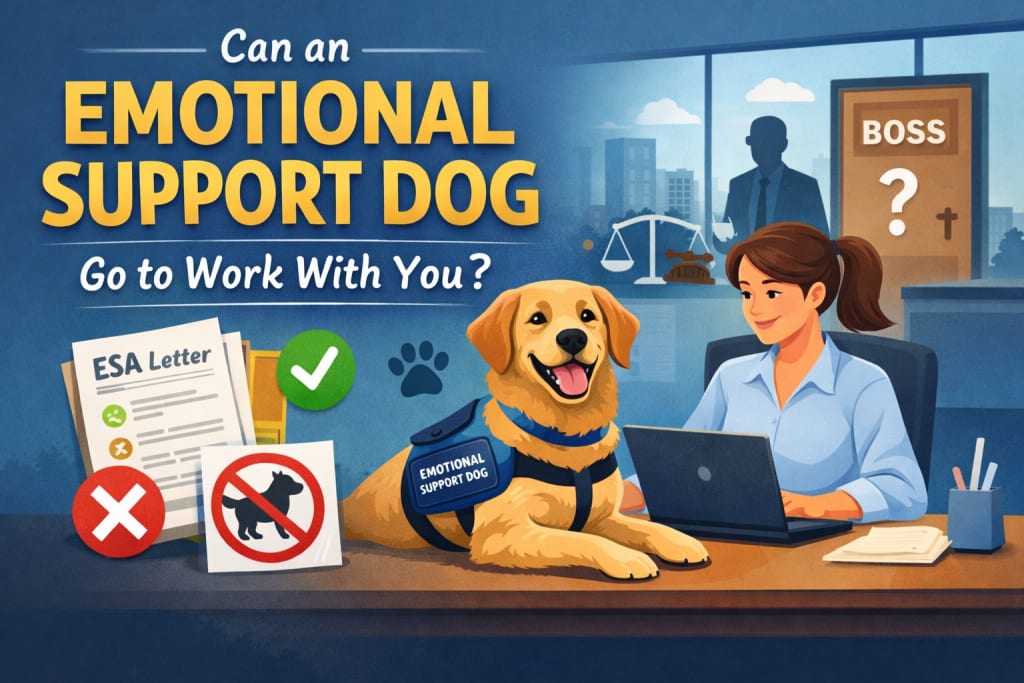
Many people struggle with anxiety, stress, and sadness at work. Some have found that having an emotional support dog helps them feel better. But can you actually bring your dog to your job? The answer is not simple. It depends on several things, including the laws, your company rules, and what your dog is trained to do.
What is an Emotional Support Dog?
An emotional support dog is a pet that helps a person feel calmer and less anxious. These dogs provide comfort by their presence. They may sit with their owner, rest their head on their lap, or simply be nearby when the person feels stressed.
Emotional support dogs are different from service dogs. Service dogs are trained to do specific tasks. For example, they might alert someone to low blood sugar, guide someone who is blind, or help someone who uses a wheelchair. Service dogs go through special training and can legally go almost anywhere. Emotional support dogs do not have special training for specific tasks. They help mainly by being a comforting presence. Because of this, they do not have the same legal rights as service dogs.
Legal Rights
In the United States, there is an important law called the Americans with Disabilities Act (ADA). This law says service dogs can go to work with their owners. However, emotional support dogs are not covered by this law. The law only covers dogs trained to do specific tasks for people with disabilities.
There are other laws that might help. The Fair Housing Act says landlords must allow emotional support animals in housing, even if they have a no-pet rule. But this law is about housing, not work.
When it comes to work, the rules are different. Your employer can say no to bringing your emotional support dog to the office. They can ask you to prove that you need the dog for a medical reason. They can also require proof that your dog is well-behaved.
Company Policies
Every workplace has its own rules about bringing dogs to work. Some companies are very friendly to dogs. They might have a "bring your dog to work" day or even allow dogs in the office all the time. Other companies do not allow any animals at work.
Before trying to bring your emotional support dog to work, you should check your company's policy. You can ask your manager or your human resources department. They can tell you what is allowed.
Getting Permission
If your company might allow it, here is how you can ask:
Talk to Your Doctor: First, get a letter from your doctor or mental health professional. This letter should explain that you have a condition that makes you anxious or sad. It should say that your dog helps you feel better. This is called a prescription for an emotional support animal.
Ask Your Employer: Next, ask your manager or human resources if you can bring your dog to work. You can explain that the dog helps you handle stress and anxiety. Give them the letter from your doctor.
Prove Your Dog is Trained: Your employer will probably want to know that your dog behaves well. Your dog should listen to you, not bark too much, and not bother other workers. You might need to show that your dog has basic training or took a class.
Make a Plan: If your employer says yes, you should work out the details. Where will your dog stay? When can you bring the dog? What if someone is allergic to dogs? What will happen if your dog has an accident or causes problems?
Benefits of Having Your Dog at Work
If you are allowed to bring your emotional support dog to work, there are many good things about it:
Less Stress: Your dog's presence can help you feel calmer. You might feel less worried about your job. Your heart rate may go down when you pet your dog.
Better Mood: Dogs make people happy. Just looking at your dog or petting it can make you smile. This can help you get through a hard day.
Better Work: When you feel calmer and happier, you often do better work. You might focus better and make fewer mistakes.
Connection: Your dog can be a friend at work. You might feel less lonely. Other workers might like petting your dog too.
Challenges to Think About
Bringing your dog to work is not always easy. There are problems to consider:
Other Workers: Some people are scared of dogs or allergic to dogs. Your dog might bother them. You need to make sure your dog does not get in the way of other workers doing their jobs.
Distractions: Your dog might distract you or other workers. If your dog wants to play or needs to go outside, it might interrupt your work.
Costs: You might have to pay for special training or a certificate for your dog. You might need pet insurance.
Rules: If your dog causes problems, your employer might ask you to stop bringing the dog. Your dog might need to pass a test to show it behaves well.
Alternatives
If your company will not let you bring your dog to work, there are other choices:
Work from Home: Ask if you can work from home some days or all the time. Then your dog can be with you.
Lunch Breaks: Spend time with your dog during lunch. This might help you feel better during the rest of your day.
Weekend Time: Make sure to spend good time with your dog on weekends.
Other Help: Talk to a counselor or therapist. Take classes to manage stress. These things can help you feel better at work.
What You Should Do
If you want to bring your emotional support dog to work, here are the steps:
- Get an ESA Letter from a RealESLetter.
- Read your policy.
- Talk to your manager or human resources.
- Make sure your dog behaves well.
- Have a plan for how this will work.
- Be ready to answer questions about your dog.
Conclusion
Emotional support dogs can help people feel less anxious and sad. Some people benefit a lot from having their dog nearby. However, bringing your dog to work is not always possible. The rules are different at each company. You need to know the law, your company's rules, and whether your dog is ready for the workplace.
The most important thing is to talk to your employer and doctor. Together, you can figure out what is best for you. Your dog can help you feel better, but it needs to be in the right place. If your job does not allow dogs, there are other ways to manage stress and feel better.
Remember, having an emotional support dog is wonderful. But you also need to think about other workers and make sure everything works out for everyone. With planning and honesty, you might be able to bring your dog to work with you.
About the Creator
Keep reading
More stories from Robert Barrett and writers in Petlife and other communities.
What Is the Bite Force of a Great Pyrenees?
The Great Pyrenees is a large and powerful dog breed. It is best known for its calm nature, thick white coat, and strong protective instincts. Many people see this dog as gentle and friendly, but this breed also has a strong physical build. One important part of that strength is its bite force.
By Robert Barrett22 days ago in Petlife
The Summer I Was Chosen by a Northern Mockingbird
During the long, suspended days of the pandemic, a wild mockingbird began visiting my driveway and chose me, again and again. What started as a strange encounter became a brief, meaningful connection that I still carry with me.
By Erica Roberts 25 days ago in Petlife
The Chihuahua Who Guarded the Night
On Maple Street, nothing unusual ever happened. The houses looked the same, the mornings smelled like coffee and toast, and the evenings were so quiet that the wind rustled through the trees. This was the kind of place where surprises didn’t belong.
By Paw Planet 4 days ago in Petlife




Comments
There are no comments for this story
Be the first to respond and start the conversation.