
Men Lose Their Y Chromosome as They Age. Scientists Thought It Didn’t Matter — But Now We’re Learning More
New research reveals that the gradual loss of the Y chromosome in men may influence health, immunity, and lifespan in ways science is only beginning to understand.

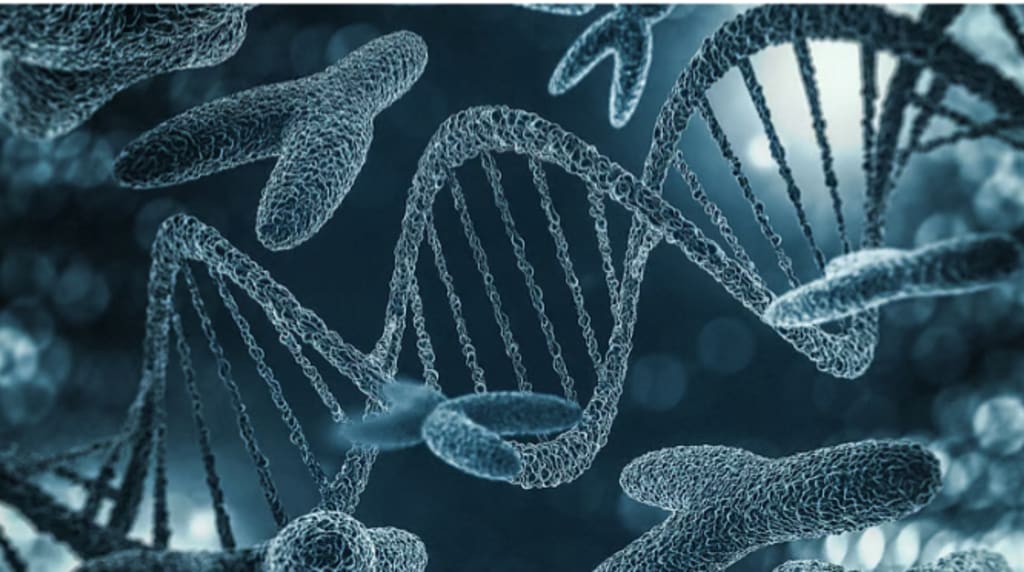
For decades, scientists believed the Y chromosome played only a narrow role in human biology: determining male sex characteristics and fertility. Once its job was done, it was often dismissed as genetically insignificant. But a growing body of research is now overturning that assumption.
As men age, many gradually lose the Y chromosome in some of their blood cells—a phenomenon known as “mosaic loss of Y.” For years, researchers assumed this change had little consequence. Today, however, new evidence suggests that losing the Y chromosome may be linked to higher risks of disease, weakened immune function, and even shorter lifespan.
What was once considered a harmless quirk of aging is now emerging as an important clue to men’s long-term health.
What Does It Mean to Lose the Y Chromosome?
Every human cell normally contains 23 pairs of chromosomes. Men typically carry one X chromosome and one Y chromosome. But as men grow older, some of their blood cells begin to lose the Y chromosome entirely.
This does not mean the Y chromosome disappears from every cell in the body. Instead, it becomes absent in a growing percentage of cells over time. By age 70, a significant number of men show this chromosomal loss in their blood.
Scientists first noticed this pattern decades ago, but early studies suggested it was just a random side effect of cell division errors. Since men could live normal lives without obvious symptoms, the loss was labeled biologically insignificant.
That assumption is now being challenged.
A Link to Disease Risk
Recent large-scale genetic studies have uncovered a striking pattern: men with greater loss of the Y chromosome in their blood cells are more likely to develop certain diseases.
Researchers have found associations between Y chromosome loss and:
Increased risk of heart disease
Higher incidence of certain cancers
Weakened immune response
Greater likelihood of Alzheimer’s disease
Shorter overall life expectancy
These findings suggest the Y chromosome may play a much broader role in regulating health than previously believed.
Scientists now suspect that genes on the Y chromosome help control immune system behavior and inflammation. When those genes disappear from immune cells, the body may become less efficient at fighting infections and abnormal cell growth.
Why the Y Chromosome Was Underestimated
Historically, the Y chromosome received little attention because it contains far fewer genes than other chromosomes. Compared to the X chromosome, it looked small and simple.
This led to a long-standing belief that the Y chromosome was slowly “shrinking” through evolution and might eventually disappear altogether. While it is true that the Y chromosome has lost genes over millions of years, modern research suggests that the genes it retains are critical.
Some of these genes appear to regulate how immune cells behave and how tissues respond to stress and aging. Losing them may subtly shift the body toward chronic inflammation and disease vulnerability.
In short, the Y chromosome may be small—but it is far from unimportant.
What Causes the Loss?
Scientists believe several factors contribute to Y chromosome loss over time:
Cell division errors: As cells divide repeatedly, mistakes become more likely.
Oxidative stress: Damage from free radicals can harm chromosomes.
Smoking: Studies show smokers lose the Y chromosome at much higher rates than non-smokers.
Environmental toxins: Long-term exposure to pollutants may accelerate chromosomal damage.
Age remains the strongest factor. The older a man becomes, the more likely some of his cells will lose the Y chromosome.
Importantly, lifestyle choices may influence how quickly this process occurs.
A New Window into Men’s Health
The discovery that Y chromosome loss is linked to disease opens the door to new medical possibilities.
Doctors may one day use Y chromosome measurements as a biomarker for aging-related risk. A simple blood test could reveal how many cells have lost the chromosome, helping identify men who are more vulnerable to heart disease or cancer before symptoms appear.
This could shift healthcare from reactive treatment to early prevention.
Researchers funded by institutions like the National Institutes of Health are now investigating whether interventions—such as anti-inflammatory drugs or immune therapies—might offset the effects of Y chromosome loss.
Not Destiny, But a Risk Factor
It’s important to note that losing the Y chromosome does not guarantee illness. Many men with this genetic change remain healthy for decades.
Instead, scientists describe it as a risk factor, much like high cholesterol or elevated blood pressure. It increases vulnerability but does not determine outcome.
This distinction matters. Understanding the biology behind Y chromosome loss empowers people rather than alarms them.
The emerging message is clear: aging is not just about getting older—it is about what happens at the cellular level.
Evolutionary Mystery
Why would the Y chromosome be so fragile compared to others? Some researchers believe its structure makes it more susceptible to damage during cell division. Unlike most chromosomes, it does not have a matching partner for repair in many cells, making errors harder to fix.
This vulnerability may explain why Y chromosome loss becomes more common with age and stress.
From an evolutionary perspective, the phenomenon raises intriguing questions. If the Y chromosome plays such an important role in immune health, why did science overlook it for so long? The answer may lie in decades of research bias that focused heavily on reproduction rather than whole-body health.
What This Means for the Future
The growing recognition of Y chromosome loss as medically relevant marks a shift in how aging is studied. Instead of treating aging as a uniform process, scientists are uncovering specific genetic events that shape how bodies decline.
Future research may lead to:
Personalized health screening for men
New treatments targeting immune decline
Better understanding of sex-based differences in disease
Improved strategies for healthy aging
It also highlights the importance of including genetic diversity in research, ensuring both male and female biology are fully explored.
Final Thoughts
For years, scientists believed the loss of the Y chromosome in aging men was a biological footnote—interesting but meaningless. Today, it is becoming clear that this small genetic change may have big consequences.
The Y chromosome appears to play a hidden role in protecting health, regulating immunity, and influencing lifespan. Its gradual disappearance from some cells may help explain why men face higher risks for certain diseases as they age.
This discovery does not bring fear—it brings knowledge. And with knowledge comes opportunity: the chance to detect risks earlier, protect health longer, and rethink how we understand aging itself.
Sometimes, the most important scientific breakthroughs come not from discovering something new, but from realizing that what we once ignored actually mattered all along.
About the Creator
Sajida Sikandar
Hi, I’m Sajida Sikandar, a passionate blogger with 3 years of experience in crafting engaging and insightful content. Join me as I share my thoughts, stories, and ideas on a variety of topics that matter to you.
Keep reading
More stories from Sajida Sikandar and writers in Petlife and other communities.
Gold Reclaims $5,000 as Analysts Warn Volatility Is Far From Over
Gold has once again captured the world’s attention after reclaiming the $5,000 mark, a psychological and financial milestone that underscores growing unease in global markets. Long regarded as a safe-haven asset, gold’s sudden resurgence reflects rising concerns about inflation, geopolitical instability, and the long-term health of major economies.
By Sajida Sikandar2 days ago in Journal
The Summer I Was Chosen by a Northern Mockingbird
During the long, suspended days of the pandemic, a wild mockingbird began visiting my driveway and chose me, again and again. What started as a strange encounter became a brief, meaningful connection that I still carry with me.
By Erica Roberts 28 days ago in Petlife
Swiss Glacier Rescue: Chihuahua Dog Leads Helicopter Team to Trapped Mountaineer
Flip is a small, energetic, and loyal Chihuahua, but he has a very big personality. These are the words Flip’s owner, Jon Goller, uses to describe his dog. Last summer, Jon Goller fell into a crevasse on a Swiss glacier. He was rescued by a helicopter—and the reason was his dog, who stayed by his side even in that terrible moment. Both Flip and Goller love the mountains and mountaineering. When Flip gets tired from walking, his owner puts him in a bag and carries him on his shoulder so they can complete the rest of the journey more quickly. They stop at several spots along the way, eat, and enjoy the surrounding scenery. Goller said, “My dog can walk 20 to 30 kilometers. Fortunately, on the day of the accident I hadn’t put him in the bag, nor was he on a leash, otherwise he might have fallen into the crevasse as well. If that had happened, the rescue teams would never have found me.” Jon is originally from the city of Plzeň in the Czech Republic and had moved to Switzerland about a month before the accident. Goller says, “My parents gave me Flip as a gift—they breed dogs. I had another dog before, but it passed away some time ago. Flip is two and a half years old, and everyone at my office likes him and plays with him. He especially loves playing in the snow.”
By Real contenta day ago in Petlife
Bartender
On the heels of grief, pain bears down hard. On the heels of death, pain awakens the quiet place between the end of our own life and now. Feeling anything is like seeing a film and in black and white, slow motion, all sound turned off. Just watching. Gritting teeth, awkward smiles and bloody red eyes move around, scanning the others who are feeling something I don't want to feel, but I do. Escapism is all I have ever known. ~
By ROCK aka Andrea Polla (Simmons)6 days ago in Poets




Comments
There are no comments for this story
Be the first to respond and start the conversation.