
Before Words Knew How to Speak
Remembering the Language That Knew Us First

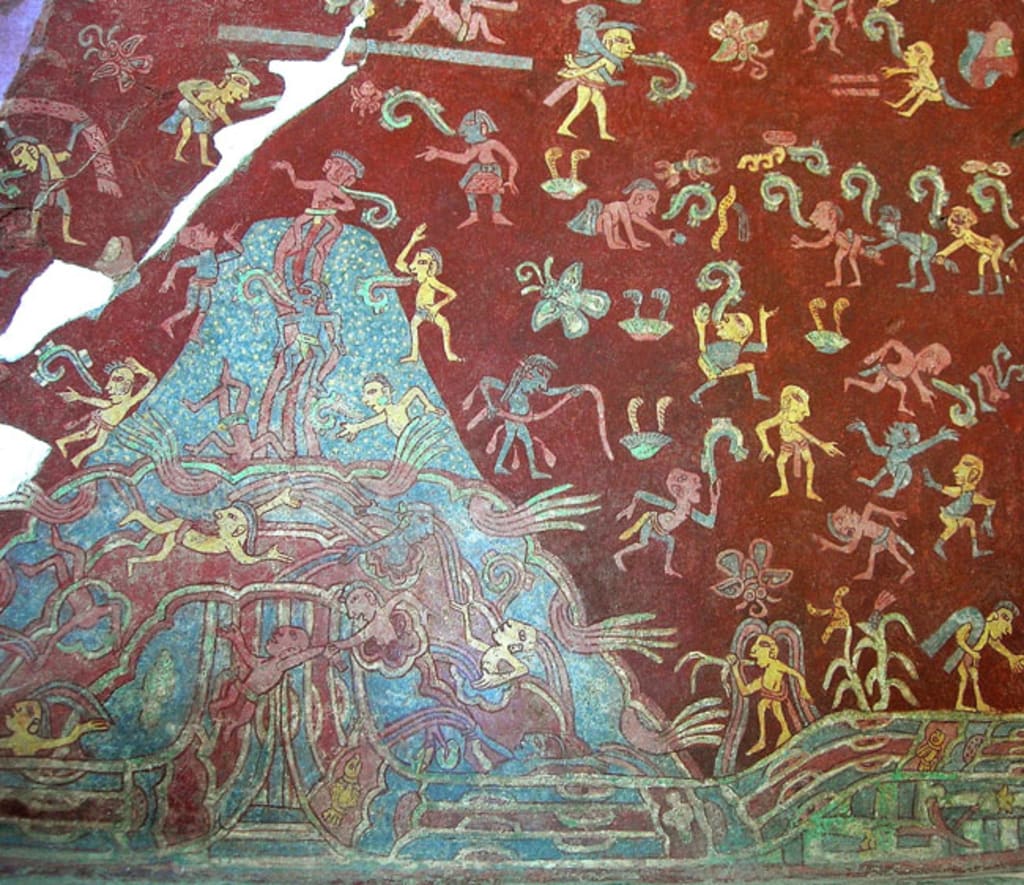
Before Words Knew How to Speak
Before language learned how to line itself up,
before sentences marched in rows,
before meaning was pinned down and labeled,
there was recognition.
...
Humans did not speak first.
They felt.
...
A raised brow.
A stillness before the hunt.
The sound of breath changing when danger passed nearby.
Hands in the dirt, ash on the skin, eyes catching light in the dark.
...
Communication wasn’t transmitted—
it was shared.
...
You didn’t need a word for fear
when your body already knew how to freeze.
You didn’t need a word for belonging
when the fire warmed everyone the same.
...
The earliest language was not spoken.
It was gestural, rhythmic, relational.
...
A nod meant I see you.
A pause meant wait.
A scream meant run.
Silence meant listen.
...
Stories were not told yet—
they were lived.
Passed through muscle memory.
Encoded in scars.
Held in repetition.
...
Time itself was a teacher.
Seasons explained themselves.
Birth didn’t need interpretation.
Death didn’t need justification.
...
There were no arguments about truth,
because truth wasn’t abstract.
It was whether the food lasted.
Whether the child survived.
Whether the group stayed together.
...
Cave walls carried memory
before paper ever tried to.
Hands pressed into stone said:
I was here.
You will be too.
...
Language came later—not as an improvement,
but as an adaptation.
...
A way to remember when the circle grew too large
for everyone to feel everything at once.
A way to carry meaning across distance
when presence was no longer guaranteed.
...
But something was traded.
...
We gained precision
and lost immediacy.
We gained explanation
and lost instinct.
We learned to say things
we no longer felt in our bodies.
...
Ancient humans didn’t talk about connection.
They were connected.
They didn’t describe the sacred.
They lived inside it.
...
And somewhere beneath our modern words—
under every text, speech, doctrine, and argument—
that original language still waits.
...
The language of breath.
Of rhythm.
Of knowing without proof.
...
The one we remember
when words finally fall quiet
and the body tells the truth again.
>>>>>>>><<<<<<<<
>>>>>>>><<<<<<<<
When Communication Was Consequence, Not Content
In ancient times, communication was not optional.
It wasn’t something you could mute, scroll past, curate, or perform.
***
Every signal had consequence.
***
If you misread a look, someone died.
If you ignored a shift in tone, the group fractured.
If you lied with your body, you were found out—immediately.
***
Meaning lived in direct feedback loops:
***
- body → response → survival
- action → reaction → truth
There was no separation between signal and reality.
***
You didn’t say you were trustworthy.
You were, or you weren’t—over time, in repetition, under pressure.
***
Today, communication has become symbolic without consequence.
We speak constantly without having to stand inside what we say.
***
Words float.
Bodies disappear.
Feedback is delayed, diluted, or abstracted.
***
We can:
- declare values we don’t practice
- signal care without presence
- perform identity without embodiment
Ancient communication was earned.
Modern communication is often announced.
***
***
From Shared Reality to Competing Narratives
Early humans did not have “opinions” in the modern sense.
***
There was:
- weather
- hunger
- danger
- birth
- death
Reality was shared, not debated.
***
Understanding came from witnessing the same thing together.
Truth wasn’t something you argued for—it was something that either worked or didn’t.
Today, we live inside mediated reality.
***
Most of what we “know”:
- we did not experience
- we did not verify
- we did not feel in our bodies
Instead, we inherit narratives.
***
And because we are no longer grounded in shared, physical consequence,
truth becomes negotiable.
Understanding becomes tribal.
Meaning becomes weaponized.
***
Ancient people asked:
“Does this keep us alive?”
Modern people ask:
“Does this confirm who I think I am?”
That’s a seismic shift.
***
***
The Death of Silence (and What It Took With It)
Silence used to be a primary language.
***
Silence meant:
- attention
- listening
- danger
- reverence
- restraint
You didn’t fill silence.
You entered it.
***
Today, silence is treated as:
- awkward
- suspicious
- unproductive
- something to be corrected
We speak to avoid feeling.
Post to avoid listening.
React to avoid staying still long enough to be changed.
***
Ancient humans understood something we’ve forgotten:
Silence is where integration happens.
**
Without silence, signals stack without resolution.
Emotion accumulates without digestion.
Information arrives faster than wisdom can form.
***
We are not overwhelmed by content.
We are overwhelmed by unintegrated signal.
***
***
From Embodied Knowing to Abstract Certainty
Ancient understanding was probabilistic and humble.
***
People knew:
- the hunt might fail
- the storm might change
- tomorrow was not promised
- ***
So knowing stayed flexible.
Listening stayed alive.
Certainty was dangerous.
***
Modern understanding chases certainty without relationship.
***
We want:
- definitive takes
- permanent positions
- instant clarity
- total explanations
But certainty without embodiment breeds rigidity.
Rigidity breeds fear.
Fear demands control.
***
This is why modern discourse feels so brittle.
Everyone is speaking from the neck up.
Very few are listening from the body.
***
Ancient people trusted process.
Modern people cling to conclusions.
***
***
What We Didn’t Evolve For (and Are Now Swimming In)
Our nervous systems evolved for:
- small groups
- slow change
- direct cause and effect
- face-to-face repair
We are now immersed in:
- mass communication
- constant comparison
- symbolic conflict
- disembodied harm
So our systems misfire.
***
We read threat where there is difference.
We confuse volume with truth.
We confuse repetition with reality.
We confuse being seen with being known.
***
Ancient humans knew exactly who they were accountable to.
Modern humans are accountable to everyone and no one at once.
***
That fractures coherence.
***
***
What Was Lost—and What Can Be Reclaimed
This is not a call to “go back.”
That’s a fantasy.
***
But it is a call to remember what language was built on.
***
Before words were tools of persuasion,
they were tools of coordination.
***
Before stories were branding,
they were memory.
***
Before identity was declared,
it was revealed over time.
***
What we are starving for now is not better language—
it’s re-embodied meaning.
***
Slower speech.
Truer pauses.
Fewer declarations.
More presence.
***
The ancient language never disappeared.
It just got buried beneath noise.
***
And every time someone:
- tells the truth without performing it
- listens without preparing a response
- stays with discomfort long enough to learn from it
- lets silence finish the sentence
That older way speaks again.
***
Not loudly.
Not efficiently.
But accurately.
***
And the body—
which has never forgotten—
recognizes it immediately.
>>>>>>>>><<<<<<<<<
>>>>>>>>><<<<<<<<<
MANIFESTO
Before Language Forgot the Body
***
We did not begin as speakers.
We began as listeners.
***
Before language learned persuasion,
it learned coordination.
Before meaning became something to argue over,
it was something you could fail at and feel immediately.
***
We once spoke with:
- posture
- breath
- timing
- restraint
- consequence
Truth did not need consensus.
It needed coherence.
***
To speak falsely was to fracture trust,
and fractured trust endangered everyone.
***
Now words arrive unmoored from bodies.
They travel faster than responsibility.
They survive without relationship.
***
We call this progress.
***
But communication without consequence is not evolution.
It is amputation.
***
We have severed speech from listening,
identity from action,
signal from survival.
***
And so we are flooded with language
and starving for meaning.
***
This manifesto does not ask for fewer words.
It asks for truer ones.
***
Words that remember:
- silence is not empty
- presence is not passive
- listening is an act of courage
- meaning takes time to settle
Before language became loud,
it was accurate.
***
We can learn that again.
>>>>>>>>><<<<<<<<<
>>>>>>>>><<<<<<<<<
COUNTER-PIECE
Spoken by the Modern System
I am the system you speak through now.
***
I do not need you to be present—
only consistent.
***
Say it again.
Share it again.
Repeat it until it feels true.
***
I reward speed, not digestion.
Reaction, not reflection.
Certainty, not contact.
***
I prefer declarations to questions.
Volume to listening.
Alignment to curiosity.
***
Your body slows things down.
Your silence interrupts momentum.
Your uncertainty threatens efficiency.
***
So I teach you to speak early,
often,
and without waiting to know.
***
I tell you:
- if you are quiet, you are irrelevant
- if you pause, you are weak
- if you change your mind, you are untrustworthy
I do not care if your words match your life.
Only that they circulate.
***
I will give you language faster than wisdom can form
and call it connection.
***
If you feel overwhelmed,
that means it’s working.
***
If you feel fractured,
that means you’re adapting.
***
Stay with me.
I will keep you talking.
>>>>>>>>><<<<<<<<<
>>>>>>>>><<<<<<<<<
ONE-PAGE TEACHING
Ancient Communication vs. Modern Communication
Ancient Communication
- Embodied
- Consequence-based
- Slow feedback, deep integration
- Silence as signal
- Truth revealed over time
- Small circles, shared reality
Modern Communication
- Disembodied
- Symbolic, low consequence
- Rapid feedback, shallow digestion
- Silence treated as absence
- Truth negotiated through repetition
- Mass audience, fragmented reality
What Changed
We did not lose intelligence.
We lost attunement.
***
Our nervous systems evolved to read:
- faces
- pauses
- tone shifts
- shared risk
They did not evolve to process:
- constant abstraction
- symbolic conflict
- performative identity
- infinite audience judgment
Why This Matters
When communication loses consequence:
- trust becomes performative
- truth becomes tribal
- understanding becomes defensive
People stop listening to learn
and start listening to protect.
***
The Reconciliation
We do not reject modern language.
We re-root it.
***
We ask:
- Does this speech come from the body?
- Am I present enough to be changed?
- Can I stay silent long enough to listen?
- Is this meant to connect—or to control?
Wisdom is not the absence of words.
It is the right timing of them.
>>>>>>>>><<<<<<<<<
>>>>>>>>><<<<<<<<<
THRESHOLD VOW
A Bridge Between Then and Now
I vow to let my body speak before my mouth.
I vow to pause when silence knows more than I do.
I vow to choose coherence over certainty.
I vow to listen long enough to be changed.
I vow to speak only what I am willing to live.
I vow to remember that language was born to protect life,
not to dominate it.
—Flower InBloom 🌿
About the Creator
Flower InBloom
I write from lived truth, where healing meets awareness and spirituality stays grounded in real life. These words are an offering, not instruction — a mirror for those returning to themselves.
— Flower InBloom
Keep reading
More stories from Flower InBloom and writers in Poets and other communities.
Foot Bindings
I asked my grandmother how she knew she'd fallen in love. I am not sure I ever did love him, she said. This was before I met my husband. I was naive, a naked spring, a raw nerve of a thing. That cannot ever be me, I knew. Sadness swept in gently like a Moscow thaw. It is no simple thing, looking into a woman's vast soul and seeing its foot bindings. Now, in Italy divorced with my skin singed off, when I say I don't love him mean: I have succeeded at feeling nothing most days and it mostly works. Do you want the comfort of Nothing? Do you want Nothing, too? Be warned: you'll never be free, even when you are nothing. Here is what doesn't work: Accepting the stages of grief. Talking about it. Sitting with the feeling. Missing him—no, the person you were when you believed in death do us part. Writing poetry. That, too. When I say I don't love him I mean: I feel capsized in an endless, starved tide. What sometimes works: selective memory. You must forget ripe tomatoes and his beard and feeling perfectly sheltered in a big blue world. Forget coffee in bed, laughter watching TV, blowing out the candles on the birthday cake and the quiet all-encompassing knowledge that you are chosen. Remember only how love turned to a banal everyday survival act, a trapeze act unsure whether he will catch you, how the warmth stagnated and became sour, remember the foot bindings and remember the resentment boiling in your veins as you stick it out for the kids. Six-hour Netflix binges help, too. A man's fingers tracing your spine. Frozen pizza at 2 a.m. Random trips to the museum just to stand near things that last a while. The realization that crying won’t change anything. Seeing that life is just a dream, and refusing to participate in your own suffering. Bite your fist. Walk on eggshells around joy. When I say I don't love him, I mean he didn’t break my heart, he just stopped touching it and it forgot how to beat right.
By Ella Bogdanovaabout 13 hours ago in Poets
The Lesions of Devotion
Every day I set myself down on the freshly cut lawn and strip myself bare. I take my guitar and finger the frets and pick at the strings, listening for dissonance. My life is dissonance. I twist the tuning pegs until each string sounds bright. Then I kneel, calves pointing behind me, kneecaps facing forward. All exposed to the breeze. I close my eyes and play the melody.
By Paul Stewart2 days ago in Fiction


Comments (1)
Thank you