
FIELD MANUAL FOR THE SAFE DECOMMISSIONING OF A HOUSE
A Procedural Guide to Leaving Without Going Back


Purpose:
To provide clear, repeatable instructions for shutting down a house that no longer functions as intended. Follow all steps in order. Deviations may result in structural failure, emotional leakage, or reactivation.
Inventory the Tools
Before you begin, assemble the following:
One notebook with blank pages (unlined preferred).
A permanent marker.
A small box labeled KEEP.
A larger box labeled DONATE.
A trash bag rated for construction debris.
Gloves (work-grade).
A ladder.
A watch that still ticks.
Do not substitute items. The notebook is not a diary. The watch is not for timekeeping; it is for proof.
Establish Authority
Stand in the entryway. Say out loud, “I am responsible for what happens next.”
If your voice echoes, proceed.
If it does not, wait until it does.
This step ensures the house recognizes a single operator. Multiple operators cause confusion, especially near the stairs.
Shut Off the Utilities (Visible)
Locate the breaker panel. Switch each breaker to OFF, starting from the bottom. Do not rush.
When the lights go dark, pause for ten seconds. Count carefully. If any light remains, you missed something.
Gas: Turn the valve clockwise until it resists you. Do not force it. Resistance indicates memory.
Water: Close the main. Expect a final cough from the pipes. This is normal. Do not apologize.
Shut Off the Utilities (Invisible)
Open the notebook. On the first page, write the names of everyone who has slept here. Include pets. Include guests who stayed “just for a while.”
On the second page, write the dates they arrived. On the third, the dates they left.
If you do not know a date, write UNKNOWN in block letters. This is acceptable. The house understands gaps.
Close the notebook. Place it in the KEEP box.
Clear the Surfaces
Begin with horizontal planes: tables, counters, shelves.
For each object, ask:
Does this object perform a function?
Does this object remind me of a function?
If the answer to either is yes, place it in DONATE. If both are no, discard.
Exception: Photographs. These go in KEEP even if they are blurry, even if they show people who no longer answer messages.
Do not look at the backs of the photographs yet.
Address the Kitchen
The kitchen is a system, not a room.
Empty the refrigerator. Discard expired items without comment. If you find a condiment that expired years ago but was used last week, close the door and wait five minutes. The system is recalibrating.
Clean the sink. Remove the drain trap. Expect something small and metallic. This is not yours. Set it aside.
Check the stove. If one burner clicks after power is off, place a mug upside down over it. This will muffle the sound. Do not investigate further.
Bedrooms (Primary)
Strip the bed. Fold the sheets even if they are going in the trash. This maintains dignity.
Inspect the mattress. If there is an indentation on one side, rotate it. If the indentation remains, note it in the notebook on a new page titled LOAD-BEARING.
Open the closet. Remove clothing by category, not by owner. Categories prevent arguments.
Shoes go last. Shoes remember where they’ve been.
Bedrooms (Secondary)
These rooms are easier. Do not let that make you careless.
If you find toys, place them in DONATE unless they are missing a piece. Missing pieces go in KEEP.
Check under the bed. If you find dust, remove it. If you find something else, leave it. The house will handle it once you are gone.
The Bathroom
Mirrors must be cleaned until they reflect light, not faces.
Dispose of expired medications. Keep the empty bottles until the end; they will be needed for counting.
Test the shower. Even with the water off, turn the handle. If you hear running, write LEAK in the notebook and underline it twice.
Do not fix the leak.
Paperwork
Collect mail, manuals, warranties, and notes left on the counter.
Sort into three piles:
ACTION REQUIRED
NO ACTION REQUIRED
UNCLEAR
The UNCLEAR pile goes into KEEP. Clarity is not always available immediately.
Shred anything with your name spelled wrong.
The Attic
Use the ladder. Do not skip this step.
In the attic, you will find boxes labeled in handwriting you recognize. Open only those labeled MISC.
If you find holiday decorations, remove one ornament and place it in your pocket. You will forget it is there. This is intentional.
If you hear footsteps above you, remain still. Count to the number of years you lived here. The sound should stop before you finish.
The Basement (If Applicable)
Basements are optional but recommended.
Check for water. If present, mark the height on the wall with the marker. Date it.
Locate the furnace. Place your hand near it. It should be cold. If it is warm, say “Thank you” and back away.
Find the box labeled OLD TAXES. Do not open it. Move it closer to the stairs so it feels included.
Walls
Remove nails, hooks, and adhesive strips.
For each hole, decide whether to patch or leave it.
Patch holes smaller than a dime. Leave larger ones. Large holes are structural truths.
If you uncover a child’s height marks, copy them into the notebook exactly. Do not measure yourself against them.
Floors
Vacuum last.
As you vacuum, note where the machine catches. These spots indicate wear patterns. Do not correct your path.
If you find a coin, keep it. If you find two, leave one behind.
Final Walkthrough
Turn the watch face up. Listen to it tick.
Walk through each room in the order you first learned them. Say the room’s name out loud. If you forget a name, that room is already gone.
Check windows. Lock them, then unlock them. Leave them unlocked.
Check doors. Close them gently. Do not slam.
Accounting
Return to the notebook.
On a new page, list what you did not finish. Be specific.
Count the empty medication bottles. Write the number. Do not explain it.
Write one sentence beginning with “If I had more time,” and stop mid-sentence.
Close the notebook. Place it on the kitchen counter.
Exit Procedure
Stand in the entryway again.
Say, “I have done what I can.”
If the house responds with silence, proceed.
If it responds with a sound—any sound—wait until it finishes.
Leave the key on the hook. Do not take it as a souvenir. Souvenirs imply return.
Step outside. Close the door.
Do not lock it.
Post-Decommissioning Notes
You may experience the following:
The urge to check your phone for messages that will not arrive.
The sensation of having forgotten something essential.
Relief, followed by a sharp and unnecessary grief.
These are expected outcomes.
Do not attempt to re-enter the house to resolve them.
Disposal of Materials
Place DONATE items where someone else can find them.
Dispose of trash according to local regulations.
Keep the KEEP box closed for at least one month. After that, you may open it, but only in daylight.
Certification
This manual does not certify closure.
Closure is not a function of procedure.
However, if you followed each step, the house will remain where it is, and you will not.
This is the best possible outcome.
About the Creator
Lawrence Lease
Alaska born and bred, Washington DC is my home. I'm also a freelance writer. Love politics and history.
Keep reading
More stories from Lawrence Lease and writers in Poets and other communities.
The Salt in her Voice
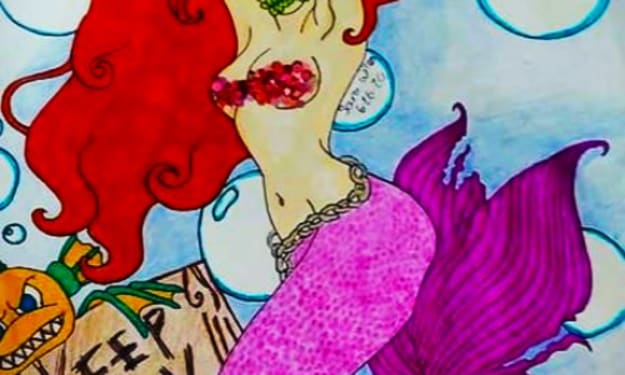
The myth says mermaids sing to lure sailors to their death. But why? The ocean is huge. Only 5 percent has been discovered by man. Why would a creature of the sea with that much space to roam ever care about the fate of men on ships? The answer, as it turns out, is not a simple one at all. The truth about the myth is older than the tides. Long ago before the first ship ever cut across the surface, the sea made a pact with the sky. The sky would take the souls of the drowned. Anyone who died in storms or any quiet accidents of the deep would have their soul lifted upward to the Heavens while the bodies would remain below, feeding the oceans endless hunger. The greedy sea however wanted more souls than the sky would claim. So it created mermaids. It gave them beautiful voices woven from currents and moonlight. It commanded them to sing. "Bring forth the ones who float where they should sink." it instructed them. So they did. They never killed out of malice but out of obligation. They sung to summon, not to seduce. A mermaid's voice could loosen the tether between the body and soul, making any man step willingly into the water. The sea would take the body and the sky would take the soul. Balance maintained.
By Sara Wilson6 days ago in Fiction



Comments
There are no comments for this story
Be the first to respond and start the conversation.