
Quiet Work of Becoming
A prose poem about persistence, doubt, and the long apprenticeship of the self

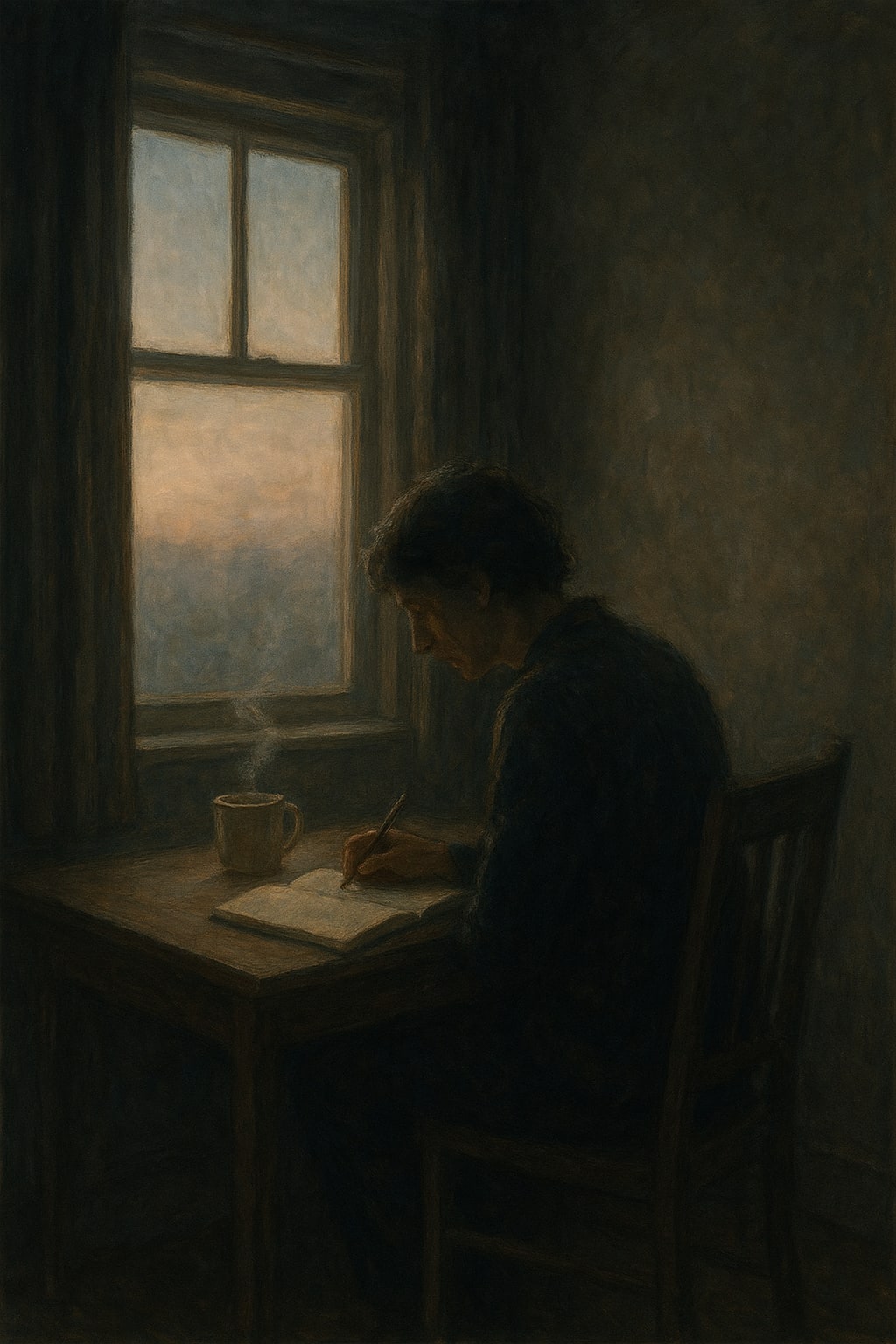
I used to believe that becoming a writer would arrive with a sound—trumpets, perhaps, or at least a clean click, like a lock finally turning. I imagined a day when the doubt would lift its coat from the back of my chair and leave the room for good. Instead, it stayed. It learned my habits. It brewed coffee. It read over my shoulder.
Most mornings, I write anyway.
The page does not care who you are. It does not remember yesterday’s sentences or promise tomorrow’s clarity. It only waits, pale and wide as a winter field, asking what you will plant today. Some days I bring seeds. Some days I bring excuses. The page accepts both and offers no applause.
There are writers who speak of inspiration as if it were a weather pattern—storms rolling in, lightning cracking open the sky. My inspiration is quieter. It arrives like dust, settling on everything while I’m not looking. It gathers in the corners of conversations overheard on buses, in the way a stranger’s hands tremble while counting coins, in the long pause before someone answers a question they already know the truth of.
I carry these moments home in my pockets. Later, I empty them onto the desk and pretend I know what I’m doing.
I have written in kitchens after midnight, when the refrigerator hum becomes a metronome and the house finally stops asking things of me. I have written in libraries where the silence feels earned, like a cathedral built from patience. I have written on my phone in grocery lines, the sentences bruised and misspelled but alive. The myth of the perfect conditions dissolves quickly when you realize how little time you’re willing to wait.
There is a particular ache that comes with caring deeply about words. You feel it when a sentence almost says the thing but stops short, like a hand hovering inches above a door it won’t knock on. You feel it when you reread your work and hear echoes of voices that are not yet your own. You feel it when praise arrives and somehow misses you entirely, sliding off the surface because it cannot touch the doubt beneath.
Still, there are moments—small, electric—when a line lands just right. When the metaphor opens instead of closes. When the rhythm carries you forward and you forget, briefly, to be afraid. These moments are not grand enough to brag about, but they are sufficient. They are bread. They keep you alive.
I used to think that writing was about saying something new. Now I think it is about saying something true in a way that does not flinch. Truth is not loud. It does not need to convince. It simply stands there, waiting to see if you will stay.
Sometimes, the work is only showing up. Sitting with the unfinished paragraph. Allowing the sentence to be ugly before it becomes honest. Accepting that revision is not failure, but a conversation with your past self—one who tried, imperfectly, to reach the same horizon.
There are days I read poems written by strangers and feel my chest open. I do not envy them. I feel less alone. Their words become proof that attention still matters, that someone else is also listening carefully to the world as it passes through them. This, more than recognition or ranking, feels like the point.
If there is a secret, it is this: the life of the writer is mostly invisible labor. It is choosing the page when no one is watching. It is trusting that the quiet accumulation of sentences will one day resemble a voice. It is forgiving yourself for the drafts that fail and returning, stubbornly, to the desk.
I am not finished. I hope never to be. The work continues because I continue, because the world continues offering itself in fragments and whispers, because somewhere a reader will recognize their own private thought in a line I nearly deleted.
So I write. Not because I am certain. Not because I am fearless. I write because becoming is a verb, and verbs demand motion.
And tomorrow, when the page waits again, I will meet it—empty-handed or full, it hardly matters—and begin the quiet work once more.
About the Creator
Luna Vani
I gather broken pieces and turn them into light
Trouble at the Tea Leafing Café
The rain had started right around the time that Annie was buttering her second thick slice of homemade toast for breakfast, and hadn’t paused since. Not that anyone could tell. The windows of the café were fogged over, and with every seat filled with happy customers munching on fresh baked pastries or steaming bowls of the delicious soup of the day, it was hardly surprising. Annie looked around the room, finally taking a moment to breathe after the lunch time rush. Her old life already felt like a bad memory, a part of her history, always, but just that. History.
By Hannah Moore3 days ago in Fiction



Comments
There are no comments for this story
Be the first to respond and start the conversation.