
Rabindranath Tagore: The Bard of Bengal
A Visionary Poet, Philosopher, Musician, and Educationist Who Reshaped the Soul of Indian Literature and Culture
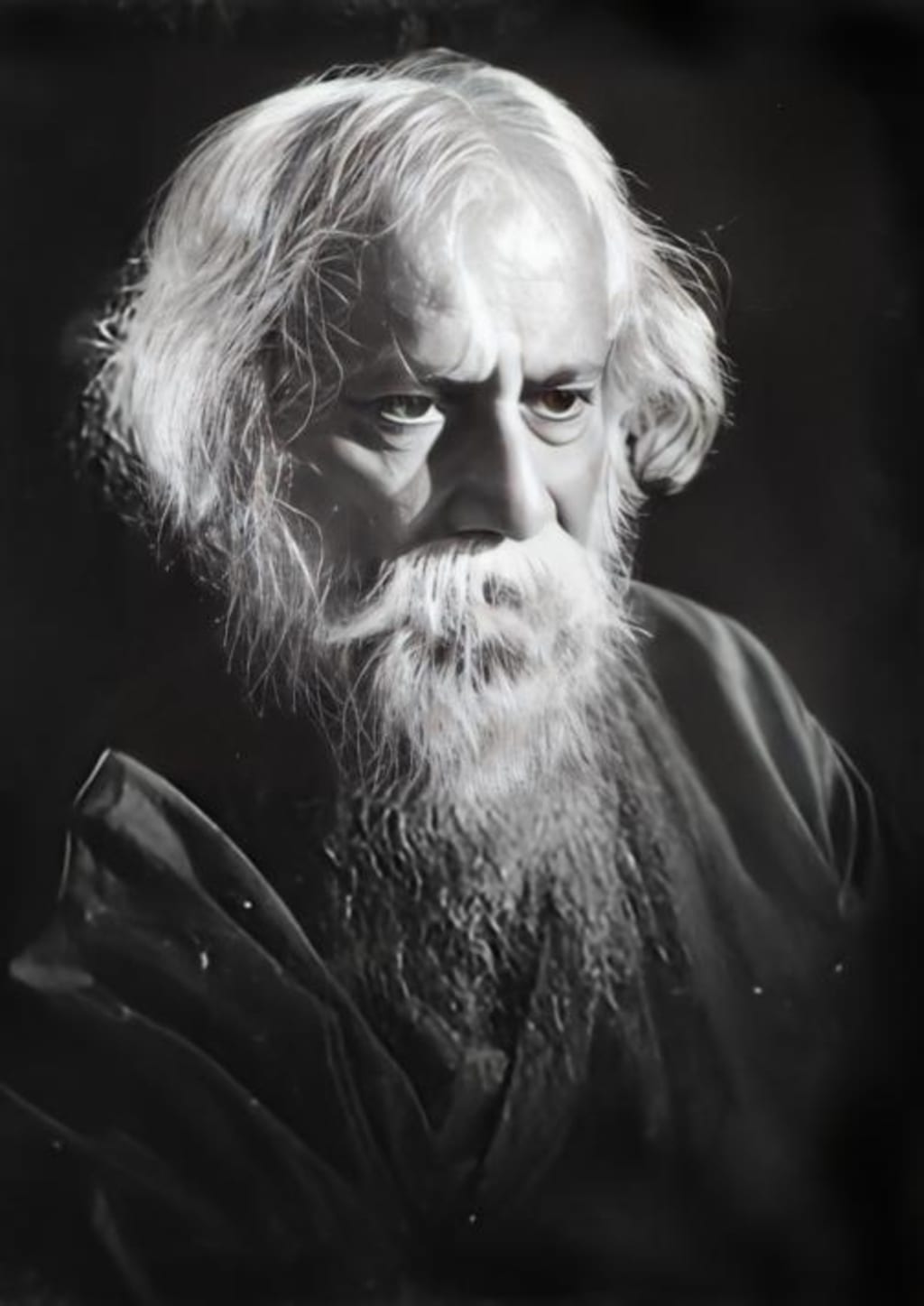
Rabindranath Tagore (May 7, 1861 – August 7, 1941) stands as one of the greatest literary and philosophical minds of modern India and a global cultural icon whose influence has transcended time, language, and borders. Born in Jorasanko Thakur Bari, the ancestral mansion of the Tagore family in Kolkata, Tagore was the youngest son of Debendranath Tagore, a leader of the Brahmo Samaj—a reformist Hindu movement. The Tagore family was a nucleus of cultural and intellectual life in 19th-century Bengal, providing young Rabindranath with a rich atmosphere of artistic experimentation, progressive thought, and spiritual inquiry.
Education and childhood: Tagore’s early education defied convention. He disliked the rigid structure of formal schooling and was largely self-taught. He traveled to England at the age of 17 with the intention of studying law at University College London but soon dropped out, disenchanted with Western academic methods. Yet, his brief encounter with European culture deeply influenced his understanding of literature, philosophy, and art, helping him forge a synthesis between Eastern and Western ideals in his later work.
Literary Genius:
Rabindranath Tagore began writing poetry at the age of eight and published his first collection at sixteen. He produced an extraordinary body of work throughout his lifetime: Over 2,000 songs (collectively known as Rabindra Sangeet),
More than 30 volumes of poetry,
Numerous novels, novellas, essays, travelogues,
Short stories, and dramas,
Thousands of letters and philosophical discourses.
His literary work, written primarily in Bengali and later translated into English, explored themes of human emotion, nature, devotion, national identity, and universal spirituality. Tagore's writings are noted for their lyrical beauty, philosophical depth, and psychological insight.
In 1910, he published Gitanjali (Song Offerings), a collection of poems reflecting a deeply spiritual and meditative quality, infused with Bhakti (devotional) and transcendental elements. When he translated these into English and published them in London in 1912, they captured the attention of European literary circles. In 1913, he became the first non-European to win the Nobel Prize in Literature, lauded for "his profoundly sensitive, fresh and beautiful verse."
Educator and Visionary:
One of Tagore’s most enduring contributions was in the field of education. He believed that learning should be rooted in nature, creativity, freedom, and cultural exchange. In 1921, he established Visva-Bharati University in Santiniketan, which became an experimental institution dedicated to the ideals of universal humanism (Visva = world, Bharati = India). Here, students learned not only traditional subjects but also arts, crafts, music, and philosophy in an open environment that fostered critical thinking and global citizenship. The university attracted scholars from around the world, including figures like Romain Rolland and Albert Einstein.
Music and Artistic Achievements:
Tagore was also a talented musician and painter. His compositions gave birth to a genre now known as Rabindra Sangeet, characterized by its lyrical elegance, emotional expression, and fusion of classical Indian and Western music. He is the only person in history to have composed two different national anthems: India’s Jana Gana Mana
Bangladesh’s Amar Shonar Bangla
He also inspired the Sri Lankan national anthem, Sri Lanka Matha.
Tagore took up painting in his later years and created thousands of artworks that were expressive, abstract, and avant-garde. Though largely untrained, his unique visual style broke traditional boundaries and influenced modern Indian art.
Political Thought and Nationalism:
Tagore maintained a complex relationship with politics. Though he was a vocal critic of British colonialism, he was equally critical of narrow nationalism. He believed in internationalism and the unity of humanity (Vasudhaiva Kutumbakam). In 1915, he was knighted by the British Crown, but following the Jallianwala Bagh massacre in 1919, he renounced the title in protest, stating that "the time has come when badges of honour make our shame glaring in their incongruous context."
Tagore supported India's freedom struggle in a philosophical and cultural capacity but was wary of violence and divisive ideologies. He was a close associate of Mahatma Gandhi but often held independent views, especially on education and nationalism.
Philosophical Views:
Tagore’s worldview was deeply spiritual, shaped by Upanishadic thought and universal humanism. He saw God not as a rigid deity but as an infinite presence manifest in nature and the human soul. His philosophy celebrated the dignity of the individual, the joy of creative expression, and the interconnectedness of all life. This was reflected not only in his writing but in his life, teaching, and personal choices.
Legacy:
Tagore's legacy is still extensive and enduring. He redefined Indian aesthetics, introduced modernism to Bengali literature, and helped shape India’s cultural identity during the crucial years of the freedom movement. His works have been translated into dozens of languages, studied in universities worldwide, and adapted into theater, music, cinema, and dance.
In India, his birthday (25th Baishakh in the Bengali calendar) is celebrated annually as Rabindra Jayanti, and his songs continue to live in the hearts of millions.
Rabindranath Tagore passed away on August 7, 1941, but his voice still echoes through his creations. As the "Vishwa Kabi" (World Poet), he remains a symbol of the timeless pursuit of truth, beauty, and harmony in human civilization.
About the Creator
Keep reading
More stories from sadhin khan and writers in Poets and other communities.
The Complex History of India and Pakistan: From Unity to Division
A shared civilization, colonial dominance, religious and political divisions, and persistent geopolitical rivalry make up the deeply intricate history of India and Pakistan. They were once part of a unified cultural and political entity under various historical empires, despite the fact that these two nations are largely viewed today through the lens of mutual suspicion and conflict. 1. Shared Origins and Pre-Colonial Unity:
By sadhin khan9 months ago in History
Off the Book
It ended like every other stupid idea. Badly, and alone. I’m researching digital confession ethics, he said. A tech ethicist. He gestured at floating data I couldn’t see then pulled out a physical notebook. Actual paper, fountain pen. He held it up like he was showing me scripture.
By Nicky Frankly3 days ago in Fiction


Comments (1)
great poet