
The Sound of Boots and the Silence of Crowds
Between Selective Outrage and Silent Consent: How Narrative Power Trumps Universal Principles in Modern Warfare.

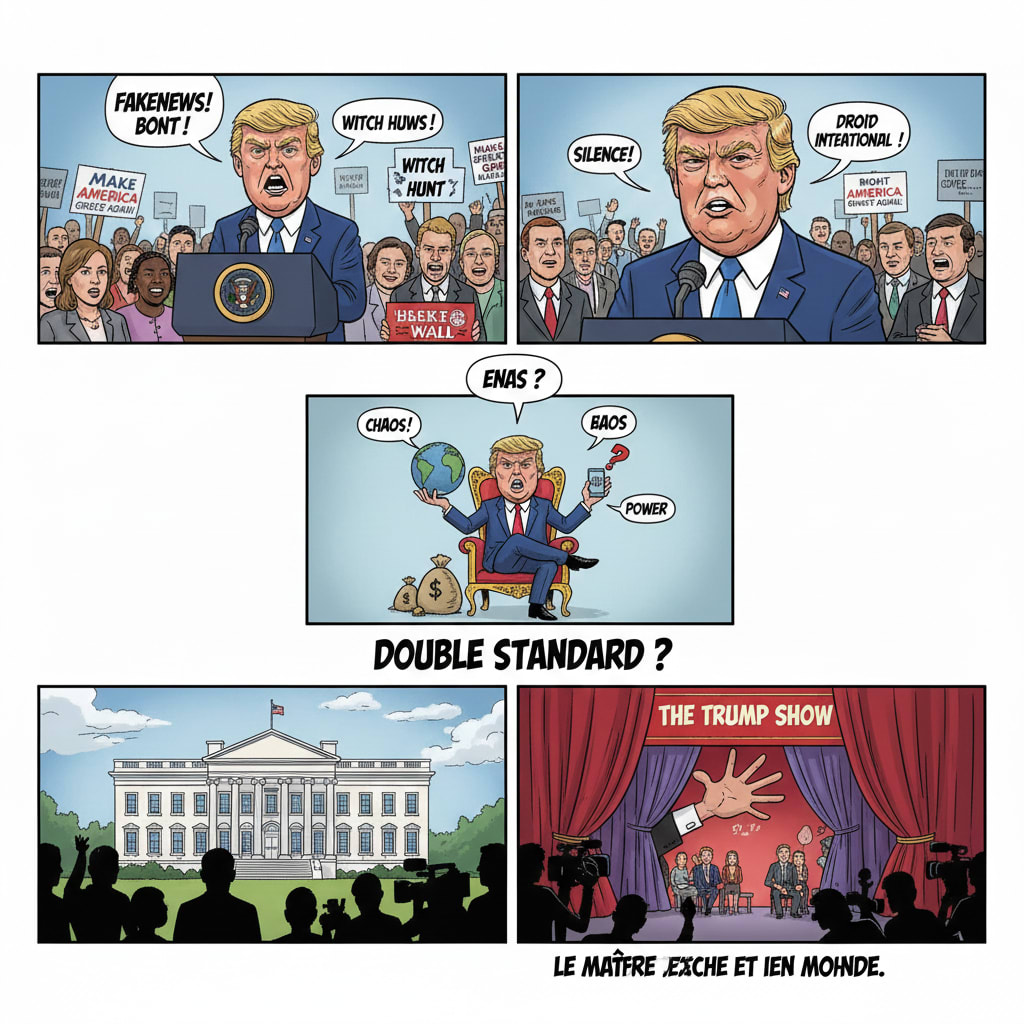
Contemporary history reveals a disturbing constant: the sound of marching boots does not always carry the same moral resonance, depending on the uniform that wears them. In one instance, a military advance triggers torrents of indignation, immediate sanctions, and grandiloquent speeches on international law and national sovereignty. In another, an act of comparable coercive nature dissolves into a hushed silence, sometimes even covered by polite applause. This discrepancy is not accidental. It reveals a tacit hierarchy of good and evil, rooted not in principles, but in the identity of those who violate them.
When a Western power intervenes militarily, directly or indirectly, in a sovereign nation like Venezuela, the dominant narrative falls into place with astonishing fluidity. The chosen words are cautious, almost soothing: "stabilization operation," "strategic pressure," "defense of democracy," or "protection of populations." The act is wrapped in a moral rhetoric that precedes any thorough factual analysis. The question is no longer "what is being done?" but "why is this necessary?". The moral verdict is delivered before the case is even heard.
Conversely, when Vladimir Putin’s Russia invades Ukraine, the international reaction is immediate, massive, and emotional. To be intellectually honest: this indignation is not unfounded. A military invasion remains a grave violation of international law. Civilians die, cities are destroyed, and a people is torn from its already fragile stability. A serious skeptic has no difficulty recognizing the legitimacy of this global anger. But it is precisely this legitimacy that becomes problematic when it is not applied universally.
For if a principle is to be accepted, it must survive the identity of the person who transgresses it. Otherwise, it is no longer a principle, but a tool.
Venezuela is not a simple case. It never has been. An authoritarian regime, endemic corruption, a profound economic crisis, and a massive exodus of the population: no serious observer denies these realities. Nicolás Maduro is not an exemplary democrat, and no rigorous mind would claim otherwise. But reducing the Venezuelan equation to a moral struggle between democratic good and authoritarian evil is a convenient simplification—one that is almost suspicious. History teaches us that great powers never commit significant military resources for purely altruistic reasons. That would be a historical anomaly.
Venezuela possesses some of the largest oil reserves in the world. This fact is documented, indisputable, and has shaped the strategic interest of the United States for decades. In any serious analysis, such a determining factor cannot be relegated to a mere detail. Rigorous reasoning requires us to ask the question we often avoid: if Venezuela had neither oil nor a key geostrategic position in Latin America, would the same interventionist fervor exist?
An intelligent skeptic would likely answer no. This answer is not the product of "reflexive anti-Americanism," but of empirical observation. Recent history is full of examples where the proclaimed defense of human rights aligns strangely with major energy or geopolitical interests. Iraq, Libya, Afghanistan: each intervention was preceded by a powerful moral narrative and followed by a lasting chaos for which local populations paid the price.
In the case of Venezuela, the question of indirect or direct control of oil resources is not a conspiracy theory; it is a reasonable strategic hypothesis. Economic sanctions, attempts at political destabilization, support for parallel governments, and more or less acknowledged military operations form a coherent continuum. It would be intellectually lazy to pretend that all this has only one objective: saving democracy.
This double standard explodes with even more violence when the reasoning is extended to other powers. If Western logic were applied universally, then China could legitimately invoke the "protection of its strategic interests" to invade Taiwan. After all, Beijing officially considers the island a rebel province. Internal legal justifications exist, as do colossal economic and technological interests. Yet, a Chinese invasion would be immediately qualified as unacceptable aggression—and rightly so.
Why does what is unthinkable for China become tolerable for the United States? The answer is uncomfortable: because the current international order is not based on a universal morality, but on a narrative power struggle. Whoever controls the story controls the legitimacy.
It would be too simple to explain this asymmetry by hypocrisy alone. The phenomenon runs deeper. Western societies perceive themselves as intrinsically moral. This self-perception acts as a preemptive absolution. When "we" intervene, it is necessarily for good reasons, even if the consequences are catastrophic. When "others" intervene, their intentions are immediately suspect. This moral dichotomy prevents any lucid analysis.
A reasoning test allows us to measure the solidity of this logic: reverse the roles. Imagine a non-Western coalition intervening militarily in a European country under the pretext of restoring democracy, while coveting its strategic resources. The indignation would be absolute. The words "imperialism," "neo-colonialism," and "violation of sovereignty" would be uttered without hesitation. This simple intellectual exercise reveals the fragility of current justifications.
The point here is not to defend Maduro, nor to downplay the invasion of Ukraine. That would be a major logical error—a false dilemma. One can condemn multiple injustices simultaneously. The real issue lies elsewhere: in moral consistency. A principle that only applies to adversaries is not a principle; it is a rhetorical weapon.
The consequence of this inconsistency is grave. It fuels global cynicism, legitimizes future aggressions, and erodes all trust in international law. Why would a state respect rules that the most powerful circumvent at their convenience? Why would China, Russia, or other emerging powers accept a manifestly asymmetrical world order?
By applauding certain boots and denouncing others, the world is building a dangerous precedent—one where force becomes acceptable when it is well-narrated. Where oil, resources, and trade routes are cloaked in humanitarian vocabulary to mask their true nature. And where civilian populations, whether Ukrainian or Venezuelan, remain the sacrificed variables of a grand game that exceeds them.
The silence that accompanies certain interventions is not neutral. It is tacit consent. And the applause is not an informed approval, but often an intellectual abdication. Understanding this does not make the world more comfortable, but it does make it more readable.
The real question is not who is right or wrong in the absolute, but whether we are ready to apply our principles even when they inconvenience us. As long as the answer remains conditional, the sound of boots will continue, and the silence of the crowds will accompany it.
JLP
About the Creator
Laurenceau Porte
Chroniqueur indépendant. J’écris sur l’actualité, la société, l’environnement et les angles oubliés. Des textes littéraires, engagés, sans dogme, pour comprendre plutôt que consommer l’information.
Keep reading
More stories from Laurenceau Porte and writers in Potent and other communities.
The Ball and the Alms: When Spanish Football Relights the Hearth While French Giants Remain Silent
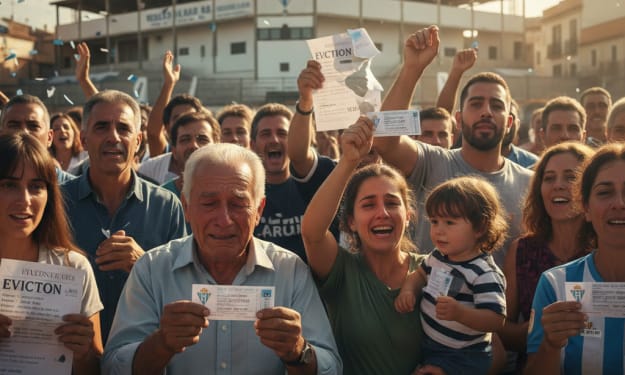
The Spanish air on that December morning didn't just carry the sharp chill of the Sierra; it crackled with a singular electricity—the kind that heralds days when fate, tired of statistics, finally decides to intervene. In this small Andalusian town—one of those white-walled villages struggling against oblivion—football wasn't played on pristine grass or discussed in glass offices. It was a matter of grit, a bond of leather and sweat uniting men and women whose horizons were darkening by the day. In streets where shutters are closed to hide poverty, the local football club became, by a stroke of luck, the last bastion of a community at its breaking point. This would later be known as the "Miracle of El Gordo."
By Laurenceau Porteabout a month ago in Potent



Comments
There are no comments for this story
Be the first to respond and start the conversation.