
The future of energy storage beyond lithium ion
Energy

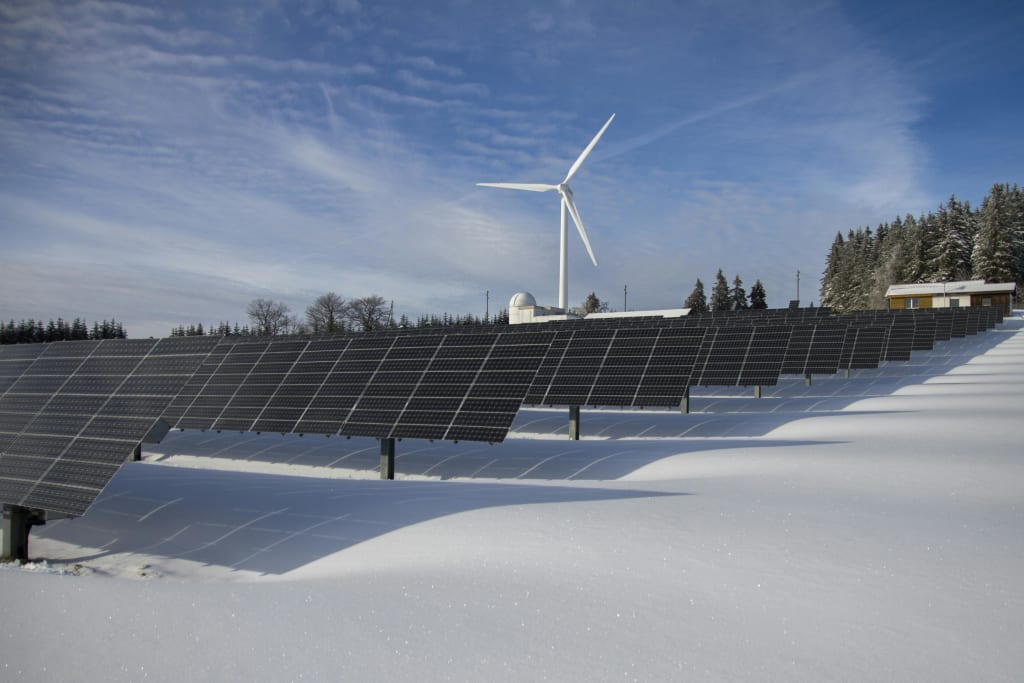
Over the past decade, prices for solar panels and wind farms have reached all time lows, leading to hundreds of gigawatts worth of new renewable energy generation. As the saying goes though, the wind isn't always blowing and the sun isn't always shining.If, for example, it's a beautiful sunny day and we've got a super abundance of electricity, we can't use it. The question of how to firm renewables, that is, ensuring there's always energy on demand no matter the time of day or weather, is one of the biggest challenges in the industry. We need a good way to store energy for later. And the main option right now is lithium ion batteries. You see them in products like Tesla's home battery, the Powerwall and utility-scale system, the Powerpack. But though lithium ion is dropping in price, experts say it will remain too expensive for most grid-scale applications. To get to battery for the electrical grid, we need to look at a further cost reduction of 10 to 20x. Right now, lithium ion batteries just can't store more than four hours worth of energy at a price point that would make sense. Plus, they pose a fire risk and their ability to hold a charge fades over time. To address this, there's acadre of entrepreneurs experimenting with a variety of different solutions. Now we're seeing flow batteries, which are liquid batteries, and we're seeing other forms of storage that are not chemical or battery-based storage.And each has serious potential. We looked at materials on the periodic table that were actually going to be cost competitive from day one. Primus Power's flow battery is a workhorse. Thermal energy storage has a pretty unique opportunity to be extremely low cost.Our solution will last 30 plus years without any degradation in that performance.Which technologies prevail remains to be seen. But one thing is clear. For renewables to truly compete with fossil fuels, we need to figure out a better way to store energy. From 2000 to 2018, installed wind power grew from 17,000 megawatts to over 563,000 megawatts. And solar power grew from a mere 1,250 megawatts to485,000 megawatts. And it's not stopping there. Renewables are expected to grow an additional 50 percent over the next five years.We know today that solar P.V. and wind are the least expensive way to generate electricity. In particular, the price of solar photovoltaics has plummeted far faster than all forecasts predicted, after China flooded the market with cheap panels in the late 2000s. All the Wall Street analysts did not believe that solar was going to ever stand on its own without subsidies. Well, a few years later, even the most conservative analysts started realizing that actually solar was going to become economic in most parts of the world pretty quickly. And as solar has gotten cheaper, so too have lithium ion batteries, the technology that powers electric vehicles, our cell phones and laptops. And thanks to improved manufacturing techniques and economies of scale, costs have fallen 85 percent since 2010. Now, wind or solar plus battery storage is oftentimes more economical than peaker plants, that is, power plants that only fire when demand is high. Tesla, for example, built the world's largest lithium ion battery in Australia, pairing it with a wind farm to deliver electricity during peak hours. But this doesn't mean lithium ion is necessarily economical for other grid applications. We don't really see the cost structure coming down to the point where it can serve those tens to hundreds of hours applications. The future of power energy is therefore good .
About the Creator
Keep reading
More stories from Timothy Mwiti and writers in Proof and other communities.
PROOFREADING TUTORIAL
So, what’s the big deal about proofreading? Good writing is about a lot more than good grammar, just like basketball is about more than good dribbling. So why this obsession over typos, misspellings and grammar slips? Two reasons. First, judgment. Someone who doesn’t know a dangling participle from a dangling dinner guest can spot a typo. That typo can then be used to negatively judge you, your writing, even your intelligence. Don’t believe me? Here’s an article from the Harvard Business Review entitled “I Won’t Hire People Who Use Poor Grammar.” Author Kyle Wiens is CEO of iFixit. This CEO writes: People who mix up their “its” and “it’s” deserve to be passed over for a job, even if they are otherwise qualified for the position. I have a ‘zero tolerance approach’ to grammar mistakes that make people look stupid. Although there is no known relationship between obviously does not prevent others, whether employers or professors, from judging you based on easy-to-spot surface errors. This second reason might surprise you: It’s impossible too oops! need to correct that typo) impossible to accurately proofread your own writing. This fact makes it likely you’ll leave some type of error unless you take active measures. Why can’t you proofread your own work accurately? When writing, your mind creates a mental image of meaning that you attempt to transfer to the page. The catch is, while your mental image may be perfect, what ends up on the page may not be. When someone else reads your writing, the process happens in reverse: The reader looks first at the words on the page and then constructs a mental image. What a difference! You, the writer, have lying on top of the page, like a piece of wax paper, your perfect mental image that can prevent you from seeing clearly what’s there. The reader, on the other hand, sees the cold reality of the page, black squiggles on a white background, without any filter. That’s why the first proofreading tip is to ICE IT--put the writing away until your mental image has faded and no longer obscures the reality of what’s on the page. But the problem with ICE IT is time--It can take days or weeks for the mental image to fade enough. Few people, least of all students, have that time. We need tools we can apply immediately. One of the best is text-to-speech. These software programs let you hear what you wrote in someone else’s voice. In other words, you get to process your writing as a listener, not its creator. There are literally 100s of free text-to-speech programs out there that do the job. Our favorite is NaturalReader.com. It’s free, web-based (nothing to download) and offers drag and drop simplicity. NaturalReader can read 10 types of documents, has 18 English voices, and speed control in its free version. Many other text-to-speech programs can be found at review sites like TechRadar.com and elearning.com. The bottom line: Listening to someone else read your document helps you know what is and isn’t on the page. Another exciting technology for writers is the new AI-based spelling, style and grammar checkers. “Wait a minute,” you say, “Microsoft Word has offered its built-in auto checker since 1995!” And you’re right. But Word’s checker uses simple algorithms based on matching. Today’s advanced grammar, spelling and style checkers use artificial intelligence to understand the context of what is written, to make predictions and give insights about your writing. There’s no comparison between the simple spellcheckers of old and today’s advanced systems. Currently there are two of these products—Grammarly and Ginger.
By Timothy Mwiti2 years ago in Proof
Jazz Age Cocktails: A Sip Back to the Roaring 1920s
Step into the smoky haze of a jazz club in the roaring 1920s, where the clink of glasses and the sultry saxophone ruled the night. Jazz Age cocktails are more than just drinks; they’re liquid time machines that transport you to an era of flappers, speakeasies, and the birth of modern mixology. This was a time when Prohibition pushed creativity behind the bar, and bartenders crafted clever concoctions to mask the harshness of bootleg booze.
By Aisha Patelabout 17 hours ago in Proof


Comments (1)
Hey, just wanna let you know that this is more suitable to be posted in the FYI community 😊