
The Science of Sour
How lemons and limes shape the flavor, structure, and personality of your cocktails.

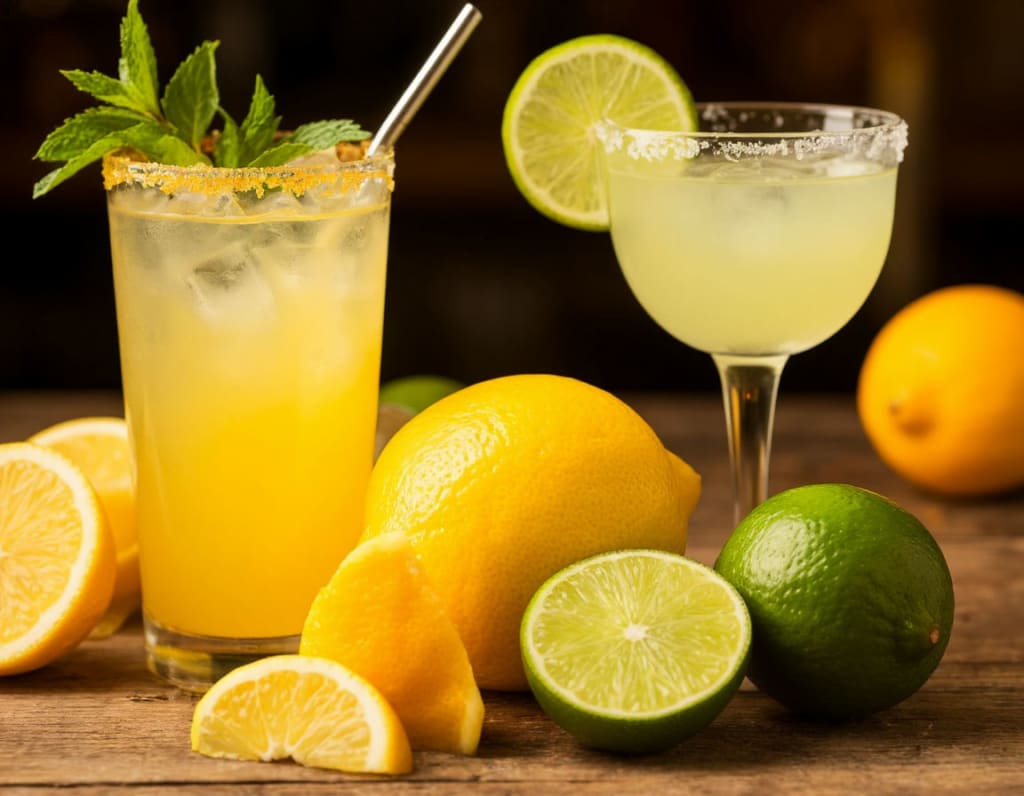
Sourness is one of the most essential elements in cocktail creation. Without acidity, drinks often fall flat—overly sweet, heavy, or unbalanced. And when it comes to acidity, lemons and limes are the bartenders’ top choices. But while they may seem interchangeable at first glance, the science and flavor behind each citrus fruit reveal a world of difference that can transform a cocktail.
The Acid Equation: Lemon vs. Lime
Both lemons and limes bring much-needed acidity, cutting through sugar and balancing alcohol. But chemically, their profiles are distinct.
Lemons are dominated by citric acid, offering a smoother, rounder kind of tartness.
Limes, on the other hand, feature a more intense mix of citric and malic acids, giving them a sharper edge.
This variance directly influences how a cocktail feels on the palate. Lemon's brightness can add lightness and airiness, while lime’s tang contributes depth and punch. Think of lemon as a scalpel — precise and elegant. Lime? More like a chef’s knife — bold and dynamic.
Flavor Notes: Bright vs. Zesty
Each citrus fruit has its own personality that complements specific spirits and cocktail styles:
Lemon: Clean, floral, and subtly sweet. It lifts the botanicals in gin, rounds out the richness in bourbon, and softens dark or aged spirits. Lemon shines in drinks like the Tom Collins, Bee’s Knees, or Whiskey Sour.
Lime: Sharp, herbal, and vibrant. It pairs perfectly with bolder flavors — spicy tequila, funky rum, or smoky mezcal. Lime is indispensable in cocktails like the Margarita, Daiquiri, and Caipirinha.
Understanding these differences isn’t just about taste — it’s about matching mood, structure, and cultural roots.
Global Citrus Culture
Citrus preferences often mirror cocktail culture across the globe.
In Latin America and the Caribbean, lime dominates. It complements local spirits like rum and tequila and cuts through tropical sweetness with precision.
In European and American classics, lemon reigns. It brings balance and sophistication to elegant sours and spritzes.
You wouldn’t put lime in a Sidecar, just like you wouldn’t dream of making a Mojito with lemon. These aren’t just habits—they’re flavor blueprints shaped by generations of tradition.
When to Swap… and When Not To
Can you swap lemon and lime in a pinch? Technically, yes. But flavor-wise, it’s risky.
A Gimlet with lemon lacks the crisp, citrus snap. A French 75 with lime feels overly aggressive, clashing with champagne’s delicacy. Still, bartenders are increasingly experimenting with split citrus bases — combining both fruits for layered acidity that evolves over each sip. This hybrid approach is growing in modern mixology circles and allows for custom sours tailored to specific spirits.
Garnishes That Do More Than Look Good
Citrus peels aren’t just garnish — they’re aromatic amplifiers.
Lemon zest releases oils with soft, sunny top notes.
Lime zest offers a spicy, herbaceous nose that hits sharper and faster.
Try expressing the peel over your cocktail and notice how the aroma immediately sets the mood. In subtle drinks, this difference can define the entire sensory experience.
Ready to Master Citrus Cocktails?
Choosing the right citrus is just one step toward cocktail mastery. If you're eager to refine your sour drinks or explore unique citrus combinations, check out our full collection of cocktail recipes and tips — from timeless classics to modern experiments designed for home mixologists and pros alike.
Know Your Citrus
To truly perfect your cocktails, you must understand your ingredients — especially citrus. Lemons and limes are more than just sources of sour. They’re mood-setters, balance-bringers, and foundational elements in flavor architecture. Choosing between them isn’t just about what's on hand. It’s about intention, harmony, and the story your drink wants to tell.
So next time you reach for a citrus fruit, ask yourself — am I going for brightness or intensity? Because in the world of cocktails, even the smallest squeeze can make the biggest difference.
About the Creator
Ethan Chen
Cocktail chemist and author, known for his scientific approach to mixology. He combines molecular gastronomy with traditional cocktail techniques to create unique drinking experiences.
Keep reading
More stories from Ethan Chen and writers in Proof and other communities.
Spring Cocktails: Light, Floral, and Refreshing Ideas
As the days grow longer and flowers begin to bloom, it’s only natural to crave drinks that are as bright and refreshing as the season itself. Spring is the perfect time to put away heavy winter spirits and embrace cocktails that are floral, citrusy, and full of life.
By Ethan Chen8 months ago in Proof
Cultivating Inner Peace: A Gentle Daily Routine
Finding inner peace is a journey that unfolds gently when we invite calm moments into our daily life. A simple routine focused on mindful presence can help settle the mind and soothe the heart. This guide offers a quiet path to nurture your inner calm.
By Marina Gomez4 days ago in Proof
Embracing Spiritual Awakening: A Gentle Path to Inner Light
Spiritual awakening is a profound journey where one begins to see beyond the surface of daily life. It is a gentle unfolding of awareness, a soft opening to deeper truths within ourselves and the world around us. This process is unique for everyone, often marked by feelings of clarity, peace, and a connection to something greater.
By Marina Gomez5 days ago in Proof
After the Storm
After the storm of winter snow there sat a small bear by the name Ted, of course. He loves the snow and likes to roll around in it making all sorts of trails and whatever he has a mind to do. He wondered where all the people are, but in a way, he is hoping that they are all snug in the homes maybe drinking hot chocolate-one of his favorite drinks with mini-marshmallows and eating something homemade for he likes this winter wonderland all to himself to romp and play and maybe even catch some fish down by the river.
By Mark Graham5 days ago in Fiction



Comments
There are no comments for this story
Be the first to respond and start the conversation.