
Occam's razor of Mandela effects
Misremembering from a psychological point of view


For many years, I was obsessed with conspiracy theories. Now that I study psychology, I want to understand the reasons behind them and what makes people believe them. One of my favorites was the Mandela effect, which is where a lot of people remember an event or detail differently from how it really happened. This term was created by Fiona Broome in 2009 when she noticed that she and many others remembered Nelson Mandela dying in prison in the 1980s. He didn’t die until December 5th, 2013. She and the others remember seeing new reports and his “widow” speaking about it on TV. It’s important to note that there is some debate about when this term actually came into use. Some have argued it didn’t appear until after Mandala’s death. The concept may have been known back in the 90s. Regardless of when the term appeared, many people have experienced what is called the Mandela effect. Here are a few other examples.
- Curious George
- The Monopoly man
- Smokey the Bear
- The Lindbergh Baby
- Tiananmen Square Tank Man
- Shazaam
- The Fruit of the Loom
Possible causes from a psychological point of view
- Conflation is the combining of two or more sets of information into one
- Priming is the previous exposure that affects how we see things later on
- Memory distortion is when time messes up memories of the past
- Confabulation is the brain’s way of filling in blanks in our memories
- False memory is a memory that appears to be real yet is partially or completely fabricated
- Misinformation is wrong information that influences your memories
- The familiarity heuristic is to favor information or opinions that are recognized
- Pop-culture references and parodies are a likely source of confusion
There are many more like this. Lots of movie quotes, song lyrics, logos, etc, seem to be different to some people now. It’s strange that people who don’t know each other would have the same memories. Let’s why that is and what reasons might be behind it. I will give a list of possible reasons below, then I will explore each Mandala effect example I have given.
Curious George
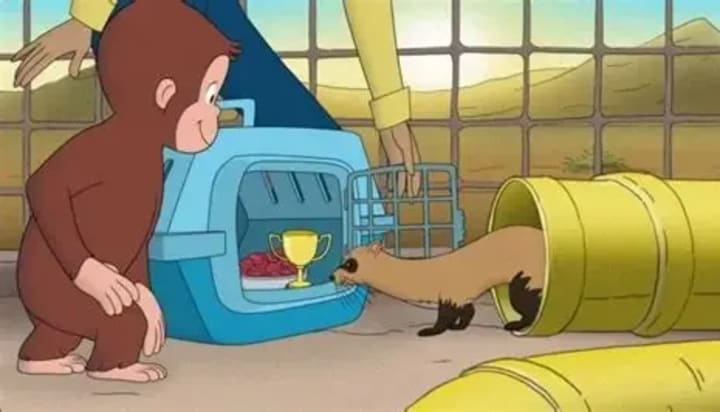
Many can remember Curious George swinging in a tree by his tail. He doesn’t have a tail and never has. He is speculated to be based on a Barbary macaque, which doesn’t have a tail. Confabulation plays into this one. People expect a monkey to have a tail. Your mind fills in the blanks and sees a tail. Most children are primed to associate a monkey with having a tail. Once they become adults, memory distortion takes over, and the details of the show or book will fade. People tend not to like being wrong, so the familiarity heuristic will take over, and they will insist he had a tail. Also, now, because of the Mandala effect being an internet phenomenon, you will see people on Reddit with “proof” that he always had a tail. In pop culture, there is fan art that gets details wrong, leading to misinformation being reposted on social media.
The Monopoly Man

He doesn’t have a monocle, despite many believing he did. This can be attributed to a few different things. Conflation may play into this, as people are likely blending the Monopoly man and Mr peanut from Planters peanuts, as they both have a cane and a top hat.

Also, confabulation is likely; the brain automatically assumes there is a monocle when really there never was. Stereotypes give in to the familiarity heuristic; many would believe he had one because it’s what people expect a rich man to wear.
Smokey Bear

He’s just Smokey Bear, not Smokey the Bear. Pop culture was a huge cause of this. In 1952, Eddy Arnold performed the song “Smokey the Bear” for the Forest Service to promote fire safety. The song became popular with that generation’s youth, and “The” stuck.

Those kids grew up, had kids, and shared their memories of Smokey the Bear. Conflation with other mascots having the in the name like Tony the Tiger from Frosted Flakes or Buzz the Bee from Honey Nut Cheerios, is also likely.


Again familiarity heuristic comes in with most people assuming that Smokey the Bear is the correct name. Examples like this show up a lot in movie quotes and song lyrics where one word is off, missing, added, etc. On this one, Occam’s razor, where the simplest explanation is the most likely one, seems to explain the confusion.
The Lindbergh Baby

This one was one that I swore I remembered learning about when I was in school. A perfect example of false memory. Some believed that the Lindbergh Baby was never found. For those who don’t know, the Lindbergh Baby was Charles Augustus Lindbergh Jr. His dad was the famous aviator Charles Lindbergh. He went missing from his crib on March 1, 1932. With his dad being well-connected, it made news. Two months later, his body was found, and the murderer was convicted in 1935. From pop culture, there are Family Guy and The Simpsons references that seem to imply that the baby was never seen again.


A few people claimed to be the Lindburgh Baby years after the fact; this could have led to misinformation due to the time period this happened in. It wasn’t easy to fact-check things like it is today, so people may not have known the case was solved. I also believe false memory is part of this one, too. I thought I remembered hearing about it in school and on Unsolved Mysteries as a kid. Others remember this too; however, conflation is most likely why we remember it this way. Unsolved Mysteries had many missing persons cases. It would have been easy to blend one of those with hearing about an (even back in the 90’s) old case to believe the baby was never found.
Tiananmen Square Tank Man

Did the Tank Man get run over, or did he survive? See if you can answer this without looking it up. Tiananmen Square Tank Man is the guy who stood in front of a row of military tanks in 1989 during the Tiananmen Square Protests. He was removed by two other men who are also unknown. Many people strongly believe that he was run over, and some even swear they saw it live on TV. No one knows who Tank Man was or what his actual fate was. This one is harder to know for sure because of the censorship within the Chinese government. There has been a lot of misinformation due to the official reports being changed over time to lower the death count. They have denied killing Tank Man. There are reports of people being run over by tanks in the protest. Conflation with the others being killed may be why people think Tank Man was run over. This would create false memories of Tank Man’s death. Confabulation could have contributed as well, with people who had watched the reports, it is easy to believe the government would kill him for rising up against them.
Shazaam
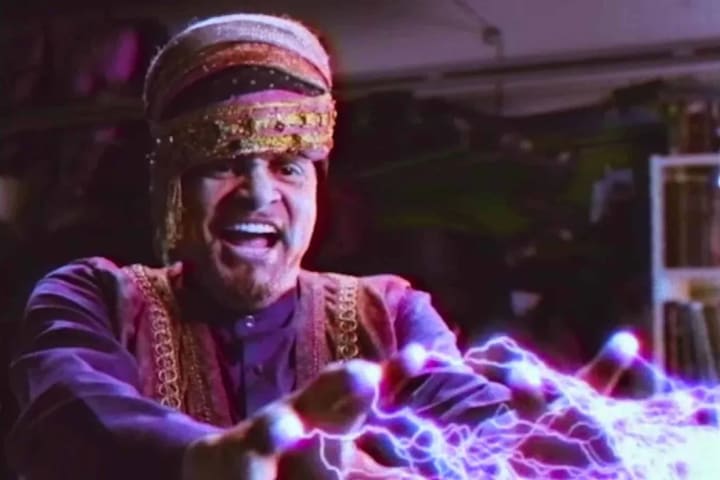
Many remember renting a movie from their local Blockbuster as a kid in the 90s, called Shazaam starring Sinbad. A movie where Sinbad plays a genie helping two kids with their dad after their mom’s death. The problem, of course, is that no such movie exists. Sinbad himself has denied it. There was another ’90s movie with Shaq O’Neil that had a very similar plot, but this movie was called Kazaam. There are a ton of people who swear they have seen both movies, and it’s not a false memory. Sinbad did dress as a genie while hosting a Sinbad the Sailor movie marathon. Some conspiracy theorists claim that the movie was only a limited run and was recalled. Others say there is a massive cover-up. Conflation seems to explain it to some; however, others are not convinced. On April Fool’s Day 2017, College Humor released “found footage” of Shazaam starring Sinbad, which features heavy amounts of Mandela effect references in it. This and other social media posts have led to more misinformation. Priming is also possible as people tell people their memories of the film, and others begin having false memories of watching it. As of right now, there is no proof that Shazaam has ever existed.
Fruit of the Loom
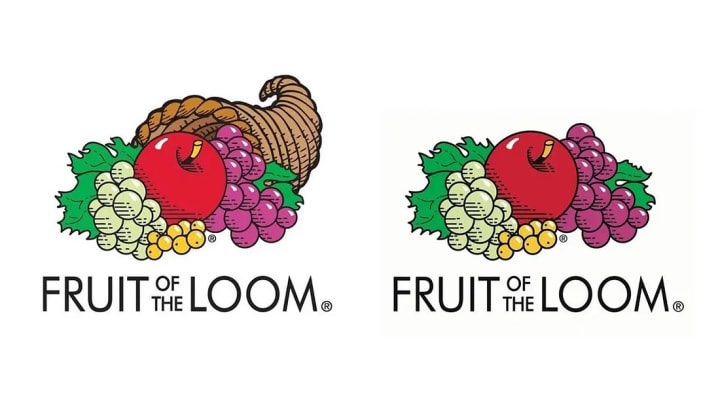
Saved the most insane one for last. It might be one of the most popular ones that is debated on Reddit. This is one that messed with me as well. Does the Fruit of the Loom logo have a cornucopia? If you said yes, you’re not alone, but you are wrong. According to Fruit of the Loom, they have never had one in their logo. On their website, they even address it as a Mandela effect. Below is a direct statement from their website

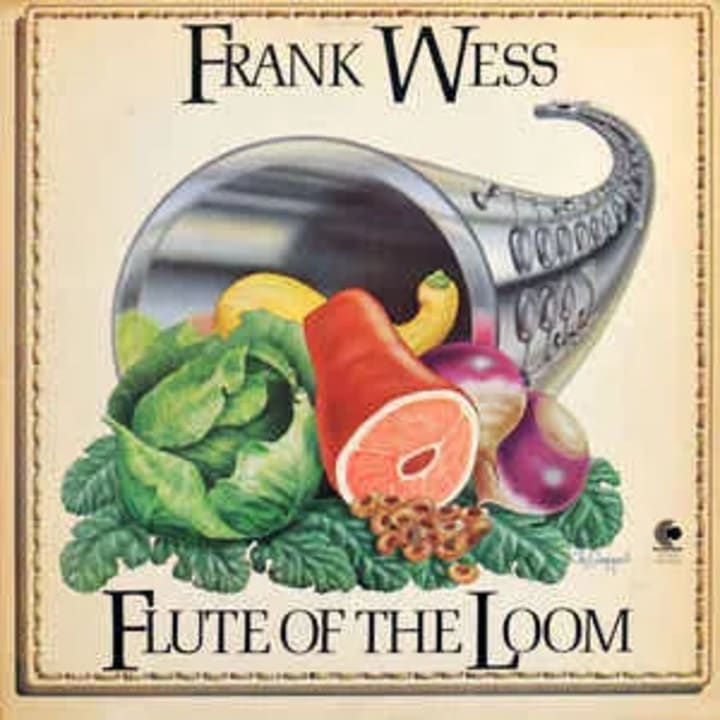
This one has a lot of pop culture references. First on is a flute album from 1973 by Frank Wess called Flute of the Loom. It was a play on the logo, and it included a cornucopia in the artwork. Jazz music archives list it as one of his albums. Another example is the Ant Bully movie from 2006 has a parody logo called “Fruit of the Loins” featuring a cornucopia. It’s easy to see how one would believe this over time.
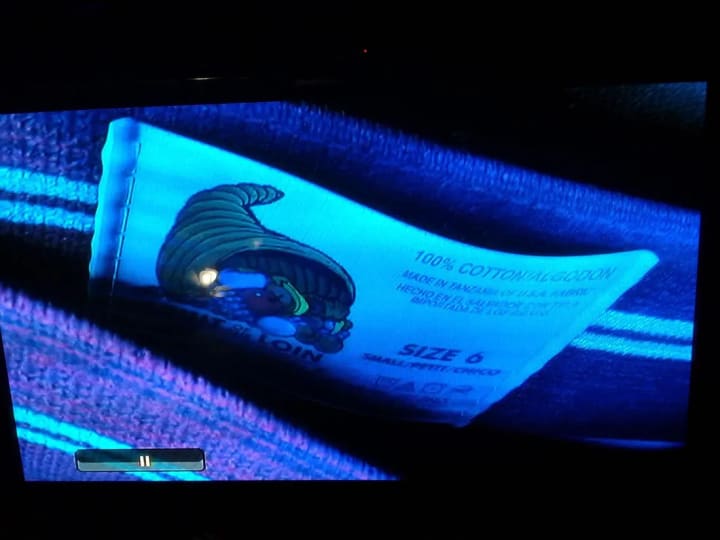
There is also the fact that many people seem to have the false memory that they learned what a cornucopia was by mistaking it for a loom and being corrected by an adult. However, kids often call stuff the wrong thing, and over time, with priming, this could become a false memory as well. The children could also conflate the fruit from the logo and a Thanksgiving cornucopia. Confabulation, too, as there were a couple of versions of the logo that had brown leaves, which can easily be mistaken for a cornucopia at a glance. The older logos give off a Thanksgiving vibe as well.

Misinformation is constantly spread with this one. There are many photoshopped “proof” photos, and there were a few different counterfeit companies that may have used a cornucopia in their design. There was also a social media post about a trademark having the cornucopia. Fruit of the Loom has issued the following statement.

As of right now, there is no solid proof that there ever was a cornucopia. If you think about it, how many kids pay close attention to an underwear tag? My guess would be not a lot. Many people have false memories of it due to priming since the Mandela effect is all over the internet. Many other company logos have had the same thing happen.
Occam’s razor
The simplest explanation is the most likely answer in most Mandela effects. Our brains fill in the blanks with misinformation, making us believe we remember things that actually didn’t happen. Oftentimes, we are not fully engaged in the present moment, which makes us misremember details. The spread of misinformation online creates false memories that we shared and primes others to believe they remember the same. Accept that you can be wrong and memories are not perfect.
About the Creator
Kristine Franklin
My name is Kristine. I'm a writer, working on my first book. I budtended for over 13 years. I've studied pyschology, writing, and mental health. I'm also working on getting Dainara's Law passed. Hardcore KMK fan
Keep reading
More stories from Kristine Franklin and writers in Psyche and other communities.
What I’ve Learned Since I Escaped Domestic Violence Twice
(Trigger warning: This article covers the topic of domestic violence. If you or someone you know needs help, please contact the National Domestic Violence Hotline for help https://www.thehotline.org/ 1–800–799–7233)
By Kristine Franklin3 months ago in Psyche
You Are Not Empty, You Are Overloaded
You are not empty. You are not broken. You are not dull. - You are overloaded. - People often describe certain mental states as “having nothing in their head,” but that description is almost always inaccurate. What feels like emptiness is usually saturation. The mind has not stopped producing content. It has lost spare capacity. The system is busy allocating energy toward coping, regulating, or enduring, and there is little left over for reflection, synthesis, or creativity. This distinction matters, because mistaking overload for emptiness leads people to judge themselves harshly for conditions that are largely structural and biological.
By Peter Thwing - Host of the FST Podcast8 days ago in Psyche
Killing him slowly
There’s an intruder in my house again. He stumbles through the door, wet carrier bags in hand. He’s bought me offerings. I show my appreciation, letting him caress my beautiful body. He wants to touch me. I rub myself against his legs. He sighs, dropping the bags. He can’t resist touching me. Running his hand slowly down my spine, I arch my back towards his caress, let out a low purr. It’s what we both need.
By N J Delmas5 days ago in Horror


Comments
There are no comments for this story
Be the first to respond and start the conversation.