
The Age Of Doublethink: When Beauty Becomes a Lie We Choose to Believe
How Social Media turns illusion into truth-and why breaking the spell is the real act of freedom

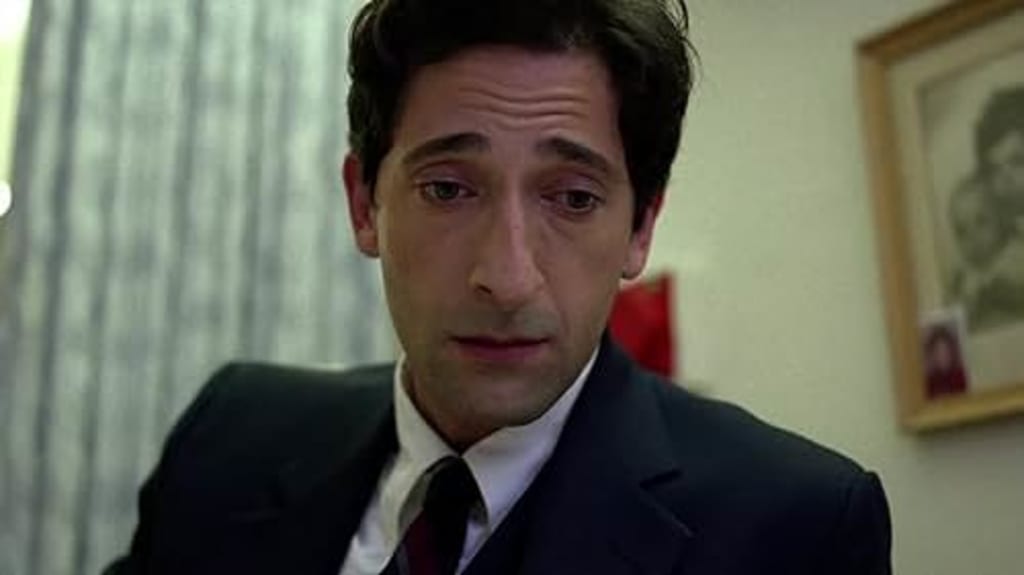
In the 2011 film Detachment, there’s a haunting classroom moment where Henry Barth, a weary and deeply human teacher, speaks to his students about the concept of “Doublethink,” a term George Orwell coined in his novel 1984. He explains that Doublethink is the ability to hold two opposing beliefs in your mind at the same time—and believe both to be true—without ever noticing the contradiction. It’s a psychological sleight of hand, a manipulation of the human mind so subtle and powerful that people end up accepting lies as truth simply because those lies are repeated with confidence.
And that is exactly what’s happening now—only the battlefield is not a dystopian government, but our glowing phone screens. Social media has turned millions into quiet victims of false perfection. It tells us—day after day, image after image—that beauty can be boiled down to a formula: a slimmer nose, plumper lips, flawless skin, a sculpted jawline. It tells us that unless we buy the product, undergo the procedure, or use the right filter, we are somehow incomplete. We know these images are edited. We know the faces have been reshaped, the bodies retouched, the light carefully manipulated. And yet—against all logic—we still compare ourselves to them. We still believe.
God warns us in the Qur’an: “And do not extend your eyes toward that by which We have given enjoyment to [certain] categories of them—it is but the splendor of worldly life by which We test them. And the provision of your Lord is better and more lasting” (Taha: 131). It’s a reminder that outward beauty and fleeting luxury are nothing more than tests, distractions from what is real and lasting. But today’s digital world has flipped that truth upside down. The test has become the goal. The illusion has become the standard. And those who don’t measure up to these fabricated ideals are made to feel less—less attractive, less successful, less worthy.
The cost is heavy. Women and men alike chase an ever-shifting, unreachable target. Beauty is no longer personal, no longer defined by culture, heritage, or individuality. It’s dictated by algorithms, trending hashtags, and whatever look happens to dominate this month’s explore page. It’s a checklist so strict that even those who seem to “have it all” in terms of appearance still find something to fix, tweak, or enhance. And for the average person? The chase becomes exhausting, expensive, and deeply unfulfilling.
Here lies the irony—no, the tragedy. We know it’s fake. We know the models have pores, blemishes, and imperfections hidden beneath layers of editing. We know the influencers are posing with borrowed luxury, renting the image of a life they don’t actually live. But we still fall for it. That is Doublethink in its purest form: knowing the truth, yet accepting the lie. The mind holds both and questions neither. And in doing so, we willingly step into a trap that feeds on our insecurities.
This isn’t just vanity—it’s a quiet form of enslavement. A person chained, not by iron, but by invisible expectations. Chained to an ideal they can never truly reach, yet can never stop chasing. Just as Orwell’s Doublethink was used to control political thought, today’s Doublethink is used to control self-image, desire, and even identity. And until we break that mental cycle—until we step back and see the contradiction for what
it is—we will keep losing pieces of ourselves, one filtered photo at a time.
But here’s the thing about illusions: they only hold power as long as we agree to believe them. The moment we step back, even for a second, and truly see the trick for what it is, the spell breaks.
We can choose to redefine beauty—not as something filtered, edited, or sold to us, but as something rooted in authenticity. We can look in the mirror and see a human being, not a list of flaws to be fixed. We can measure our worth by the depth of our character, the kindness we give, and the life we live—not by the number of likes beneath a picture.
The world will always try to sell us a prettier mask. But masks, no matter how perfect, are meant to be removed. When we take them off, we might find that what’s underneath—the unedited, unfiltered truth—is not only enough… it’s the only thing that was real all along.
So maybe the greatest act of rebellion in an age of Doublethink isn’t to chase their standard of beauty at all… but to look at ourselves, flaws and all, and say, This is me. And that is enough.
About the Creator
ayoube elboga
I focus on writing useful articles for readers
Keep reading
More stories from ayoube elboga and writers in Psyche and other communities.
What Is RootKit And How To Detect It?
In today’s article, we will try to know what is Rootkit? And the strategy used by the attacker to reach the victim’s device? And how to prevent this attack? How do you know if the device is infected with Rootkit? These and other questions we will try to answer in this article.
By ayoube elboga7 months ago in 01
What Happens To Your Brain When You Stop Multitasking
Digital technology is the culprit that is causing us to doom scroll when tired, disengaged and unmotivated with the content that motivated you to log onto your device to consume in the first place. That is only the beginning. In the modern workplace (and even when filing cabinets were around, I confirmed this with my adopted parents to get my facts right); reading files while you are supposed to be present to the caller on the other end of the phone line is another classic example of multitasking that causes your brain (although adaptable and intelligent) to lose focus and concentration.
By Justine Crowley4 days ago in Psyche
stop overthinking with just 2 words
Did you know that there are exactly two words that cause overthinking and exactly two words that can end it forever? These are tools you can carry with you for life. Overthinking is not the real problem, it is a symptom. And treating a symptom without addressing the root cause never truly works. Beneath overthinking, there is often a deeper issue: a lack of trust and a loss of control. From that space, two small but powerful words are born: “What if?”
By Mahboubeh Fallahi7 days ago in Psyche




Comments
There are no comments for this story
Be the first to respond and start the conversation.