
The Psychology of Brand Names: What Makes a Name Stick?
Your brain judges a brand name before you finish reading it. The psychology behind why some names stick and others vanish.

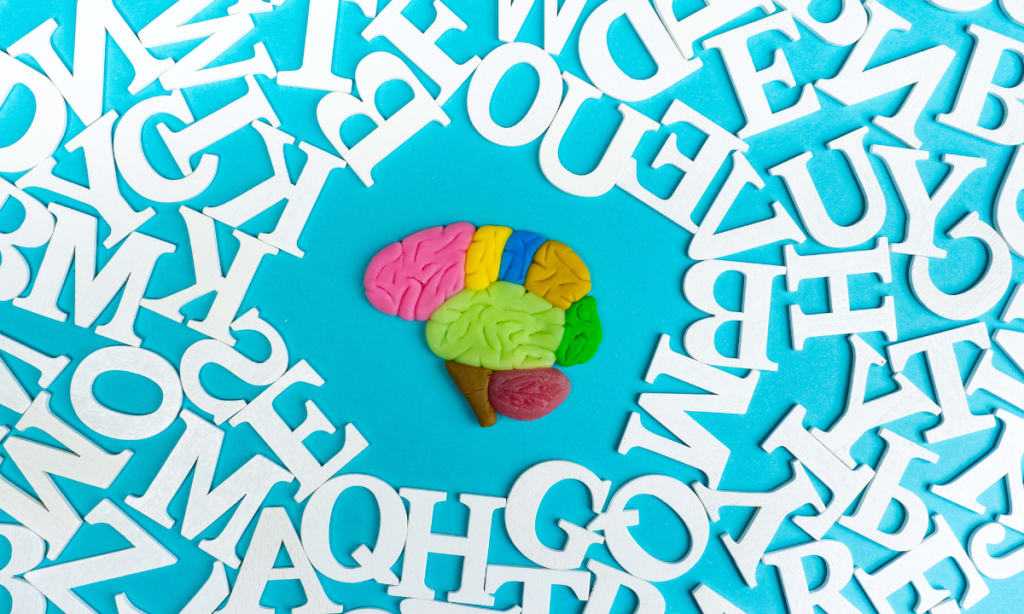
Say the word "Kodak" out loud. Now say "Muvel." Which one sounds stronger?
If you picked Kodak, you're not alone. And the reason has nothing to do with your memory of yellow film boxes or George Eastman's marketing budget. It's something weirder. Your brain is assigning personality to sounds before you even process their meaning.
I've spent an embarrassing amount of time thinking about why some names feel right and others feel like wearing someone else's shoes. Not from a branding strategy angle (there are plenty of those articles) but from the brain science side. What's actually happening in your neurons when a name clicks?
Turns out, naming isn't art. It's not quite science either. It's the messy, fascinating overlap between the two.
Your Brain Has Opinions About Sounds
In 1929, psychologist Wolfgang Köhler showed people two shapes. One was round and blobby. The other was jagged and spiky. He asked them: which one is "baluma" and which one is "takete"?
Almost everyone matched the round shape to "baluma" and the jagged shape to "takete." Decades later, researchers Vilayanur Ramachandran and Edward Hubbard repeated the experiment with the words "bouba" and "kiki," and found the same thing. Across cultures, across languages, across age groups. About 95% of people agree: bouba is round, kiki is sharp.
This is called the bouba/kiki effect, and it tells you something important about naming. Your brain doesn't treat sounds as arbitrary. It maps them to shapes, textures, even emotions. The soft, rounded mouth movements you make saying "bouba" (lips puffing, vowels rolling open) connect to soft, rounded visual concepts. The sharp tongue movements in "kiki" (tongue clicking against the hard palate, vowels pinched tight) connect to angular ones.
I tried this on my partner once. No context, just drew two shapes on a napkin and said "one of these is bouba and one is kiki." She nailed it instantly. Then got annoyed when I tried to explain why for the next ten minutes.
Now think about brand names through this lens. "Coca-Cola" is round sounds on round sounds. All those open vowels and soft consonants. It feels smooth, approachable, comforting. Compare that to "TikTok," which is nothing but sharp plosives. Quick. Punchy. Energetic. Neither name was chosen by accident.
The Plosive Effect: Why Hard Consonants Hit Harder
Linguists divide consonants into categories based on how your mouth produces them. Plosive consonants (B, D, G, K, P, T) create a tiny burst of air when you release them. You literally build pressure behind your lips or tongue and let it pop. Fricatives (F, S, Sh, V, Z) are smoother. Air flows continuously, no burst.
Here's where it gets interesting for your name choices. A 2012 study by Eric Yorkston and Geeta Menon in the Journal of Consumer Research found that brand names with front vowels (like the "ee" in "breeze" or the "ih" in "slim") made people think of products that were smaller, lighter, thinner, and faster. Back vowels (the "oo" in "moon" or "ah" in "large") triggered associations with bigness, heaviness, and slowness.
This isn't a quirky lab finding with no real-world application. It shows up in your shopping cart. Think about car names. The Mazda Miata (all those front vowels and light consonants) is a small, nimble roadster. The Dodge Durango (back vowels, heavy plosives) is a full-size SUV. Would you trust a tiny sports car called the "Durango"? Probably not. Your brain would fight the mismatch between what you heard and what you saw.
I find this stuff endlessly useful because it means you can reverse-engineer naming. If you're building something fast and sleek, you want names loaded with front vowels and crisp consonants. Building something sturdy and reliable? Lean into back vowels and voiced plosives. You're not guessing. You're working with how human brains actually process sound.
AI naming tools like nametastic.com use phonetic scoring when generating brand name candidates, filtering by exactly these sound patterns. It's one thing to know these principles exist. It's another to sort through hundreds of options already filtered by how they'll land in someone's ear.
Processing Fluency: If You Can Say It, You Trust It
Here's a finding that should change how you think about names forever.
In 2006, Adam Alter and Daniel Oppenheimer published a study at Princeton that tracked fictitious stock ticker symbols. They created two groups: pronounceable tickers (like "SLINGERMAN") and unpronounceable ones (like "XAGIBPQR"). Then they asked people which stocks they'd invest in.
The pronounceable stocks won. Consistently.
But it gets wilder. Alter and Oppenheimer then looked at real stocks on the NYSE. Companies with pronounceable ticker symbols actually outperformed those with unpronounceable ones in the first day of trading. The effect faded over time as more information became available, but that initial boost? Real money, driven by nothing more than whether you could say the name out loud easily.
This is processing fluency at work. Your brain uses a shortcut: if something is easy to process (easy to read, easy to say, easy to remember), it feels more familiar. And familiar things feel safer. More trustworthy. More true.
I think about this every time I come across a startup with a name I have to mentally rehearse before saying out loud. You know the type. Six consonants jammed together, a missing vowel where your tongue expects one. You hesitate for half a second. That half-second costs more than most founders realize.
Google. Apple. Nike. Stripe. Slack. Zoom. Notice anything? You can say each one in under a second. No syllable trips you up. No letter combination makes you pause. They slide through your brain without friction, and that frictionlessness becomes a feeling of familiarity, which becomes a feeling of trust.
The Mere Exposure Effect: Why "Weird" Names Stop Being Weird
Quick question. The first time you heard the word "Google," did it sound like a serious company to you?
I'm guessing not. It probably sounded silly. Maybe like a baby's babble or a cartoon sound effect. And yet now "Google" is so deeply embedded in your vocabulary that you use it as a verb without thinking.
This is the mere exposure effect, first identified by psychologist Robert Zajonc in 1968. His research showed something counterintuitive: people develop a preference for things simply because they encounter them repeatedly. You don't need a positive experience with something. Just repeated contact. Familiarity breeds preference. Full stop.
For names, this has a radical implication. You don't need your name to test well with focus groups on day one. You need it to be distinctive enough to be remembered, and then repetition does the rest of the work. Xerox. Häagen-Dazs. Skype. Yahoo. Etsy. All of these sounded weird at first. All of them feel completely natural now.
This is why I tell people to stop obsessing over whether a name "sounds right" during early testing. Your test subjects are hearing it for the first time. Of course it sounds strange. The real question isn't "does this sound good right now?" The real question is "will this be distinctive enough to benefit from repeated exposure?"
The Von Restorff Effect: Standing Out in the Freezer Aisle
In 1933, German psychiatrist Hedwig von Restorff discovered something elegantly obvious: an item that stands out from its surroundings is more easily remembered. Show someone a list of black words with one red word, and they'll remember the red one.
Apply this to brand names and you get a powerful filter. Your name doesn't exist in isolation. It exists in a competitive context, surrounded by other names. If your name sounds like the others in your category, you're invisible. If it sounds different, you're memorable.
The most famous example might be Häagen-Dazs. It's not a real word in any language. Reuben Mattus invented it to sound European and premium in an ice cream aisle full of American-sounding brands. It worked precisely because it was so different from everything around it.
I notice this whenever I'm scrolling through an app store or product directory. The names that snag my attention are never the ones describing what the product does. They're the odd ones out. The ones that make you go "wait, what is that?" (Honestly, that curiosity gap is worth more than any amount of descriptive clarity.)
This is also why category-descriptive names can be tricky. "FastShip Logistics" tells you exactly what the company does, which feels safe. But when it sits next to "QuickShip Express" and "SwiftFreight Solutions" and "RapidMove Inc," your brain mushes them all together. The best approach? Be different from your immediate neighbors.
Semantic Satiation: The Silent Killer of Naming Sessions
Have you ever repeated a word so many times that it loses all meaning? Say "bowl" twenty times in a row and by the fifteenth repetition, it sounds like an alien language. The letters look wrong. The sound is just noise.
This is semantic satiation, and it's the hidden saboteur of naming processes.
When you're evaluating name candidates, you stare at them. You say them repeatedly. You write them in different fonts. You sleep on them and stare some more. And after enough repetition, every single name starts to feel meaningless. Flat. Wrong.
This isn't a signal that the names are bad. It's a signal that your brain has temporarily severed the connection between the sound and its associations. It happens with every word, including ones you love. If you said "Apple" forty times right now, it would start to sound absurd too.
The practical fix is simple but hard to follow: set time limits on your name evaluation. Make your first-instinct reactions count. Score each name on first impression, walk away, and come back the next day for a fresh pass. Don't sit in a conference room debating the same five names for three hours. By the end of that meeting, you'll hate all of them, and it won't be the names' fault.
Cross-Cultural Sound Patterns: What Travels and What Doesn't
Not all phonetic associations are universal. Some sounds carry very different connotations across languages and cultures, and that matters more than people think when a brand starts crossing borders.
The good news: certain patterns hold up well worldwide. The bouba/kiki effect replicates across dozens of languages. Front vowels signaling "small and fast" versus back vowels signaling "large and slow" appears consistent across English, French, Chinese, and Japanese speakers in research by Shinohara and Kawahara (2010).
The bad news: specific letter combinations can be landmines. Chevrolet's Nova ("no va" in Spanish, meaning "doesn't go"). Mitsubishi's Pajero (a vulgar term in some Spanish dialects). These aren't urban legends. They're documented branding failures caused by skipping phonetic due diligence.
Even beyond obvious translation errors, subtler issues lurk. Some consonant clusters that feel natural in English (like "str" or "spr") are physically difficult for native Japanese or Mandarin speakers to pronounce, creating a processing fluency penalty in those markets.
If you're building something with global ambitions, run your name candidates through a few filters. Can speakers of your target languages pronounce it comfortably? Does it accidentally mean something unfortunate? A quick 15-minute call with a native speaker for each of your top three markets is worth more than a week of internal debate. Trust me on that one.
Conclusion: Putting the Psychology to Work
Look, knowing why names stick is only useful if you can apply it. Here's how I think about combining these principles when I'm evaluating a name (or helping someone else stress over theirs).
The sound check. Say the name out loud. What shape does it feel like? Does the phonetic profile match what you're selling? Front vowels and light consonants for small, fast, light. Back vowels and heavy consonants for big, solid, powerful.
The fluency check. Hand the name to five people who've never seen it. Can they all pronounce it correctly on the first try? If not, you have a processing fluency problem.
The isolation check. Write your name in a list with your top five competitors. Does it stand out or blend in? If you squint to find yours, the Von Restorff effect isn't working in your favor.
The satiation check. Trust your first reaction. If a name sparked something positive in the first three seconds, write that down. Don't let hours of deliberation erase a genuine instinct.
The cross-border check. Run your top candidates through speakers of your three largest non-English markets. One quick conversation per language can catch deal-breaking pronunciation issues.
A brand name isn't a label you slap on a product. It's the first interaction your customer has with your entire world. Before they see your logo, read your copy, or try your product, they hear or read your name. And in that fraction of a second, their brain has already formed opinions.
Those opinions follow patterns that psychologists have mapped over decades. Sound symbolism. Processing fluency. Mere exposure. Competitive isolation. These aren't abstract theories. They're the operating system running beneath every name you've ever remembered or forgotten.
Whether you're brainstorming names on a whiteboard, running candidates through an AI generator, or polling friends over dinner, the psychology doesn't change. Names that match their product's phonetic identity, process easily, stand apart from competitors, and work across your target languages will stick. Not because of luck. Because of how human brains are wired.
And honestly? That's more reliable than any focus group.
About the Creator
Tighnari
Storyteller at heart.
Curious soul wandering through words.
Keep reading
More stories from writers in Psyche and other communities.
Diaries to Nietzsche
Quotation from Friedrich Nietzsche "He who wrestles long with monsters should beware lest he himself become a monster. And if you gaze long into an abyss, the abyss also gazes into you. Man is not destroyed by suffering, but by the meaning he makes of it."
By LUCCIAN LAYTH6 days ago in Critique
Valentine's Dates Over the Years
Colin grinned as Brooklyn slipped into the living room. “Is it all set?” he asked. The twenty-one year old grinned. She was in her last year of college and Colin knew that Lincoln was proud of her. Although she had been away at college, she’d eagerly helped Colin plan his surprise for Lincoln. “I’m so glad you’re finally doing this,” she said.
By Reb Kreyling6 days ago in Chapters


Comments
There are no comments for this story
Be the first to respond and start the conversation.