
The Quiet Part of a Sad Breakup
What No One Warns You About After the Goodbye


The ending isn’t the end; it’s the echo that almost no one talks about
There should have been a soundtrack when it ended.
Some dramatic swell of music when the door clicked shut, or the last text came through, or you watched them walk away for the final time.
Instead, there was probably something stupid happening in the background.
An ad playing too loud. A neighbor’s dog barking. The clink of dishes from the apartment upstairs.
That’s the part that stings later.
Not just the heartbreak itself, but how ordinary the world stayed while yours quietly fell apart.
People warn you about the crying, the blocking, the unfollowing, the first weekend alone.
What no one really prepares you for is what happens after the obvious grief.
The quiet part. The strange, hollow season that shows up once everyone assumes you’re “over it.”
That’s the part that almost broke me.
The breakup is loud; the aftermath whispers
My breakup didn’t end with a fight.
There was no dramatic storming out, no dramatic scene in a restaurant, no shattered glass.
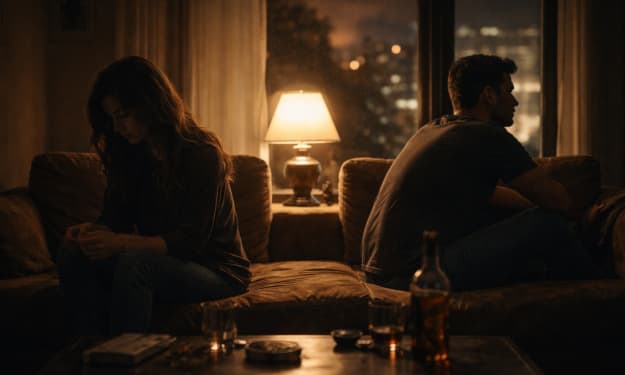
Just two tired people sitting on opposite ends of a couch that used to be ours, using calm voices to end a shared life.
We were “mature” about it. That’s what people said.
We divided furniture, had polite conversations, even hugged goodbye.
If you had walked past the window, you would have thought we were planning a vacation, not dismantling a future.
The first week was loud.
Friends calling, group chats lighting up, playlists curated for “healing.”
People sent memes, therapy quotes, “you deserve better” speeches.
I cried in the shower.
I cleaned the apartment like I was being graded on it.
I did all the breakup clichés: deleted photos, re-downloaded old hobbies, ordered takeout that he hated just because I could.
Then, slowly, the volume dropped.
The texts from friends came less often.
Work deadlines crept back in.
Everyone went back to their lives, and they assumed I was doing the same.
That’s when I met the quiet part.
And no one had warned me how heavy silence could be.
The small, stupid moments hurt more than the big ones
I expected the holidays to hurt.
The anniversary date.
Their birthday.
The “big” days came with a kind of emotional warning label.
I could see them coming on the calendar and brace myself.
What caught me off guard were the tiny, stupid things.
Standing in the grocery aisle staring at the pasta sauce we always bought and realizing I didn’t actually know what kind I liked without them.
Hearing a song in a café and instinctively pulling out my phone to send them an “omg they’re playing our song,” before remembering there was no “our” anymore.
Reaching for my phone when something funny happened, feeling that tiny jolt of joy at the thought of sharing it, and then that slow, sinking drop when I remembered:
There was nowhere for that moment to land.
No one tells you how many times your body will move like they’re still in your life.
How your brain will run on old paths long after the relationship is over.
You think you’re crying over them, but sometimes you’re crying because the pasta aisle doesn’t know who you are anymore.
Because you don’t know who you are anymore.
The breakup is one moment.
Realizing how woven they were into the boring, forgettable, everyday pieces of your life—that’s a thousand tiny breakups after.
The weird grief of losing the “imaginary future”
People talk about heartbreak like it’s just losing a person.
That’s only half of it.
You don’t just lose them.
You lose the future you secretly storyboarded in your head.
The apartment you thought you’d eventually share.
The trips you were saving for.
The kids you weren’t even sure you wanted, but sometimes pictured anyway when you saw them holding a baby.
I found myself mourning conversations we never even had.
The version of us that finally learned how to communicate perfectly.
The vacations we would have taken when we “had more money.”
The calmer, older versions of ourselves who would laugh at how hard these years were.
A breakup doesn’t just end a relationship.
It kills an imaginary life only you knew fully.
No one else was there when you built it in your head, brick by hopeful brick.
So when people say, “You were only together for a year” or “At least you didn’t have kids,” they’re measuring the relationship by calendar time.
You’re measuring it by the depth of the future you buried with it.
That disconnect is lonely.
You’re grieving an invisible thing, and it can make you feel dramatic, childish, or foolish.
You’re not.
You just lost a life you were quietly living in your mind.
That grief is real, even if no one else saw it.
The loneliness that lives in the in-between
There’s a very specific kind of loneliness that happens after a breakup, and it isn’t just “being alone in your apartment.”
It’s the loneliness of having a story with no audience.
They were the person you texted from the back of the Uber: “On my way home.”
The person who knew what that particular sigh meant.
The one who could tell from a single “hey” text whether you had a good day or a terrible one.
After the breakup, you can tell friends things.
You can give them the headlines, the highlights, the worst parts, the best parts.
But there’s something about having just one person who keeps track of your Tuesday moods and your petty complaints and the name of the coworker you can’t stand.
Losing that is like losing a language you were fluent in.
You start to feel like a translated version of yourself.
Understandable, but not as precise.
It’s not that your friends don’t care.
It’s that no one else has the whole archive.
No one else has the running commentary of your life from the last few years.
That’s the quiet ache: the sense that there is no longer a designated person who is contractually obligated by love to care about the dumbest details of your day.
You’re not just single.
You’re suddenly un-witnessed.
The strange relief you don’t know what to do with
The part I felt guilty admitting—even to myself—was the relief.
Breakups are usually not random.
By the time you get to the end, there have been a hundred little cuts.
Fights, miscommunications, needs you swallowed, parts of yourself you shoved into the closet to keep the peace.
The day after he left, the apartment felt wrong… but it also felt bigger.
There was more space on the couch.
I could play the music I liked without negotiating.
I could cook weird dinners that didn’t have to factor in someone else’s preferences.
And mixed in with the sadness was something I didn’t expect: air.
Space to exhale.
Space to not be constantly reading the room.
Space to not feel like I was failing every time I couldn’t fix whatever had gone stale.
That relief is confusing.
You can love someone and still feel lighter when they’re gone.
You can miss them and also be glad you’re not constantly walking on emotional eggshells.
No one warns you how hard it is to hold those two truths at once.
We’re taught to see relationships as either Good or Bad, Love or Hate, Right or Wrong.
Real life doesn’t play by those rules.
Sometimes the end hurts like hell and also saves parts of you that were slowly suffocating.
If you feel both heartbreak and relief, you’re not broken.
You’re just honest.
The identity crash that shows up months later
The first few weeks after a breakup, people check on you.
They ask if you’re “doing okay.”
You cry, you vent, you say the dramatic things out loud.
Then, eventually, you stop talking about it because you don’t want to be the person who “can’t move on.”
That’s usually when the deeper identity questions sneak in.
Who am I if I’m not their person?
What do I like, if I’m not tailoring my choices to us?
What does a Friday night look like if it doesn’t revolve around their schedule?
I remember standing in front of my closet one night, staring at clothes that suddenly felt like costumes.
How many of these outfits were chosen because they liked them?
How many hobbies did I adopt because they were into them?
How many opinions did I soften because it was easier?
Calling them “my person” had always felt romantic.
After the breakup, I realized how much of myself I had quietly outsourced to that phrase.
You don’t notice how fused you’ve become until you’re forced to function as just you again.
And honestly? It feels like learning to walk after a long time in someone else’s arms.
The quiet part of a breakup is the part where you have to rebuild a self that can stand without leaning.
No one claps for you when you make dinner for one and actually eat it at the table instead of over the sink.
No one celebrates the night you watch a movie alone and don’t feel like you’re missing a limb.
But those are the tiny, unphotogenic victories.
That’s where your new life actually starts.
The way people stop asking—but you’re still not done
There’s an unspoken timeline people have in their heads for your breakup.
For a while, it’s socially acceptable to cry over them.
Then it shifts to “you just need to get back out there.”
By the six-month mark, you can feel the impatience, even if no one says it out loud.
“You’re so much better off.”
“You’ll find someone else.”
“You’re too great to be single for long.”
They mean well.
They want a tidy arc: heartbreak, healing, new love.
But the quiet part of a breakup often lasts longer than anyone imagines.
It shows up in the songs you still skip.
The restaurants you still avoid.
The way you still hesitate when someone asks, “So, are you seeing anyone?”
You might not be actively crying anymore.
You might be working, socializing, laughing, functioning.
But there’s a part of you still making peace with what happened, still stitching together the frayed edges.
Healing doesn’t sync itself with the patience of the people around you.
It moves at the speed of honesty.
If you’re still not “over it” and you can’t even explain why, that’s okay.
You’re not behind.
You’re just in the quiet part, and it takes as long as it takes.
The subtle ways you start to come back to yourself
The good news—the part we don’t give enough airtime to—is how quietly you start to return to yourself.
It doesn’t come with a big epiphany.
There’s no morning when you wake up and think, “Ah yes, I am healed.”
It happens in tiny, almost forgettable ways.
You realize you went a whole day without mentally narrating something to them.
You cook dinner and, halfway through eating, you notice you’re actually enjoying it.
You rearrange your room and suddenly it feels like your space, not a museum of what used to be.
You laugh so hard at something a friend says that you forget, for a minute, that you’re supposed to be sad.
The song you’ve been skipping comes on, and instead of changing it immediately, you let it play.
It stings a little, but less than before.
One day you catch yourself making a plan for next summer and you don’t automatically picture them in it.
There’s just you, and maybe some friends, and this open, wide possibility.
That’s the quiet miracle on the other side of the quiet pain.
You start building a life that isn’t a consolation prize for losing them.
It’s just… your life. On purpose, this time.
Not as half of a pair.
Not as someone’s “other half.”
As a whole, messy, complicated person who knows what kind of pasta sauce they like and doesn’t apologize for it.
The takeaway no one gives you when they say “you’ll be okay”
People love to say, “You’ll be okay,” after a breakup.
And they’re right, but it’s incomplete.
You won’t just “be okay.”
You’ll be different.
You’ll learn that the end of a relationship doesn’t come all at once; it comes in waves, in echoes, in grocery aisles.
You’ll learn that you can miss someone and still not want them back.
That you can grieve what you lost and still trust yourself for choosing to leave—or for surviving being left.
No one warns you about the quiet part because it’s hard to describe.
It’s not dramatic enough for stories, not shiny enough for advice columns.
But it’s where the real work happens.
It’s where you find out who you are when no one is clapping, watching, or sharing the bed.
If you’re in that quiet place right now, hearing the echo more than the goodbye, this is the thing I wish someone had told me:
You are not stuck.
You’re in the in-between, where the old life is gone and the new one hasn’t fully introduced itself yet.
Stay there.
Feel it, even when it’s boring, even when it’s confusing, even when it feels like nothing is happening.
Because somewhere in that quiet, you’re not just getting over them.
You’re quietly, bravely, becoming someone you haven’t met yet—
and that person is worth the wait.
About the Creator
abualyaanart
I write thoughtful, experience-driven stories about technology, digital life, and how modern tools quietly shape the way we think, work, and live.
I believe good technology should support life
Abualyaanart
Keep reading
More stories from abualyaanart and writers in Psyche and other communities.
Meeting My Dead Best Friend Twice:
I was twenty when the world cracked in half. My mom died suddenly that spring, leaving me reeling and raw. Then, just months later, Jimmy told me over a nice casual lunch on Broadway in Vancouver— plates filled with burgers & fries, the sharp tang of ketchup mixing with the faint diner coffee bitterness—that the spots on his arms weren’t an injury. They were the first signs of something the doctors were just starting to name AIDS. He was scared, but still grinning like the slutty optimist he was, his voice low over the clatter of dishes. “California,” he said. “They need fresh faces. Mature ones.” He practiced saying James instead of Jimmy, rolling the name around like it might armor him against whatever came next. I laughed, called him a goober, and hugged him so hard the waitress looked away; my cheek pressed against his warm shoulder.
By Thaidal Zonerabout 6 hours ago in Psyche



Comments
There are no comments for this story
Be the first to respond and start the conversation.