
What to Read on the Twin Flame Journey
x
The concept of the Twin Flame is an intriguing one to observe, whether you feel your path truly aligns with it, or whether you stay skeptical about it. If you belong to the latter group and have doubts, let me remind you that, as per quantum physics enthusiasts, everything you can imagine holds the potential to exist and become real.
The essential thing about the Twin Flame journey is that it’s not about any romantic story or any man-woman relationship. It’s meant to shift your perception of the universe, to guide you to higher levels of awareness and connect you to your true self that lies beyond your personality, all the masks you wear, and all the stories you tell yourself about who you are.
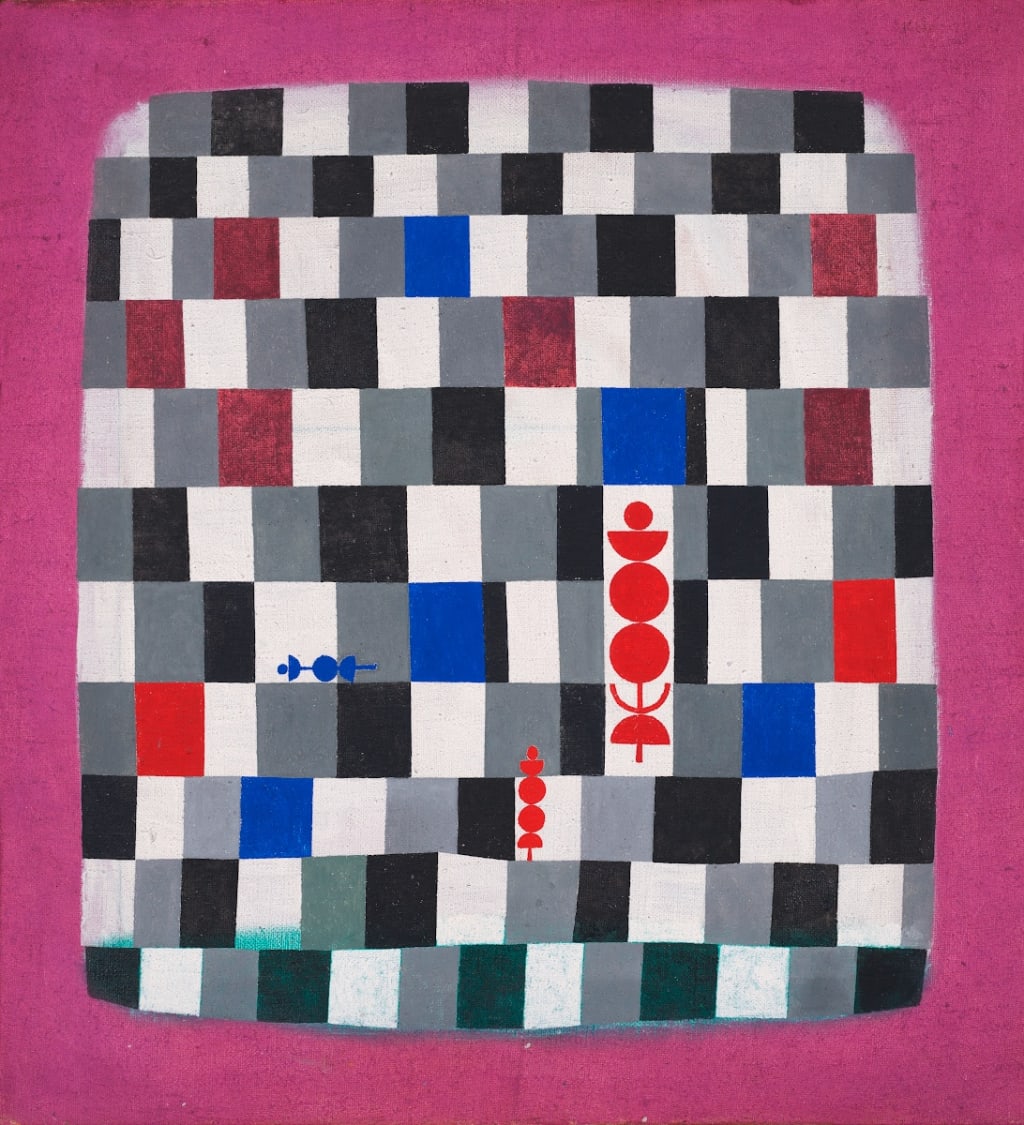
This experience is much like a game of chess against oneself. Without realizing that there is no other opponent but oneself, one risks getting all worked up and losing control when, suddenly, the white pieces (or the black) start to fall… The only way to learn to play properly is to step out of this illusory division and see the game as a whole.
This article offers some readings that may help those on the Twin Flame journey feel the whole and embrace their integrity.
*
To begin with, I would like to mention The Five Wounds That Prevent You from Being Yourself, written in 2001 by Lise Bourbeau, a Quebecois specialist in personal development. The book helps readers become aware of their psychological wounds — betrayal, rejection, abandonment, humiliation, injustice — learn to accept them, and pay attention to the signals of their body: one’s most reliable guide. While Lise Bourbeau’s approach may seem somewhat schematic, it provides a solid foundation for embarking on the path of healing and initiating self-work. For anyone on the Twin Flame journey, whose primary aim is to heal deeply rooted traumas, it remains an essential read.
*
The thick darkness that immediately follows the flash of light illuminating the day of the encounter with one’s true self envelops the being in fears and uncertainties. It is also an essential period, akin to the nigredo in alchemy, marking the beginning of a deep transformative process leading to the promise of a new life. In Dark Nights of the Soul: A Guide to Finding Your Way Through Life’s Ordeals, published in 2004, Thomas Moore, psychotherapist and disciple of C.G. Jung, paints a portrait of this dark night and reveals its many facets. Rich in references to literature and mythology, this work encourages the development of one’s sensitivity and the building of a relationship with one’s creative energy. It shows how to master one’s anger, and, once again, calls for listening to one’s body, whose ailments reflect the state of the soul. Beyond that, it is a fascinating read that improves general knowledge and allows one to discover archetypal paths that human beings continually traverse throughout their lives.
*
Detaching from the scattered thoughts that constantly cross our being is a major step toward serenity and inner liberation. In The Untethered Soul, Michael A. Singer explores the incessant mental dialogue that gives us the illusion of control and offers techniques to free ourselves from the inner noise: the very noise that builds a barrier between the self and the world. According to the author, we tend to believe we are the sum of the experiences we have accumulated, but living in full awareness allows us to perceive the very process of perception itself. This reading enables a shift in one’s worldview, moving from a divided and limiting perception to a fuller, purer understanding.
*
In Hands of Light: A Guide to Healing Through the Human Energy Field, Barbara Ann Brennan, a physicist and former NASA employee who later became a healer and energy practitioner, explores the universal energy that animates all beings, drawing connections between physical science and esoteric thought. In the spiritual tradition of India, this energy is known as prana, the life force, while the Chinese call it ch’i, which in turn consists of two poles of force: yin and yang.
The first part of the book is devoted to the human aura and energy field. According to the author, seven layers (or bodies), each represented by a particular color, make up the human aura. This section also discusses the chakras and their psychological functions. Later, the author shares her experience as a healer, explaining how illnesses appear and develop in the human being, ultimately affecting physical health, and demonstrating how spiritual healing can be carried out.
*
According to quantum physics, at the nanoscale, all matter is composed of subatomic particles in perpetual vibration. Thus, everything we perceive as solid matter is, in reality, the result of the interaction between constantly moving parcels of energy, a kind of cosmic dance. Understanding this principle allows one to broaden one’s perspective, shake the rigid framework of one’s beliefs, and go beyond the conditioning imposed by the society in which one lives. Furthermore, becoming aware that subatomic particles have no individual identity and are all interconnected makes it possible to understand that we, as human beings, are also connected to one another, and that the boundaries separating us are merely mental constructs.
On a spiritual path, doubt often persists, because it is an indispensable tool of the mind: I doubt, therefore I am. Studying quantum physics and learning its fundamental postulates — which challenge classical Newtonian physics — can help ease doubts about the nature of reality, build a bridge between mind and heart, and cultivate a deep trust in one’s true essence.
*
The quantum approach to consciousness, supported by mathematician Roger Penrose, is based on the idea that energy is a fundamental element governing all beings. Written in 1993, Quantum Consciousness by Stephen Wolinsky introduces the concepts of quantum psychology and invites readers to establish contact with one’s inner Observer through fifty practical exercises. As explained by Wolinsky, quantum psychology, a synthesis of Western psychology, Eastern spirituality, and quantum physics, does not seek to propose a new reductionist approach to the psyche (such as the psychoanalysis of Sigmund Freud, the analytical psychology of Carl Jung, the transactional analysis of Eric Berne, Gestalt therapy, or any other theory), but rather aims to develop awareness beyond the mind and encourage each person to realize their capacity to create their own reality.
Quoting quantum physicists as Werner Heisenberg, Niels Bohr, and David Bohm, the author argues that reality, in its deepest essence, is a homogeneous fabric. It is only our preconceptions that lead us to divide it into categories. He also highlights how the human brain generates a linear perception of things, thereby creating the illusion of time and space. The practical exercises included in the text help one perceive emotions as clusters of energy and free them from any label, as well as observe automatic reactions and one’s relationship to time and space. Ultimately, they allow one to grasp that non-existence is the very material from which existence is constructed.
*
After experiencing a certain spiritual awakening and discovering the ability to create and navigate one’s own reality, it becomes essential to integrate this knowledge into daily life through meditation: a practice which that goes far beyond simply sitting in the lotus position with closed eyes.
In his 1979 work, The Myth of Freedom and the Way of Meditation, Chögyam Trungpa, a master of Tibetan Buddhism, presents an approach to meditation “based on letting go of dualistic fixation, of the struggle between good and bad.” He explains how meditation, by bringing our neuroses to the surface, teaches us to see clearly and perceive things as they truly are, without attempting to adjust them to fit our subjective worldview or judgments.
The awareness cultivated through meditation allows us to fully live each experience encountered on our path while maintaining balance between the spiritual and the material. The author also emphasizes the importance of discipline and trust, which must be developed even in the absence of guarantees. At the end of the book, he introduces the concept of the “spiritual friend,” to whom one must entrust the ego and whose role is to confront us with ourselves in order to foster our growth. This is in some ways similar to the idea of the two halves of a Twin Flame.
*
“Does a story really have a beginning or even have an end? Where does it begin and where does it end? Does it begin at the start of a trip, the end of a trip… ”
Written in 2002, Living in Love: The Messenger by Klaus J. Joehle explores a conception of love that goes beyond conventional ideas, envisioning it as a fundamental force influencing all beings. Through a semi-fantastical encounter between Klaus, Danny, and Neena in a bar whose existence is uncertain, the author illustrates how anything can be accomplished when guided by love, and how our subconscious mind directs us toward the realization of our goals, provided we remain open, receptive, and attentive to the space around us. As the conversation between the characters unfolds, readers learn to distinguish their conscious mind from their subconscious, decipher the signals it sends (including those appearing in dreams), perceive time as an illusion creating the sense of movement and continuity, and initiate the events they wish to experience.
*
In closing, I would like to mention Conversations with God by Neale Donald Walsch, published in 1997. In this book, the author frees the word “God” from its purely religious connotation and from the punitive image with which it is often associated, and portrays God is “the observer, not the creator,” while the role of the human beings in their lifetime is to discover themselves — to recall their true nature — and to create. The soul, in its earthly journey, seeks to experience through matter what it already knows conceptually. Walsch also asserts that from the Non-Thing arises the All, an idea that echoes the Big Bang theory. In a dualistic world founded on the principle of relativity, we begin by learning what we are not before recognizing our divine essence.
About the Creator
Anastasia Tsarkova
Anastasia Tsarkova is a writer born in St. Petersburg and based in France, working in both English and French. Her novels, essays, and short fiction explore the human psyche and consciousness, with a focus on art, cinema, and pop culture.
Keep reading
More stories from Anastasia Tsarkova and writers in Psyche and other communities.
On a Publisher’s Refusal
There was a day in my life, a kind of point of no return, when I lost everything: an apartment, a boyfriend, all my belongings, any clear vision of my future, and, icing on the cake, my bank account was in the red. By pure chance, a man I barely knew picked me up, and we set off on a road trip. We didn’t become a romantic couple by the end of the journey, as happens in movies: we just spent a month together, and then I was on my own again. That was when I decided to write about everything that had happened to me. Since I was no longer attached to anything in this world, my ability to write was the only thing still holding me up…
By Anastasia Tsarkova5 days ago in Critique
It’s Really Not That Deep
Some days I hate myself for still wanting things I was never built to have. Some days I hate everyone else for having them without trying. I hate their friends. I hate their laughter. I hate birthday parties and inside jokes and photos where nobody is standing slightly outside the circle. I hate how effortless it looks. Like if you asked them how they do it, they’d laugh. Or look at you in that quiet way that makes you wish you hadn’t asked. I know it’s pathetic to resent people for being loved. I know it makes me seem like someone you wouldn’t want to know. I hate that I know that and I still feel it anyway.
By Suzanne B.5 days ago in Psyche
Goodbye, Mr. Duvall
It is turning out to be an interesting year. I was in the middle of teaching a class when a pop-up appeared on the screen announcing the death of Mr. Robert Seldon Duvall (yes, that was his full name). I was in the middle of a discussion on the obsession we have with winning when it comes to sports (the Winter Olympics was a theme), and I felt as though things were coming full circle. We had already lost Gene Hackman last year, and along with that titan, it feels though one particular golden age has closed off to be replaced by...?
By Kendall Defoe 2 days ago in Geeks



Comments
There are no comments for this story
Be the first to respond and start the conversation.