
Why Are We Obsessed with Labubu? It’s Not Cuteness — It’s the Permission to Be Weird
You can have angles and space.


Recently, Labubu has taken over the internet. Every time I scroll through social media or short videos, I see this little monster with sharp teeth and a mischievous grin. Its expression seems to say, “This is me — deal with it.” I have to admit, I’m tempted to place one quietly on my desk, letting it keep me company on long nights of reading and writing.
Some argue that Labubu’s popularity is just another product of consumerist manipulation. I disagree. I believe it resonates because its “unlikable weirdness” actually heals us. It speaks on our behalf: “I’m not perfect, but I’m still worthy of love.”
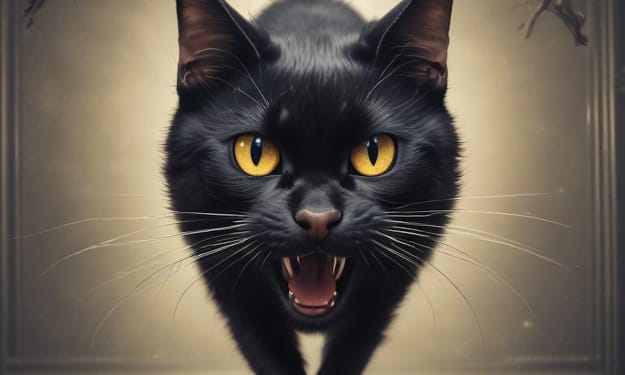
Look at it — like it’s just misbehaved, been unreasonable, and absolutely unapologetic about it. Messy hair, pointy ears, snarling grin. It’s unapologetically offbeat — and that’s precisely what feels so real. Labubu doesn’t try to be cute. It doesn’t try to please. It simply exists as itself, and that fierce authenticity moves us.
Adults aren’t tired because they’ve never tried to be themselves — they’re tired because they did, and it was too hard. We dull our edges to get by, compromise in relationships, and censor our emotions when we speak. We’ve learned to be cautious, moderate, and inoffensive. But when you look at Labubu, you remember: being yourself isn’t just a slogan. It’s a vanishing kind of courage.
To someone in their twenties, Labubu feels like a manifesto: I don’t have to follow the rules. To those in their thirties, it’s a comfort: I’m odd, but I’m okay. And to those in their forties or fifties, Labubu can feel like a soul retrieval — pulling that quiet, unruly self out from beneath the years, dusting them off, whispering, “You’re still here.”
Labubu doesn’t try to fix us. It wakes us. It doesn’t preach growth or improvement — it whispers instinct and breath. When you stare at it, you’re seeing that version of yourself before the world taught you to behave. That version is still alive, still beating, still stubborn enough to believe the world is worth one more act of defiance.
Even from a design standpoint, Labubu is compelling. It’s not a knockoff or a mashup. It’s the distilled memory of Kasing Lung’s childhood — the Nordic fairy tales, forest spirits, lonely dream-creatures — all simmered into one face. This isn’t surface-level aesthetic fusion. It’s a deeply personal worldview, fermented over time.
For parents, Labubu’s popularity is also a reminder: children don’t always need obedient, cheerful characters. They need to be allowed edges, rebellion, stubbornness. Childhood isn’t all pink bubbles — it’s also “I don’t want to go to school,” “I don’t want to be reasonable,” “I’m a little scared of the dark.”
Labubu’s message to children is this: You don’t have to be likable to be lovable.
And for adults, Labubu builds a quiet safe house. In its world, there are no lectures, no moral lessons — just a small space carved out of life. When you’re trying too hard, you can retreat, sit down, and breathe. It won’t guide you, but it will leave the door unlocked, light a warm lamp, and soften you gently. It hands back those flattened parts of you — the bits that didn’t fit in, but were always real.
About the Creator
Cher Che
New media writer with 10 years in advertising, exploring how we see and make sense of the world. What we look at matters, but how we look matters more.
You Are Not Empty, You Are Overloaded
You are not empty. You are not broken. You are not dull. - You are overloaded. - People often describe certain mental states as “having nothing in their head,” but that description is almost always inaccurate. What feels like emptiness is usually saturation. The mind has not stopped producing content. It has lost spare capacity. The system is busy allocating energy toward coping, regulating, or enduring, and there is little left over for reflection, synthesis, or creativity. This distinction matters, because mistaking overload for emptiness leads people to judge themselves harshly for conditions that are largely structural and biological.
By Peter Thwing - Host of the FST Podcast8 days ago in Psyche
Killing him slowly
There’s an intruder in my house again. He stumbles through the door, wet carrier bags in hand. He’s bought me offerings. I show my appreciation, letting him caress my beautiful body. He wants to touch me. I rub myself against his legs. He sighs, dropping the bags. He can’t resist touching me. Running his hand slowly down my spine, I arch my back towards his caress, let out a low purr. It’s what we both need.
By N J Delmas5 days ago in Horror


Comments
There are no comments for this story
Be the first to respond and start the conversation.