
Stablecoin Use Cases: Driving the Next Evolution of Digital Finance
Exploring Stablecoin Use Cases in DeFi, payments, remittances, and multi-chain ecosystems to understand how they are reshaping global finance.
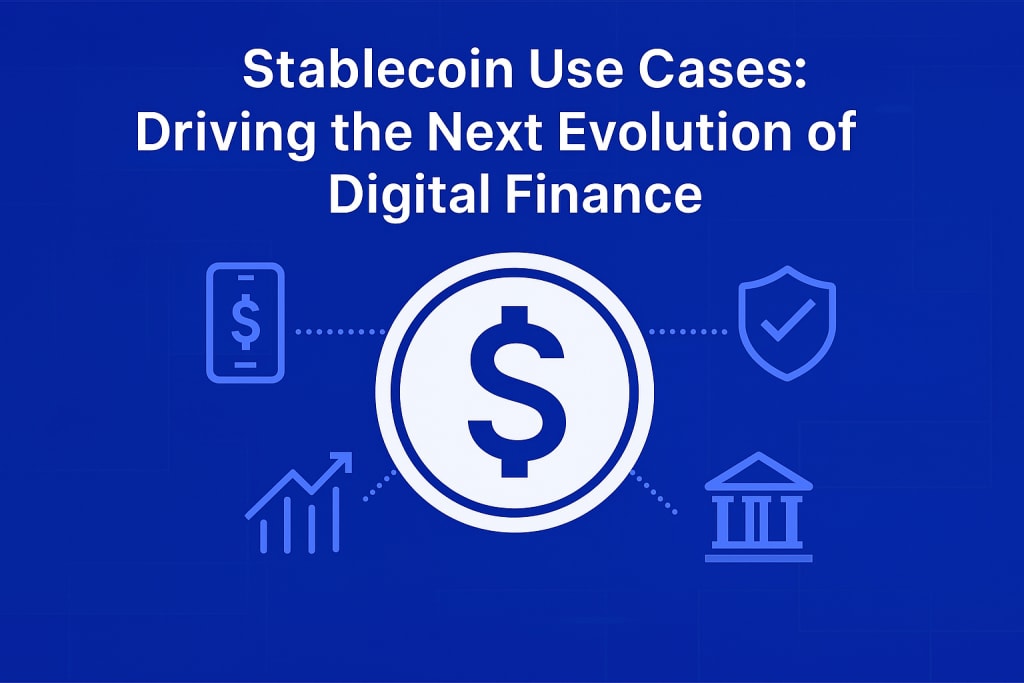
Stablecoins have emerged as one of the most disruptive innovations in the blockchain ecosystem. Unlike traditional cryptocurrencies, which often suffer from price volatility, stablecoins are designed to maintain a steady value by pegging themselves to assets such as the U.S. dollar, gold, or even baskets of currencies. This balance between blockchain efficiency and real-world stability has unlocked a wide range of applications across industries. In this article, we’ll explore Stablecoin use cases that are shaping the future of payments, DeFi, remittances, and global finance.
Stablecoins in Decentralized Finance (DeFi)
One of the most prominent Stablecoin use cases lies in the DeFi sector. Platforms like lending protocols, liquidity pools, and decentralized exchanges rely heavily on stablecoins to maintain balance. Without stable assets, DeFi ecosystems would be exposed to extreme volatility, making borrowing, lending, or yield farming risky. For example, a user can lock volatile assets as collateral while borrowing stablecoins to hedge against market swings. This not only ensures liquidity but also introduces a layer of predictability crucial for long-term adoption.
Developers and enterprises experimenting with innovations such as how to create Stablecoin on Solana are extending the DeFi utility even further. By leveraging Solana’s high throughput and low fees, stablecoins can be minted and deployed on-chain at scale, powering faster and cheaper DeFi services compared to Ethereum’s gas-intensive model.
Stablecoins for Cross-Border Payments
Global money transfers are historically slow and costly. Traditional banking intermediaries impose fees, long settlement windows, and conversion costs. One of the most impactful Stablecoin use cases is in international remittances and global commerce. With stablecoins, businesses and individuals can bypass middlemen, sending value across borders instantly at a fraction of the cost.
Financial institutions are increasingly exploring Stablecoins for Cross-Border Payments as part of their digital strategies. Unlike SWIFT-based transfers, stablecoin transactions settle in near real time and can be executed 24/7, independent of geographic boundaries or banking hours. This efficiency is driving adoption in regions where financial access is limited but smartphone penetration is high, effectively bridging gaps in traditional banking infrastructure.
Multi-Chain Stablecoins
The blockchain ecosystem is no longer siloed. As users adopt multiple chains—Ethereum, Solana, Polygon, Avalanche—the demand for interoperability has skyrocketed. Enter Multi-Chain Stablecoins, a critical innovation in the evolution of digital finance. These tokens can operate seamlessly across different blockchains, enabling cross-chain liquidity and reducing fragmentation.
Stablecoin use cases in this arena are especially relevant for decentralized exchanges, NFT marketplaces, and gaming platforms. A gamer, for instance, can use a stablecoin across multiple ecosystems without having to swap tokens or incur unnecessary gas fees. Developers are designing bridges and protocols that allow stablecoins to maintain value parity across chains, ensuring that users have consistent purchasing power, no matter the network.
Stablecoin Remittances
Remittance flows to emerging economies are vital, often surpassing foreign direct investment or aid. However, the current remittance industry is plagued with inefficiencies—high fees, regulatory hurdles, and long delays. Stablecoin remittances are transforming this sector by providing migrants with an affordable and reliable way to send money home.
By leveraging blockchain rails, recipients can access funds instantly through digital wallets and convert them into local currency if needed. Unlike volatile crypto assets, stablecoins assure senders that the value of their transfer won’t be eroded by sudden price changes. Stablecoin Remittances are particularly impactful in regions with weak currencies, where dollar-pegged tokens offer a safer store of value compared to unstable local currencies.
Corporate Treasury and Business Payments
Corporates are increasingly adopting stablecoins for treasury management and business-to-business (B2B) payments. One of the biggest challenges in global trade is settlement lag and currency risk. By integrating stablecoins, businesses can pay suppliers in real time, regardless of jurisdiction, while minimizing foreign exchange exposure. This creates operational efficiencies and enables businesses to unlock liquidity that would otherwise be tied up in settlement cycles.
Additionally, programmable payments powered by smart contracts enhance transparency and auditability. For example, suppliers can receive payments automatically once a delivery milestone is met, reducing disputes and fostering trust between trading partners.
Tokenized Assets and Stablecoin Collateralization
Another major Stablecoin use case lies in asset tokenization. As physical and digital assets are increasingly tokenized—whether it’s real estate, securities, or commodities—stablecoins often serve as the preferred settlement medium. Since they are stable in value, they provide a frictionless and predictable way to trade tokenized assets on-chain.
Moreover, stablecoins themselves act as collateral in a variety of applications, from synthetic asset issuance to insurance protocols. Their stability ensures that protocols can maintain solvency even during market downturns.
The Future of Stablecoin Use Cases
The evolution of Stablecoin use cases is still unfolding. From CBDC integration to compliance-ready enterprise solutions, the role of stablecoins in global finance is expanding rapidly. Regulators are beginning to create frameworks that ensure safety and transparency, further boosting confidence among institutions and retail users alike.
As developers innovate around areas like Multi-Chain Stablecoins, interoperability will become a standard rather than an exception. Similarly, as adoption grows in emerging markets, Stablecoin remittances and Stablecoins for Cross-Border Payments will continue to transform how individuals and businesses interact with money.
Stablecoins are no longer just digital representations of fiat—they are the backbone of a new financial architecture. Their role in enhancing liquidity, accessibility, and efficiency places them at the center of Web3’s ongoing transformation. For enterprises, governments, and individuals, the question is no longer “if” but “how” they will integrate stablecoins into their financial lives.
About the Creator
Keep reading
More stories from Siddarth D and writers in The Chain and other communities.
Stablecoin Payments: Redefining the Future of Digital Transactions
In the evolving landscape of blockchain technology, Stablecoin Payments have emerged as a groundbreaking solution bridging the gap between traditional finance and decentralized ecosystems. Unlike volatile cryptocurrencies such as Bitcoin or Ethereum, stablecoins are pegged to assets like the U.S. dollar, euro, or commodities. This stability makes them ideal for real-world transactions, where predictability and minimal fluctuation are critical. As global adoption of digital assets accelerates, stablecoins are no longer confined to crypto exchanges—they are becoming the backbone of payment infrastructures.
By Siddarth D5 months ago in The Chain



Comments
There are no comments for this story
Be the first to respond and start the conversation.