
The Strategic Advantages of RWA Tokenization Services for Modern Businesses
How Real-World Asset Tokenization Services Drive Liquidity, Global Reach, and Competitive Growth for Forward-Thinking Enterprises
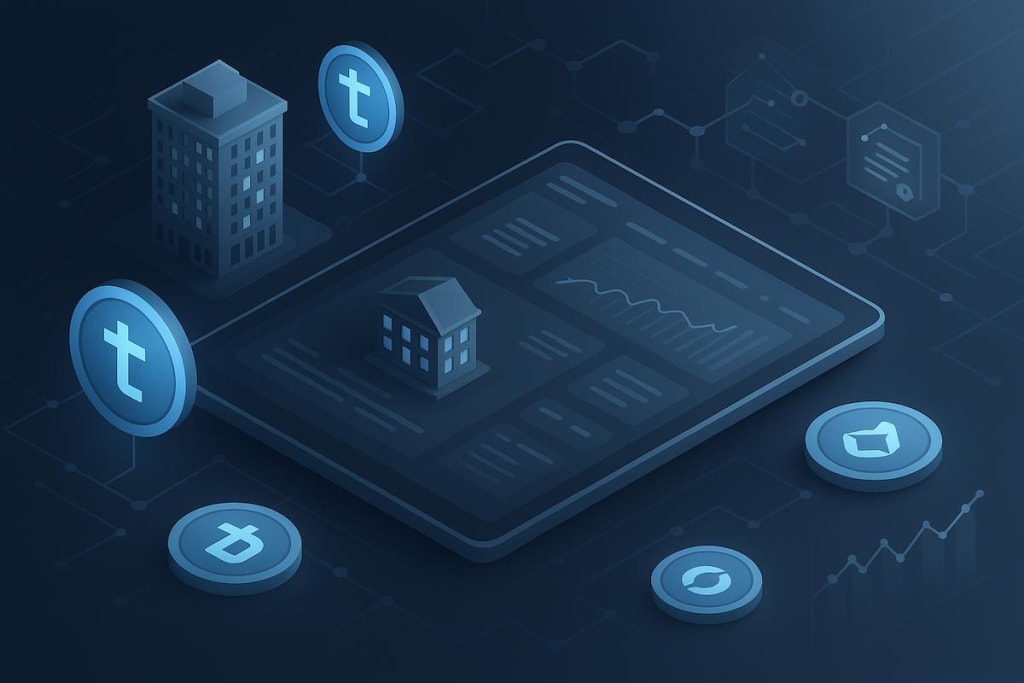
In recent years, Real-World Asset (RWA) tokenization has emerged as a transformative force in the global economy. By converting tangible assets such as real estate, commodities, fine art, or even intellectual property into blockchain-based tokens, businesses are unlocking new levels of efficiency, transparency, and accessibility. What once required lengthy paperwork, intermediaries, and geographic proximity can now be achieved in a fraction of the time, with greater security and reduced costs.
For modern businesses, the appeal of RWA tokenization goes beyond novelty—it is a strategic enabler that opens pathways to new markets, diversifies revenue streams, and enhances operational agility. As the demand for more inclusive and efficient investment models rises, tokenization services are fast becoming a critical pillar of digital transformation strategies.
Understanding RWA Tokenization Services
RWA tokenization services involve the technical, legal, and operational processes that transform a physical or intangible asset into a digital token recorded on a blockchain. These services ensure the asset is accurately valued, legally compliant, and securely represented in a digital format. The token can be fractionalized, traded, or transferred instantly, giving businesses greater flexibility in asset management.
Modern tokenization providers handle everything from smart contract development and blockchain integration to regulatory compliance and custodial solutions. By outsourcing to specialized service providers, businesses reduce the technical burden while gaining access to expertise that ensures tokenized assets meet the highest security and legal standards.
Strategic Advantage 1: Unlocking Liquidity in Traditionally Illiquid Assets
One of the most significant strategic benefits of RWA tokenization is its ability to bring liquidity to assets that have historically been illiquid. Real estate, fine art, rare collectibles, and certain commodities often require months—if not years—to sell. By tokenizing these assets, ownership can be divided into smaller, tradable fractions that can be bought or sold in seconds through digital marketplaces.
For businesses, this means that high-value assets no longer need to remain idle on the balance sheet. Tokenization creates opportunities for quicker capital mobilization without the need for full asset liquidation. This advantage is especially critical for companies seeking rapid funding or diversification without disrupting long-term asset holdings.
Strategic Advantage 2: Expanding Market Reach and Global Accessibility
In traditional markets, investment in real-world assets is often limited to specific geographic regions, high-net-worth individuals, or institutional investors. Tokenization breaks down these barriers by enabling global participation through blockchain networks. A property in London can be tokenized and sold to investors in Singapore, Dubai, or New York—instantly and without the constraints of time zones or banking hours.
For businesses, this expanded reach means a broader investor base, greater brand visibility, and access to capital markets that were previously difficult to penetrate. Tokenization services integrate with decentralized exchanges and regulated trading platforms, ensuring that assets can be marketed and sold to audiences across the world with minimal friction.
Strategic Advantage 3: Enhancing Transparency and Trust
In a business climate where trust is essential, RWA tokenization offers a level of transparency that traditional asset transactions often lack. Every tokenized asset is recorded on a blockchain ledger, creating an immutable and verifiable history of ownership, transfers, and valuation changes. This reduces disputes, minimizes fraud risk, and fosters investor confidence.
For businesses operating in sectors where credibility is paramount—such as luxury goods, real estate development, or sustainable energy projects—tokenization serves as both a marketing and operational advantage. Transparent ownership records not only reassure investors but also support compliance with increasingly stringent global regulations.
Strategic Advantage 4: Lower Transaction Costs and Faster Settlement
Traditional asset transfers often involve multiple intermediaries—banks, brokers, escrow agents, and legal teams—each adding fees and delays to the process. Tokenization streamlines these transactions by embedding ownership and contractual terms directly into blockchain-based smart contracts.
For modern businesses, this means significantly lower operational costs and faster settlement times, often reducing weeks of administrative work to just a few minutes. This efficiency not only improves cash flow but also allows companies to react quickly to market opportunities without being slowed down by legacy financial infrastructure.
Strategic Advantage 5: Enabling Fractional Ownership for Broader Participation
Fractional ownership, made possible through tokenization, allows multiple investors to own a portion of a high-value asset. This democratization of investment is a game-changer for businesses looking to attract a wider audience of stakeholders.
For example, a luxury hotel chain could tokenize ownership of a flagship property, enabling thousands of small investors to participate in its revenue streams. This approach not only diversifies the investor base but also fosters community engagement, brand loyalty, and ongoing capital inflows.
Strategic Advantage 6: Improving Asset Management and Monetization
RWA tokenization services don’t just enable the buying and selling of assets—they also enhance asset management. Businesses can track asset performance in real-time, automate dividend or rent payments to token holders, and create secondary markets for trading.
This real-time asset visibility gives decision-makers the data they need to optimize performance and monetize underutilized resources. For example, a renewable energy company could tokenize future energy production from a solar farm, selling tokens in advance to fund expansion while providing investors with a predictable return.
Strategic Advantage 7: Strengthening Compliance and Regulatory Alignment
One of the key hurdles in global asset trading is navigating complex and varied regulatory environments. Professional RWA tokenization services incorporate compliance protocols from the outset, ensuring that assets meet the legal requirements of their target markets.
From Know Your Customer (KYC) and Anti-Money Laundering (AML) checks to adherence with securities laws, tokenization providers handle the complexities that might otherwise deter businesses from entering digital asset markets. This proactive approach mitigates legal risk and protects a company’s reputation.
Strategic Advantage 8: Future-Proofing Business Models
While tokenization is still in its growth phase, its adoption is accelerating across industries. Businesses that embrace it early gain a competitive edge, positioning themselves as innovators in their sector. This future-proofing ensures they are ready to adapt as blockchain adoption expands, smart contract sophistication improves, and global regulatory frameworks evolve.
Forward-thinking enterprises that integrate tokenization into their long-term strategy can leverage it to create new products, revenue models, and customer experiences—staying ahead of competitors who rely solely on traditional methods.
Real-World Examples of Strategic Impact
Several industries are already demonstrating how RWA tokenization delivers strategic benefits. In real estate, developers are using tokenization to fund large-scale projects by attracting international investors without relying solely on bank financing. In commodities, agricultural producers are tokenizing crop futures to secure capital for planting seasons. Even luxury brands are turning rare collectibles into tokenized investment opportunities, opening their doors to a younger, digitally savvy investor base.
These real-world applications illustrate that tokenization is not just a technical innovation—it’s a business strategy that drives growth, resilience, and adaptability.
Conclusion: Turning Assets into Strategic Catalysts
RWA tokenization services represent far more than a technological trend; they are a strategic enabler for modern businesses seeking liquidity, market expansion, operational efficiency, and investor trust. By bridging the physical and digital asset worlds, tokenization transforms how companies raise capital, manage resources, and engage with stakeholders.
The organizations that act now—embracing tokenization as part of their business model—stand to reap substantial long-term benefits. As blockchain infrastructure matures and regulatory clarity improves, RWA tokenization will become an essential tool for businesses that want to thrive in an increasingly interconnected, digital-first economy.
About the Creator
Keep reading
More stories from Lily Arthur and writers in The Chain and other communities.
How Enterprises Are Leveraging Real World Asset Tokenization Offerings for Growth
The intersection of blockchain technology and tangible assets has opened new possibilities for how businesses raise capital, manage investments, and scale operations. Among the most transformative innovations is Real World Asset (RWA) tokenization — the process of converting physical assets like real estate, commodities, art, and even intellectual property into digital tokens that can be stored, traded, or fractionalized on blockchain networks.
By Lily Arthur6 months ago in The Chain
Utility Token Development: How to Add Staking, Governance, Rewards, and Access to Your Token?
A token without utility rarely maintains relevance beyond early interest. When users hold a token but cannot actively use it, motivation fades and trust weakens. Utility gives a token purpose by embedding it into the everyday functioning of an ecosystem. Instead of being just another asset to trade, the token becomes something users depend on for participation, benefits, and influence.
By Jennifer Atkinson7 days ago in The Chain
Bitcoin Hit $60,000 Because Two Different Groups Finally Surrendered — On-Chain Data Shows Who Blinked
When Bitcoin surged past the $60,000 mark, headlines framed it as another chapter in crypto’s familiar boom-and-bust cycle. But on-chain data tells a more precise and revealing story. This rally did not come from blind optimism or retail hype alone. It emerged because two opposing forces in the market—long-term holders and aggressive short sellers—both reached a breaking point at the same time. One group gave up on waiting. The other gave up on betting against the trend.
By Sajida Sikandarabout 15 hours ago in The Chain


Comments
There are no comments for this story
Be the first to respond and start the conversation.