
Fighting the ‘AI Ghost Trade’ – Dan Ives Lists 10 Catalysts to Reverse the Tech Selloff
Wedbush analyst outlines key drivers that could reignite investor confidence and stabilize the battered technology sector
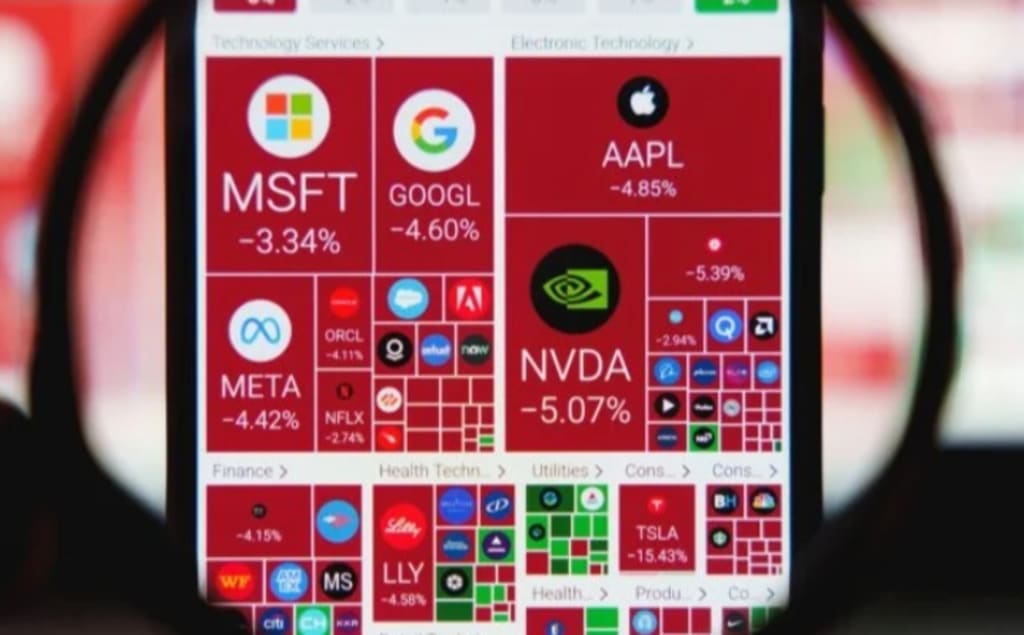
The technology sector has been under pressure in recent months, with investors pulling back from high-growth stocks amid rising volatility, valuation concerns, and shifting macroeconomic signals. But according to prominent Wall Street analyst Dan Ives, the recent tech selloff may be overdone — and a powerful rebound could be on the horizon.
Ives, a managing director at Wedbush Securities, has described the current market pullback as the “AI Ghost Trade” — a phenomenon in which fears about artificial intelligence overheating, regulatory pressures, and profit-taking have overshadowed the sector’s long-term fundamentals.
In a recent investor note, Ives outlined ten catalysts he believes could reverse the downturn and reignite enthusiasm across the technology landscape.
Understanding the ‘AI Ghost Trade’
The “AI Ghost Trade” refers to a market dynamic where investor anxiety — rather than deteriorating business fundamentals — drives stock declines. After a massive rally fueled by artificial intelligence breakthroughs, many tech stocks experienced sharp corrections as investors worried about stretched valuations and the sustainability of AI-driven growth.
The rapid rise of companies tied to AI infrastructure, semiconductors, and cloud computing created expectations that may have run ahead of earnings visibility. When sentiment shifted, selling accelerated.
But Ives argues that the broader AI revolution remains in its early stages.
Catalyst #1: Enterprise AI Spending Acceleration
Corporate investment in AI software and infrastructure is still ramping up. Ives believes that as enterprises move from experimentation to full deployment, spending cycles will strengthen, supporting revenue growth for cloud providers, chipmakers, and software companies.
AI adoption is transitioning from hype to implementation — and that shift could stabilize earnings projections.
Catalyst #2: Stronger Earnings from Tech Leaders
Major technology firms have demonstrated resilience despite macro headwinds. Continued strong earnings reports from mega-cap leaders could restore investor confidence and reinforce the narrative that AI monetization is real and scalable.
If revenue growth continues to outpace expectations, valuation concerns may ease.
Catalyst #3: Semiconductor Demand Rebound
The AI boom has dramatically increased demand for advanced chips used in data centers and machine learning applications. Companies like NVIDIA have become symbols of this trend.
Ives believes continued chip demand — particularly for AI accelerators — could serve as a key stabilizer for the broader tech ecosystem.
Catalyst #4: Federal Reserve Policy Clarity
Monetary policy plays a major role in tech valuations. Lower interest rates typically favor growth stocks, as future earnings become more valuable when discounted at reduced rates.
Clear signals from the Federal Reserve regarding rate stability or easing could help reverse risk-off sentiment.
Catalyst #5: AI Monetization Milestones
Investors want proof that AI investments translate into revenue and margin expansion. Companies demonstrating tangible returns from AI integration — whether through productivity gains or new product lines — could help shift perception from speculative to sustainable.
The next wave of quarterly reports may provide that evidence.
Catalyst #6: Cloud Growth Stabilization
Cloud computing remains foundational to AI deployment. If cloud growth rates stabilize or reaccelerate after recent slowdowns, confidence in long-term digital transformation trends could rebound.
Strong guidance from major cloud providers would be a powerful psychological boost for markets.
Catalyst #7: Reduced Regulatory Uncertainty
AI regulation is an emerging concern globally. Greater clarity from policymakers — whether in the U.S., Europe, or Asia — could remove a key overhang on valuations.
Investors often price in worst-case scenarios during periods of uncertainty. Clear frameworks may reduce that risk premium.
Catalyst #8: Broader Market Participation
The tech rally had been concentrated in a small number of mega-cap stocks. Ives believes a healthier rebound would involve broader participation across mid-cap and small-cap technology firms.
Improved market breadth would signal a more durable recovery.
Catalyst #9: M&A Activity Resurgence
Strategic acquisitions in the AI and software space could restore confidence. Mergers and acquisitions often indicate that corporate leaders see long-term value even when public markets are cautious.
A pickup in deal-making would reinforce the belief that the AI cycle remains intact.
Catalyst #10: Long-Term Structural AI Demand
Perhaps most importantly, Ives argues that AI is not a short-term trend but a generational technological shift. From healthcare diagnostics to financial modeling and cybersecurity, AI applications are expanding rapidly.
The underlying structural demand for AI infrastructure, software, and data analytics remains powerful — regardless of short-term market volatility.
The Psychology of a Selloff
Market corrections often reflect emotional cycles as much as fundamentals. After a strong rally, investors tend to lock in gains, amplifying downside momentum. Fear can overshadow earnings resilience.
The “AI Ghost Trade” label captures this psychological dynamic — the idea that fear of an AI bubble is haunting the market even as real-world adoption continues.
Historically, technology sectors have experienced multiple correction phases during long-term innovation cycles. Each wave of volatility eventually gave way to renewed growth once business fundamentals reasserted themselves.
Risks Still Linger
While Ives remains bullish, risks remain:
Prolonged macroeconomic weakness
Slower-than-expected AI adoption
Unexpected regulatory crackdowns
Corporate spending pullbacks
Investors must balance optimism with caution.
Looking Ahead
The tech sector stands at a crossroads. On one side lies lingering skepticism about valuations and AI hype. On the other lies sustained enterprise adoption, structural digital transformation, and innovation momentum.
Dan Ives’ ten catalysts present a roadmap for recovery — but markets will demand evidence.
If earnings, spending trends, and policy signals align positively, the current selloff may prove temporary. If not, volatility could persist.
For now, the “AI Ghost Trade” remains a battle between fear and fundamentals — and the next chapter will depend on which force ultimately prevails.
About the Creator
A Gathering of Evil Bosses
“I’m the queen of chin jutting while I smooth my hair, attacking, insulting, and deflecting to protect my appointer.” “Oh, please, Blondi, my hair is curled, highlighted, and longer than yours. I feature television commercials telling immigrants that we will give them a free plane ride home, and if they voluntarily turn themselves in, they will be allowed to legally apply for re-entry. It runs everywhere, and I look good in it! You can’t compete because of your blond hair. Mine is nicer, and my lips are prettier than yours.”
By Andrea Corwin 3 days ago in The Swamp



Comments
There are no comments for this story
Be the first to respond and start the conversation.