
Grail Stock Craters as Key NHS-Galleri Cancer Blood Test Trial Fails to Hit Primary Endpoint
A major setback for early cancer detection technology raises questions about the future of liquid biopsy screening programs and investor confidence

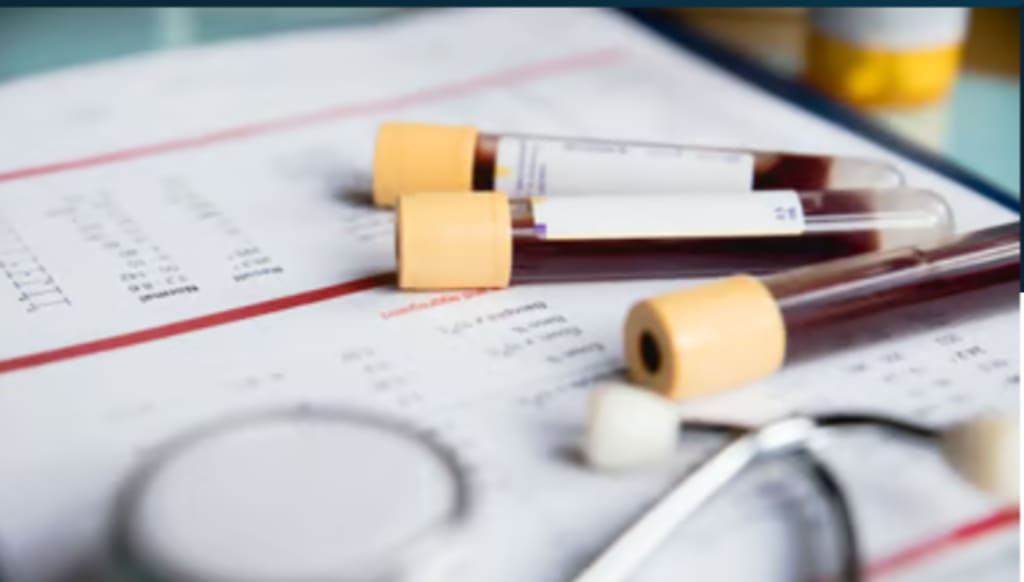
The promise of a simple blood test that can detect dozens of cancers early has captured the imagination of scientists, investors, and healthcare systems worldwide. But this week, that vision took a serious hit when Grail revealed disappointing results from its highly anticipated NHS-Galleri clinical trial.
The news triggered an immediate and dramatic market response: Grail’s stock plunged nearly 50%, erasing billions in market value overnight. The reason? The trial failed to meet its primary endpoint—an outcome that raises tough questions about the future of multi-cancer early detection tests and their role in national screening programs.
What Is the Galleri Test?
The Galleri test is designed to detect more than 50 types of cancer using a single blood draw. It works by identifying fragments of cancer-derived DNA circulating in the bloodstream and predicting where in the body the cancer originated. The technology represents one of the most ambitious attempts yet to shift cancer diagnosis from late-stage discovery to early intervention.
To test whether this innovation could make a real difference at a population level, Grail partnered with the United Kingdom’s National Health Service to launch one of the largest cancer screening trials ever conducted.
Inside the NHS-Galleri Trial
The NHS-Galleri trial enrolled more than 140,000 participants aged between 50 and 77 who had no known cancer symptoms. Participants were divided into two groups: one received standard cancer screening, while the other received standard screening plus the Galleri blood test annually for three years.
The study’s primary goal was straightforward but critical—determine whether adding the Galleri test could significantly reduce the number of late-stage cancer diagnoses (specifically stage III and IV cancers). Reducing late-stage detection is essential because cancers caught earlier are far more treatable and have much higher survival rates.
However, when the results were analyzed, the trial failed to show a statistically significant reduction in the combined rate of stage III and IV cancers. In clinical research, missing the primary endpoint is a major setback, regardless of positive secondary trends.
Some Bright Spots Amid the Disappointment
Although the trial did not meet its main target, the data were not entirely negative. Researchers observed encouraging signs in specific cancer categories, particularly among 12 highly lethal cancers such as lung, pancreatic, and colorectal cancer.
The Galleri test also appeared to detect some cancers earlier in subsequent screening rounds, with fewer stage IV diagnoses reported over time in certain subgroups. Grail highlighted these findings as evidence that longer follow-up and further analysis may reveal stronger benefits.
Still, secondary outcomes rarely carry the same regulatory or financial weight as a missed primary endpoint, especially in a trial of this size and visibility.
Why Investors Reacted So Harshly
Markets do not like uncertainty, and the Galleri trial introduced plenty of it.
Investors had priced Grail’s stock based on expectations that the NHS trial would provide strong evidence supporting widespread adoption of the test in national healthcare systems. When that didn’t happen, confidence collapsed.
The stock’s plunge marked the company’s steepest single-day decline ever. It also sent shockwaves through related stakeholders, including Grail’s former parent company Illumina, which still holds a financial stake.
Beyond market losses, the results also triggered legal scrutiny, with several law firms announcing investigations into potential securities law violations related to investor disclosures.
Regulatory and Policy Implications
Failing to meet a primary endpoint complicates Grail’s regulatory path forward. In both the U.S. and U.K., regulators rely heavily on predefined trial outcomes to assess whether a new diagnostic tool truly improves patient outcomes.
For the NHS, the data may weaken the case for incorporating Galleri into routine national screening programs. Public health agencies must balance innovation with cost-effectiveness and proven benefit, and without strong evidence of late-stage cancer reduction, that balance becomes harder to justify.
In the United States, Grail’s future will depend in part on results from ongoing studies such as PATHFINDER 2, which focuses on Medicare-eligible populations. Positive outcomes there could help offset the disappointment from the NHS trial.
A Reality Check for the MCED Industry
The Galleri setback is not just about one company—it’s a wake-up call for the entire multi-cancer early detection (MCED) field.
Liquid biopsy technology has been heralded as the next revolution in cancer care, promising to detect cancers long before symptoms appear. Yet translating that promise into real-world population benefits is proving far more complex than anticipated.
Cancer biology varies widely between tumor types, and detecting faint DNA signals in healthy individuals remains a formidable scientific challenge. The NHS-Galleri results suggest that while the technology can find cancers, proving that it meaningfully reduces late-stage disease across broad populations is another hurdle entirely.
What Comes Next for Grail
Grail has stated it will continue to analyze the data and extend follow-up for another six to twelve months. More detailed findings are expected to be presented at upcoming oncology conferences, which may offer deeper insights into where the test performs best.
The company also retains a strong cash position and plans to continue expanding in the U.S. market. Still, rebuilding investor trust will require more than optimism—it will require convincing clinical evidence.
Conclusion: Innovation Meets Evidence
The NHS-Galleri trial represents a defining moment for early cancer detection technology. It underscores a hard truth in medicine: groundbreaking ideas must survive rigorous testing before they reshape healthcare.
For Grail, this is not the end of the road—but it is a pivotal crossroads. The company now faces the challenge of refining its science, proving its value, and navigating a more cautious regulatory and financial environment.
For patients and policymakers, the trial serves as a reminder that progress in cancer screening is incremental, not instant. The dream of catching cancer early with a simple blood test remains alive—but it will take more data, more trials, and more time to turn that dream into everyday clinical reality.
About the Creator
Sajida Sikandar
Hi, I’m Sajida Sikandar, a passionate blogger with 3 years of experience in crafting engaging and insightful content. Join me as I share my thoughts, stories, and ideas on a variety of topics that matter to you.
Keep reading
More stories from Sajida Sikandar and writers in The Swamp and other communities.
Depleted Savings and Plummeting Sales: The American Casualties of Economic Slowdown
For years, American consumers were the engine of economic growth. Stimulus checks, strong job markets, and rising wages allowed households to save more and spend freely. But that momentum is fading fast. Today, depleted savings and plummeting retail sales are becoming two of the most visible casualties of a slowing economy.
By Sajida Sikandara day ago in The Swamp
A Gathering of Evil Bosses
“I’m the queen of chin jutting while I smooth my hair, attacking, insulting, and deflecting to protect my appointer.” “Oh, please, Blondi, my hair is curled, highlighted, and longer than yours. I feature television commercials telling immigrants that we will give them a free plane ride home, and if they voluntarily turn themselves in, they will be allowed to legally apply for re-entry. It runs everywhere, and I look good in it! You can’t compete because of your blond hair. Mine is nicer, and my lips are prettier than yours.”
By Andrea Corwin 4 days ago in The Swamp
Minister Pledges That Children Will Receive SEND Support ‘Much More Quickly’ Under New Reforms
The UK government has announced a series of new reforms aimed at speeding up Special Educational Needs and Disabilities (SEND) support, pledging that children will receive the assistance they need more promptly amid long-standing concerns about delays in the system. Education ministers said the reforms would tackle inefficiencies, improve accountability, and ensure children with additional needs are not left waiting for critical interventions. Speaking at a parliamentary briefing, Education Secretary Claire Cartwright acknowledged that families had faced “unacceptable delays” in accessing support, particularly for assessments, individualized education plans (IEPs), and specialist services. “No child should be left behind because of bureaucracy,” Cartwright said. “Under these reforms, we aim to ensure that SEND support reaches children much more quickly, helping them to thrive in school and beyond.” Background: The SEND System Under Strain SEND provision in the UK has long been a source of controversy. According to recent reports from Ofsted and the Children’s Commissioner, thousands of children experience delays in getting educational assessments or placement in specialist provision, with some waiting months or even years for an Education, Health and Care Plan (EHCP) to be finalized. Families have complained of lengthy paperwork, inconsistent local authority procedures, and shortages of qualified staff to carry out assessments. One parent, Sarah Whitman from Birmingham, described her experience: “My son needed speech therapy and extra classroom support. We were promised assessments within 20 weeks, but it took over a year. It was exhausting and emotionally draining.” Her story echoes hundreds of similar accounts from families across England. The Proposed Reforms Under the new government plans, key measures include: Faster assessments – reducing the statutory 20-week period for EHCP completion in practice, with new accountability measures for local authorities. Streamlined paperwork – cutting down duplicative reporting requirements to allow education, health, and social care professionals to focus on direct support for children. Increased specialist staffing – funding for additional educational psychologists, speech and language therapists, and occupational therapists in schools and local authorities. Centralised oversight – improved monitoring systems to track progress on SEND support provision, ensuring children do not fall through the cracks. Education Secretary Cartwright emphasized that these reforms would be rolled out in phases, with pilot programs starting in selected local authorities from April 2026. Nationwide implementation is expected by spring 2027, with progress reports to Parliament every six months. Response From Advocacy Groups SEND advocacy groups welcomed the announcement but urged caution. Iain Douglas, director of the National SEND Alliance, said: “We are pleased to see government acknowledgment that delays are unacceptable, but promises must translate into real, tangible improvements on the ground. Staffing shortages, budget constraints, and inconsistent practices between local authorities remain major barriers.” Some unions representing education and health professionals highlighted the need for adequate training and manageable caseloads to prevent burnout and ensure that support is delivered effectively. Impact on Families For families, the reforms are a potential lifeline. Early intervention in SEND can significantly improve academic outcomes, social integration, and long-term wellbeing for children with disabilities or additional needs. By reducing waiting times and simplifying processes, the government hopes to alleviate stress for parents and guardians, while enabling children to access tailored support sooner. Parent advocacy groups, including Contact, have called for ongoing consultation with families throughout the reform process, stressing that policies must be flexible to meet the diverse needs of children across different regions. Looking Ahead While it remains to be seen whether the proposed reforms will fully resolve long-standing delays, the government’s pledge represents a renewed focus on improving SEND provision. With pilot programs set to launch in the coming months, families, educators, and advocacy groups will be watching closely to ensure that children across the UK finally receive the timely, personalised support they need to succeed.
By Fiaz Ahmed about 7 hours ago in The Swamp
Winterthorne
Winterthorne stood alone at the edge of the park. The beautiful snow that had surrounded him was all trampled now, from the feet of all of the children who had built him. He missed the sparkly clean snow blanket, but he was happy that so many children had come out to make him.
By Laura DePaceabout 22 hours ago in Fiction




Comments
There are no comments for this story
Be the first to respond and start the conversation.