
JFK (1991)
1001 Movies to See Before You Die (Schneider, J.S, Smith, I.H)

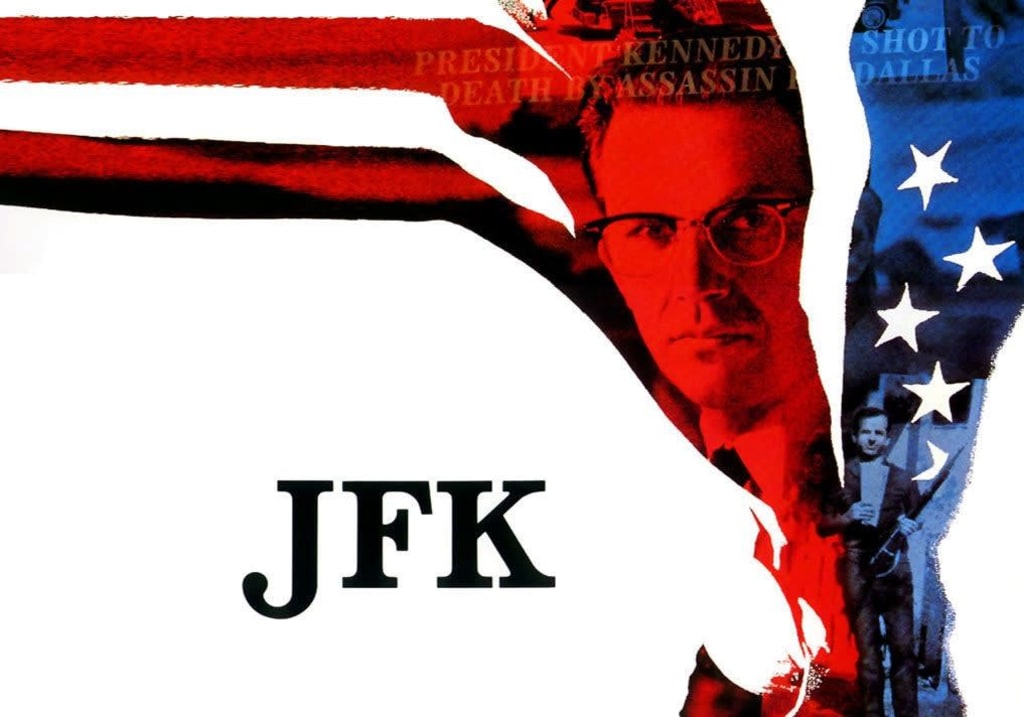
In this article, we will be looking at 2019’s book “1001 Movies to See Before You Die” and going through each film in a random order that I have chosen. We will be looking at what constitutes this film to be on the list and whether I think this film deserves to be here at all. I want to make perfectly clear that I won’t be revealing details from this book such as analyses by film reporters who have written about the film in question, so if you want the book itself you’ll have to buy it. But I will be covering the book’s suggestions on which films should be your top priority. I wouldn’t doubt for a second that everyone reading this article has probably watched many of these movies anyway. But we are just here to have a bit of fun. We’re going to not just look at whether it should be on this list but we’re also going to look at why the film has such a legacy at all. Remember, this is the 2019 version of the book and so, films like “Joker” will not be featured in this book and any film that came out in 2020 (and if we get there, in 2021). So strap in and if you have your own suggestions then don’t hesitate to email me using the address in my bio. Let’s get on with it then.
JFK (1991) dir. by Oliver Stone
JFK (1991) is based on the book “On the Trail of the Assassins” by Jim Garrison and “Crossfire: The Plot that Killed Kennedy” by Jim Marrs. It is a legal drama and political thriller based around the assassination of President Kennedy and the investigation (or lack thereof) into his death. It received many scathing reviews including those by the Chicago Tribune and the Washington Post upon its release for not the way in which it covered the theories surrounding the death of JFK, but in the way it adapted Jim Garrison’s book for the film, adding in and taking out various details at will. (If you actually read the book then you will realise that there is story that needs to be filled in around the theories concerning the Warren Commission, or you really don’t have a film at all). The Time Magazine Film Analyst and veteran film critic Richard Corliss wrote:
“Whatever one's suspicions about its use or abuse of the evidence, JFK is a knockout. Part history book, part comic book, the movie rushes toward judgment for three breathless hours, lassoing facts and factoids by the thousands, then bundling them together into an incendiary device that would frag any viewer's complacency. Stone's picture is, in both meanings of the word, sensational: it's tip-top tabloid journalism. In its bravura and breadth, JFK is seditiously enthralling; in its craft, wondrously complex.”
I think that it is important to remember that this is a movie. Yes, it conjured up an interest in JFK’s assassination again, but it also provided the 90s with its key political thriller and according to the book “Chasing the Light” by Oliver Stone, it was a big part of his post-Platoon career. And, according to most of us, the reason we all know and love Oliver Stone so much.
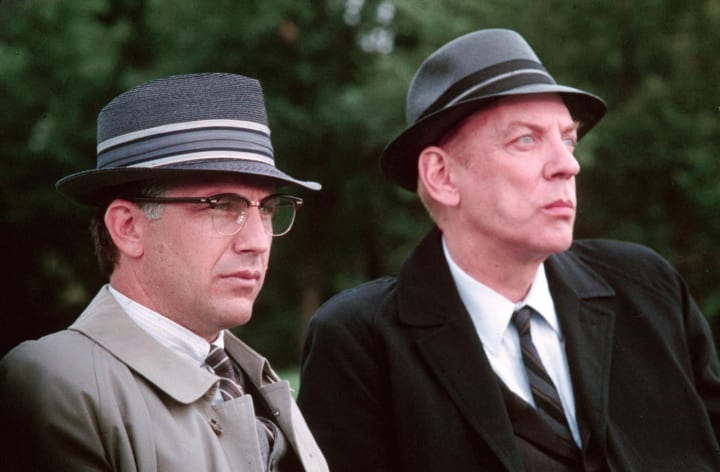
Obviously, the great and powerful Roger Ebert weighed in on the film in the Chicago-Sun and he had this to say (which I think is correct given the fact that many people were calling it a ‘step too far’ for Hollywood on the assassination) in his review:
“The achievement of the film is not that it answers the mystery of the Kennedy assassination, because it does not, or even that it vindicates Garrison, who is seen here as a man often whistling in the dark. Its achievement is that it tries to marshal the anger which ever since 1963 has been gnawing away on some dark shelf of the national psyche.”
In terms of awards, “JFK” (1991) won the Best Cinematography award and Best Editing award at the Academy Awards of their year. It also won a few BAFTAs and Oliver Stone got a Golden Globe for Best Director.
I’m not going to lie, it may not be the most accurate film about the assassination but at the end of the day it was not trying to be. It was a loose adaptation of a book which was based on criticising the main theories that were written about the assassination. It was adapted to show exactly how paranoid everyone was about everything and how everyone in the government was always looking over their shoulder as if they were next.
It is, however, one of my personal favourite films of all time. I love the various montages and the way in which it tells the story through not only these montages but various flashbacks and side-notes. One of my favourite scenes in the history of cinema (you might think it is boring, but I do not) is the one where Jim Garrison is talking to a man called X outside and X is telling him about the different theories he has and the way in which the Black Ops heard about the president’s assassination. It is one of the coolest scenes I have ever seen filmed because not only do you have it acted out and narrated by Donald Sutherland, but you also have these various flashbacks and montages on to things that the narrative needs you to believe happened in order to the next stage of the film to happen. I think I’ve spoken about this film and this scene time and time again, but it really is one of the best scenes I have ever seen.
About the Creator
Annie Kapur
I am:
🙋🏽♀️ Annie
📚 Avid Reader
📝 Reviewer and Commentator
🎓 Post-Grad Millennial (M.A)
***
I have:
📖 280K+ reads on Vocal
🫶🏼 Love for reading & research
🦋/X @AnnieWithBooks
***
🏡 UK
Keep reading
More stories from Annie Kapur and writers in The Swamp and other communities.
Book Review: “Too Much and Never Enough” by Mary L. Trump
Initially, I was a bit apprehensive about reading this book, and I’ll tell you exactly why. Nearly everyone has tried to explain the dystopian apocalyptic nightmare that is the reign of Donald Trump as POTUS, even those who initially supported him during his 2016 election campaign. Since the mass movements that have developed during his presidency, the environmental crises, the Flint Water problems and many more, Donald Trump is more inactive than evil - even his Twitter account is more alive than his want to remove the dark stains that protrude through American History and are seemingly slipping through the cracks in his power once again. Again, everyone has written a book or thought about writing a book about why they cannot really understand how Donald Trump is still president through all of this, but I was more apprehensive about reading this particular one not because it was by his niece but because it was dealing with something that from research, I know to be a touchy subject: Donald Trump’s mental health.
By Annie Kapur6 years ago in The Swamp
The Saddest Thing - The Billionaires Who Rule America Aren't Even Enjoying Themselves
This single post says more about our ruling class than a thousand policy papers. The saddest thing about today's system is that the men robbing the rest of us - sabotaging our economic prospects, our pensions, our access to affordable healthcare - are not even happy.
By Scott Christenson🌴10 days ago in The Swamp
Top Goldman Sachs Lawyer Kathy Ruemmler Resigns Over Jeffrey Epstein Ties: What It Means for Corporate Accountability
The departure of Kathy Ruemmler — one of the most powerful legal executives in global finance — has sent ripples through the corporate world. As chief legal officer of Goldman Sachs, Ruemmler occupied one of the most sensitive positions in banking, overseeing compliance, litigation strategy, and regulatory oversight for a firm managing trillions in assets.
By Adil Ali Khan2 days ago in The Swamp


Comments
There are no comments for this story
Be the first to respond and start the conversation.